This article was published in Scientific American’s former blog network and reflects the views of the author, not necessarily those of Scientific American
In honor of Earth Day it is worth taking a moment to consider the impact we have on our planet as individuals. Those of us who live in developed countries probably know about some of the relatively simple steps we can each take to reduce carbon emissions—we can recycle, for example, or reduce the quantity of animal products in our diets.
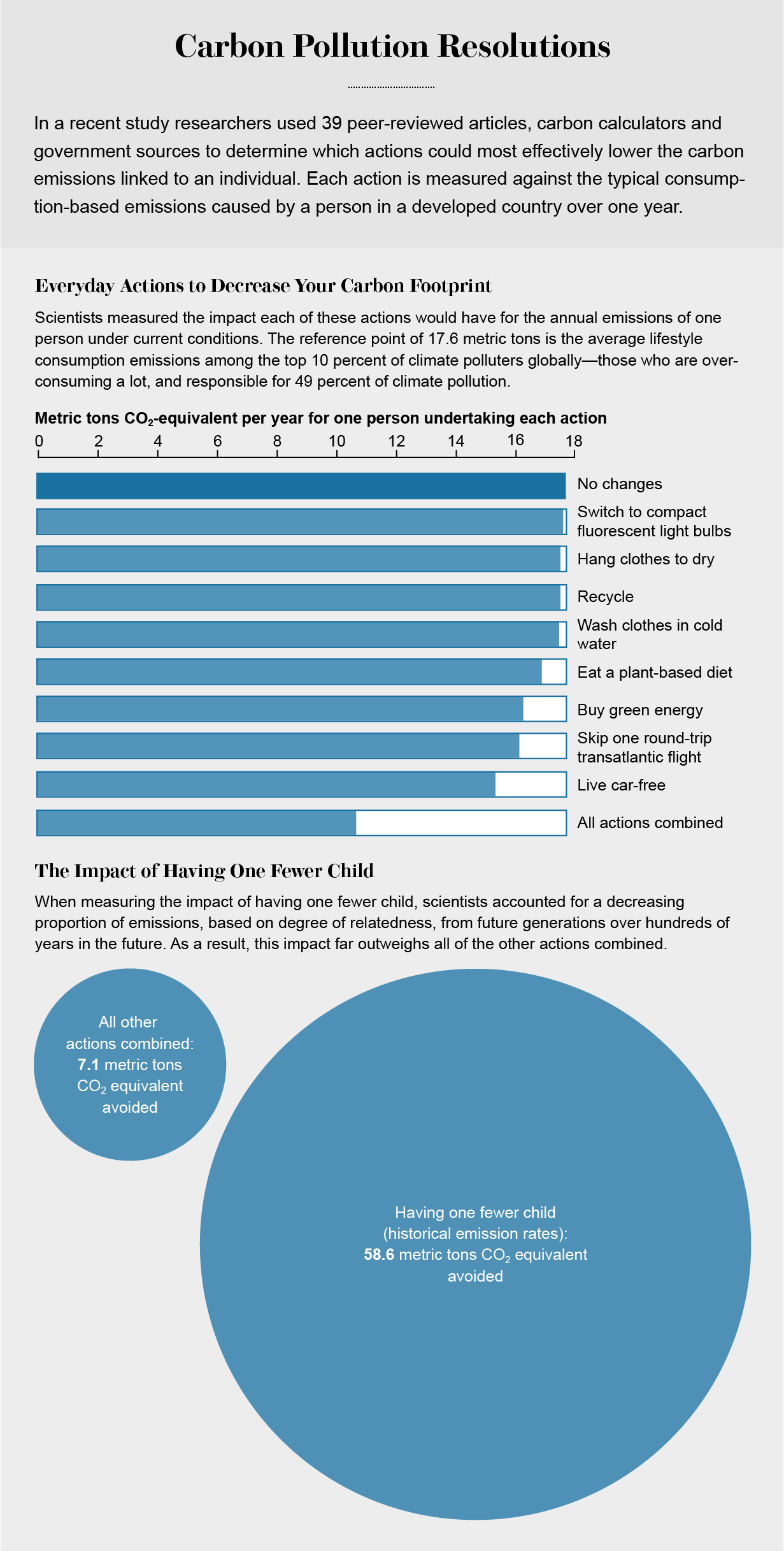
But to what extent do these sorts of personal choices really make a difference? The graphic below provides some answers.
Credit: Amanda Montañez;
Source: “The Climate Mitigation Gap: Education and Government Recommendations Miss the Most Effective Individual Actions,” by Seth Wynes and Kimberly Nicholas, in Environmental Research Letters, Vol. 12; July 12, 2017
On supporting science journalism
If you're enjoying this article, consider supporting our award-winning journalism by subscribing. By purchasing a subscription you are helping to ensure the future of impactful stories about the discoveries and ideas shaping our world today.
For additional inspiration on how to be more Earth-friendly in your daily life, check out this July 2017 blog post by climate scientist Kimberly Nicholas.
It’s Time to Stand Up for Science
If you enjoyed this article, I’d like to ask for your support. Scientific American has served as an advocate for science and industry for 180 years, and right now may be the most critical moment in that two-century history.
I’ve been a Scientific American subscriber since I was 12 years old, and it helped shape the way I look at the world. SciAm always educates and delights me, and inspires a sense of awe for our vast, beautiful universe. I hope it does that for you, too.
If you subscribe to Scientific American, you help ensure that our coverage is centered on meaningful research and discovery; that we have the resources to report on the decisions that threaten labs across the U.S.; and that we support both budding and working scientists at a time when the value of science itself too often goes unrecognized.