
This article was published in Scientific American’s former blog network and reflects the views of the author, not necessarily those of Scientific American
This Wednesday in the early morning hours skywatchers in select regions of the world will tune in for a spectacle known as the “super blue blood moon” eclipse. This rare event is called “super” because the full moon will be in perigee (at the point in its orbit when it is closest to Earth); “blue” as it happens to be the second full moon this month; and “blood” for the reddish tint it will take on as it passes through Earth’s shadow.
On March 13, 1960, another lunar eclipse was to take place, and two scientists were meticulously preparing to do what many of us will do with minimal effort on Wednesday: capture the event in a series of photographs. Given the current ubiquity of high-quality, easy-to-use smartphone cameras, we may forget how fraught such a task once was. For J. F. Ossanna, Jr., and L. C. Thomas, both engineers at Bell Telephone Laboratories and amateur photographers, figuring out the proper exposure needed to capture the eclipse involved a complex foray into astronomy, math and optics.
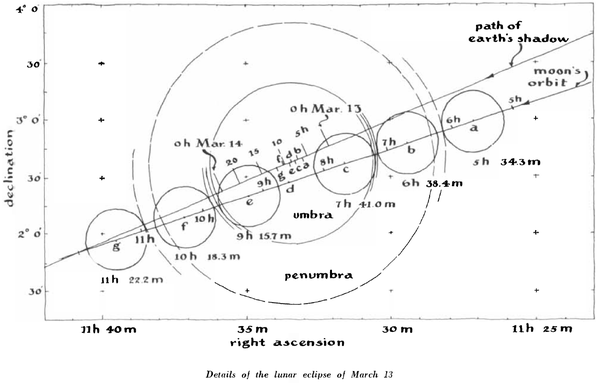
The December 1960 issue of Scientific American told their story in The Amateur Scientist, a sort of how-to column meant to facilitate adventures in citizen science. The diagrams below helped to explain their calculations.
On supporting science journalism
If you're enjoying this article, consider supporting our award-winning journalism by subscribing. By purchasing a subscription you are helping to ensure the future of impactful stories about the discoveries and ideas shaping our world today.

Credit: J. F. Ossanna, Jr. and L. C. Thomas

Credit: J. F. Ossanna, Jr. and L. C. Thomas

Credit: J. F. Ossanna, Jr. and L. C. Thomas

Credit: J. F. Ossanna, Jr. and L. C. Thomas
Inscrutable as they may be to the average modern reader, perhaps some astronomy enthusiasts of the day were able to grasp these diagrams and reproduce the process for subsequent eclipses. Ossanna’s and Thomas’s efforts certainly paid off, yielding images like these.

Credit: J. F. Ossanna, Jr. and L. C. Thomas
Lucky for us nowadays, technology has advanced significantly, and photography guides like this one are much easier to follow. Happy eclipse viewing!
