The Science of Success in Science

Interactive data visualization traces the career paths of over 10,000 scientists in search of predictable patterns of impact

Join Our Community of Science Lovers!

This article was published in Scientific American’s former blog network and reflects the views of the author, not necessarily those of Scientific American


At what point in her career can a young or aspiring scientist expect to achieve success in her field? This week, the journal Science released a paper that attempts to answer this question. Using data from Google Scholar, Web of Science, and Physical Review journals, researchers compiled profiles of thousands of scientists across seven disciplines, tracing their careers over time and measuring the impact of each paper they published.

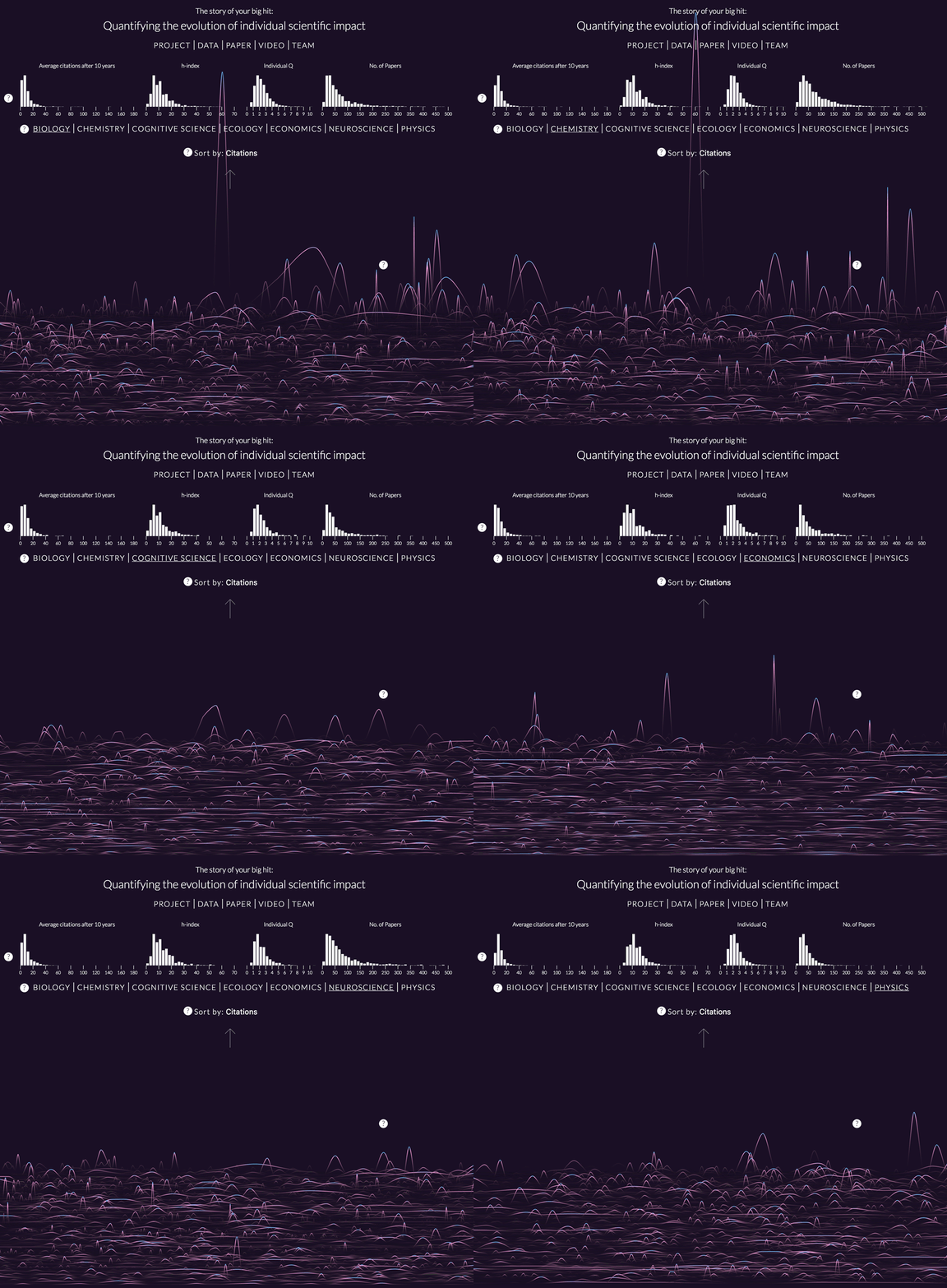
Interestingly, what they found is that there is no predictable pattern of success over one’s career. In fact, it seems completely random—a scientist’s most impactful publication might just as likely come at the beginning of his career, as toward the end or somewhere in the middle. And this rule holds true for all seven fields included in the study: biology, chemistry, cognitive science, ecology, economics, neuroscience, and physics.

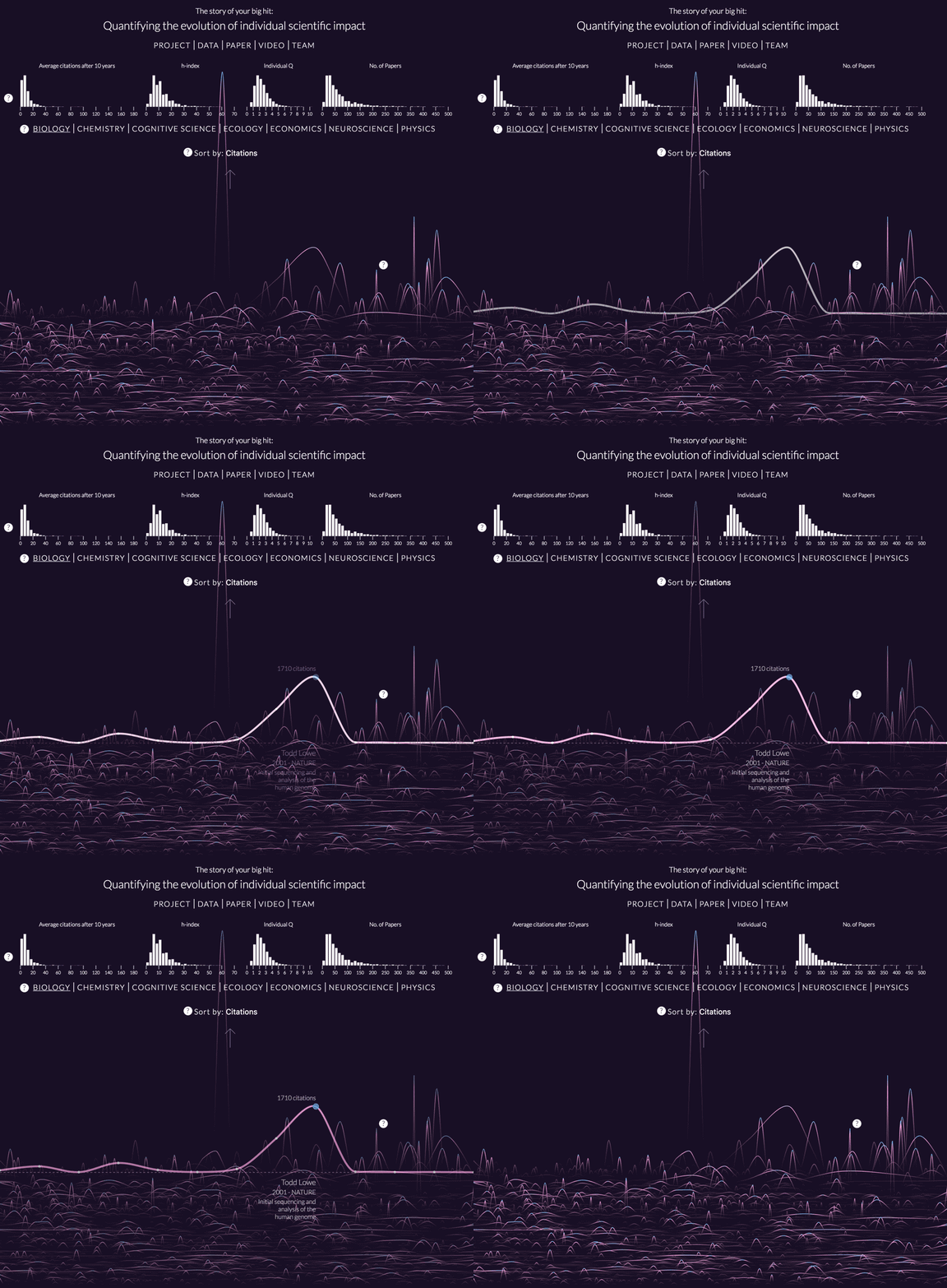
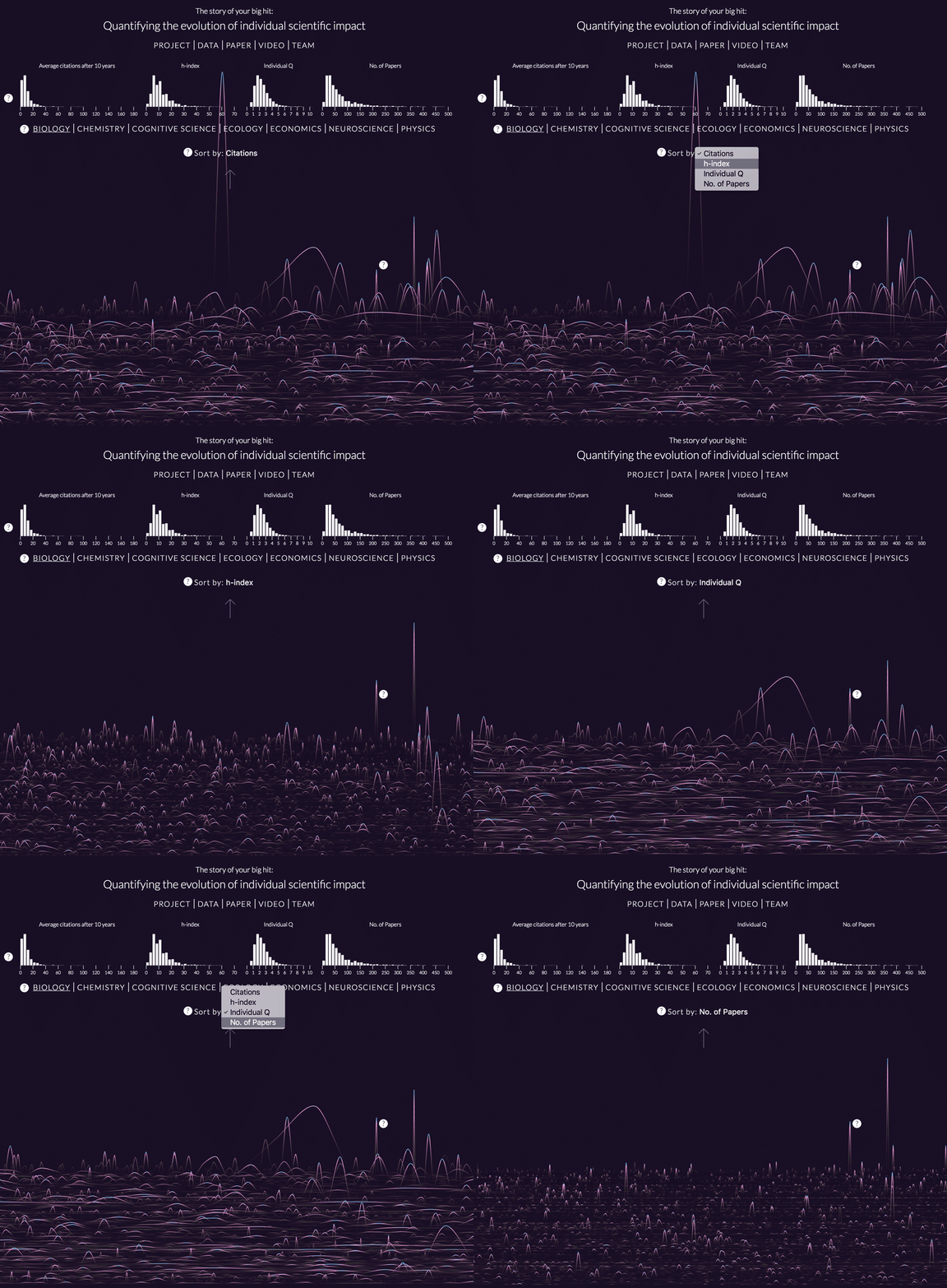
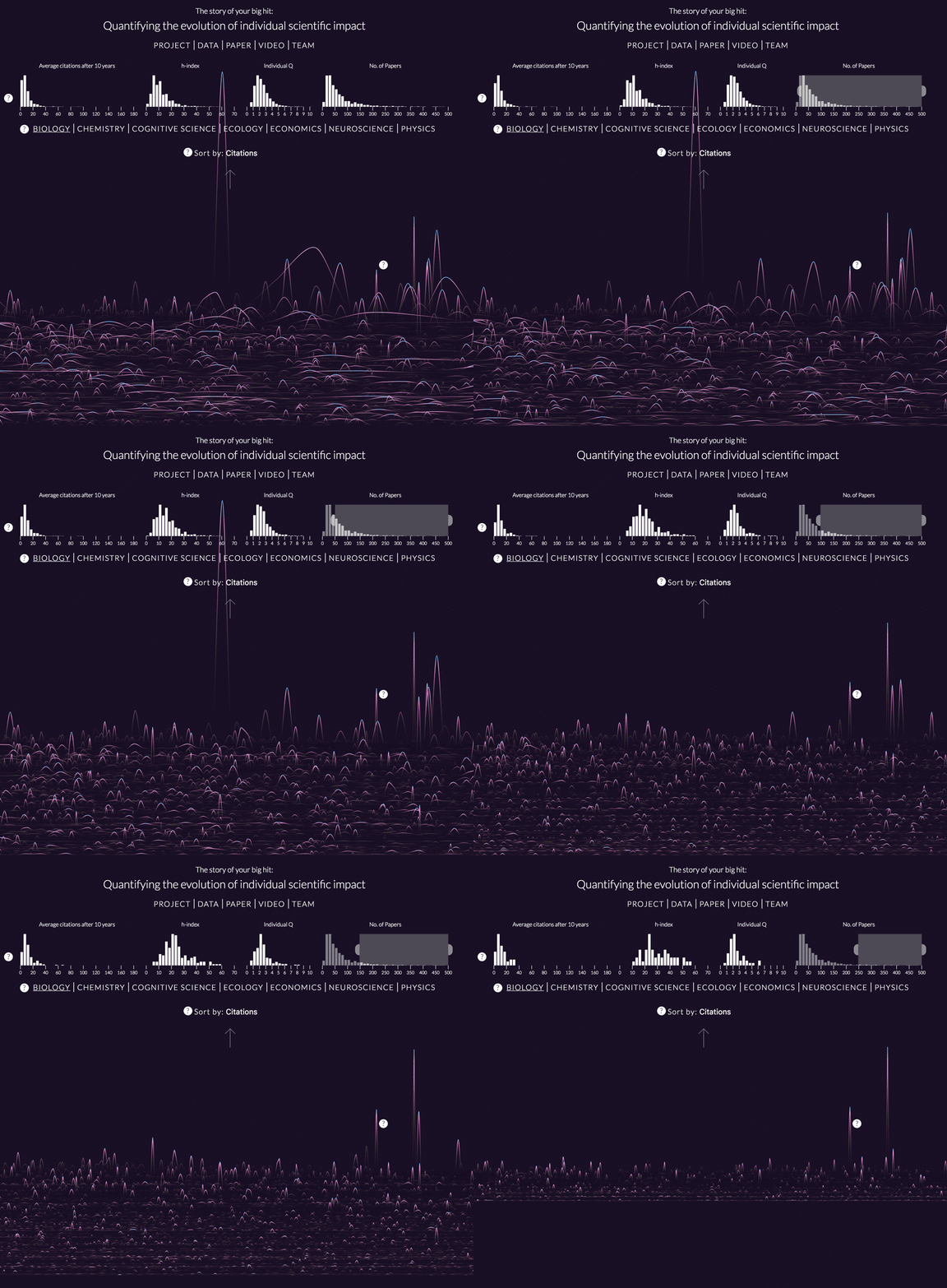
Perhaps this seems like an underwhelming result. However, when presented visually, it actually becomes rather intriguing. Kim Albrecht, a data researcher and designer at the Center for Complex Network Research, has assembled the enormous quantity data from the study into a beautiful and information-rich work of interactive data visualization.


On supporting science journalism

If you're enjoying this article, consider supporting our award-winning journalism by subscribing. By purchasing a subscription you are helping to ensure the future of impactful stories about the discoveries and ideas shaping our world today.


The series of GIFs below demonstrate how the visualization works, but you can also explore the tool on your own here. And in case you missed it, check out Albrecht’s Cosmic Web visualization, which I wrote about earlier this year.

Credit: Kim Albrecht
Credit: Kim Albrecht
Credit: Kim Albrecht
Credit: Kim Albrecht
Credit: Kim Albrecht


Amanda Montañez is senior graphics editor and been at Scientific American since 2015. She produces and art directs information graphics for the Scientific American website and print magazine. Montañez has a bachelor's degree in studio art from Smith College and a master's in biomedical communications from the University of Toronto. Before starting in journalism, she worked as a freelance medical illustrator. Follow her on Bluesky @unamandita.bsky.social

More by Amanda Montañez

It’s Time to Stand Up for Science

If you enjoyed this article, I’d like to ask for your support. Scientific American has served as an advocate for science and industry for 180 years, and right now may be the most critical moment in that two-century history.

I’ve been a Scientific American subscriber since I was 12 years old, and it helped shape the way I look at the world. SciAm always educates and delights me, and inspires a sense of awe for our vast, beautiful universe. I hope it does that for you, too.

If you subscribe to Scientific American, you help ensure that our coverage is centered on meaningful research and discovery; that we have the resources to report on the decisions that threaten labs across the U.S.; and that we support both budding and working scientists at a time when the value of science itself too often goes unrecognized.

In return, you get essential news, captivating podcasts, brilliant infographics, can't-miss newsletters, must-watch videos, challenging games, and the science world's best writing and reporting. You can even gift someone a subscription.

There has never been a more important time for us to stand up and show why science matters. I hope you’ll support us in that mission.

Thank you,

David M. Ewalt, Editor in Chief, Scientific American

Subscribe