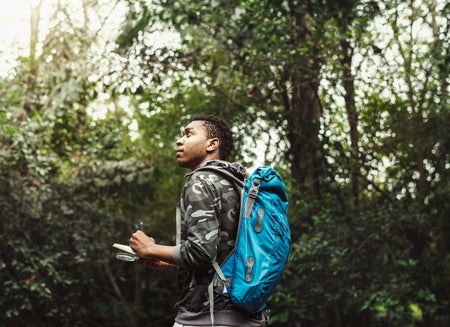
Journalist Bob Hirshon reports from the Taking Nature Black conference, reporter Shahla Farzan talks about tracking copperhead snakes, and nanoscientist Ondrej Krivanek discusses microscopes with subangstrom resolution.
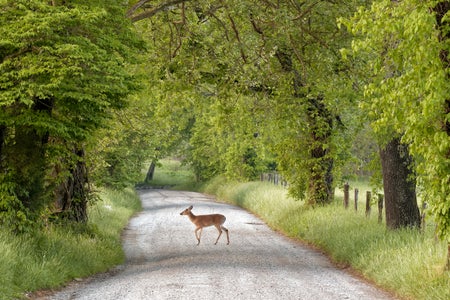
Researchers saw a third fewer vehicle collisions with deer, elk, moose and other large mammals in the four weeks following COVID-19 shutdowns in three states they tracked.
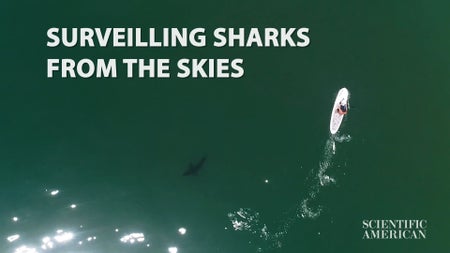
Over the past decade, the number of encounters between humans and sharks swimming off the coast of California has risen dramatically. Chris Lowe, director of the Shark Lab at California State University, Long Beach, says this summer is shaping up to be a major year for these sharks along the state’s 840-mile coastline.
“We’re already seeing a lot of activity, more than we’ve seen in some of the past years,” he says. “This year is looking to be a big season.”
In 2019 Lowe and his team launched an ambitious two-year shark study using drones, buoys and underwater robots with a $3.75-million grant from California. Prior to the new funding, the Shark Lab’s annual budget was between $20,000 and $40,000.
Now the laboratory has dramatically ramped up its efforts in order to better understand how many of the cartilaginous fish are out there and how they interact with people. The researchers are sharing their information with local lifeguards and the public to enhance safety at the beach.
“The goal is to come up with what we'd call an encounter assessment,” Lowe says. “Who is most likely to encounter sharks—and under what conditions? Are sharks attacking aggressively? Are they attracted to people? Are they repelled by people, or do they just ignore people? So we're right in the middle of a two-year study, and hopefully, by the end of this study, we’ll be able to answer those questions.”