EvolutionJuly 13, 2015
Why Red Algae Never Packed Their Bags for Land
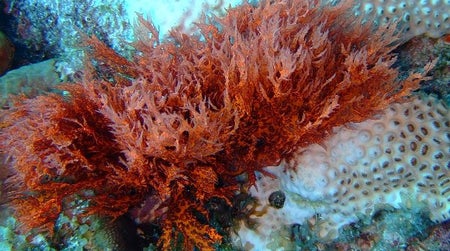
Red algae have shockingly few genes for a multicellular organism - far fewer than a single-celled green alga - and this may explain why they never colonized land.
Why Red Algae Never Packed Their Bags for Land
Red algae have shockingly few genes for a multicellular organism - far fewer than a single-celled green alga - and this may explain why they never colonized land.

Best Male Nightingale Vocalists Make Best Fathers
Male nightingales use singing virtuosity to signal prospective mates that they will be the most doting dads. Sabrina Imbler reports

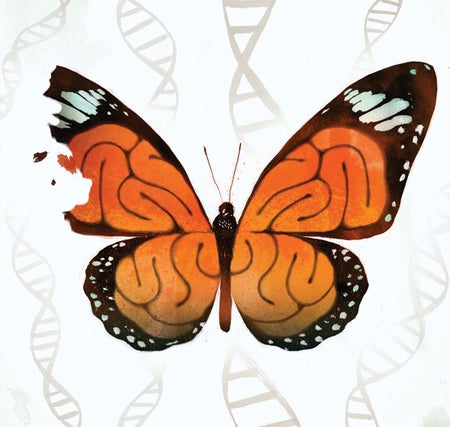
Schizophrenia May Be the Price We Pay for a Big Brain
The disease is linked to genetic changes on the evolutionary road from ape to human

The Richest Reef: Time to Call It a Day
Of the course of nearly 1,200 scientific dives conducted on an expedition to the Philippines' Verde Island Passage, a team from the California Academy of Sciences discovered approximately 100 new species
Bird Literally Weighs Its Food Options
Mexican Jays compare peanuts to determine which one has the most meat inside before choosing one for a meal. Karen Hopkin reports
The Richest Reef: To Collect or Not to Collect?
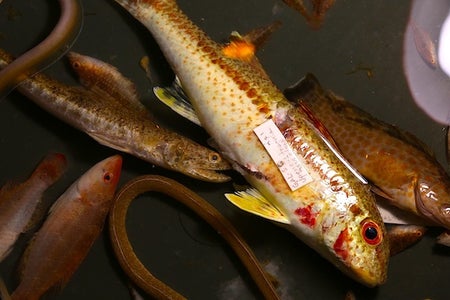
Scientific divers aren’t looking to simply fill their collecting bags—they’re seeking scientific value, data that furthers their understanding of a place or process.
Starfish Show Tracking Tags Who's Boss [Video]
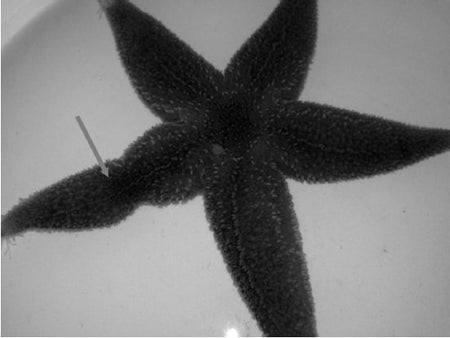
A funny thing happened when two Danish college students injected tracking tags into starfish. The tracking tags kept mysteriously winding up on the bottom of the tank.
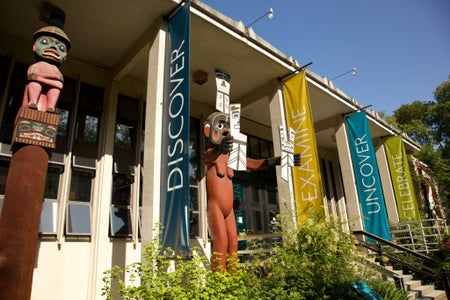
Ancient American Genome Rekindles Legal Row
“Kennewick Man” sequencing points to Native American ancestry
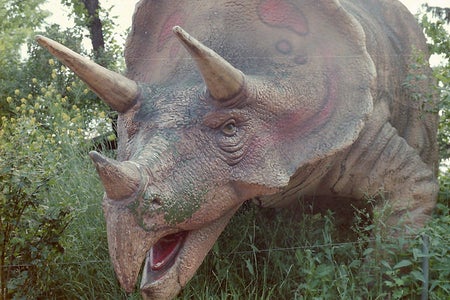
Awesome Dinos, Iffy Science Inhabit Jurassic World
Seven paleontologists weigh in on the science behind the summer blockbuster movie
Ant Smells Like Blue Cheese for a Reason
The "odorous house ant" smells like blue cheese or rotten coconut because it produces chemical compounds similar to those found in its nose-sakes. Cynthia Graber reports

The Most Momentous Year in the History of Paleoanthropology
In an excerpt from his new book Ian Tattersall lays out the story of how a scientific giant in the field of evolution put forth a spectacularly incorrect theory about the diversity of hominids
Wild Chimps Seen Drinking Alcoholic Beverage
In west Africa researchers observed wild chimps seek out and drink fermented tree sap left outside by humans. Karen Hopkin reports