Space & PhysicsJuly 29, 2015
Search for Alien Life Ignites Battle over Giant Telescope
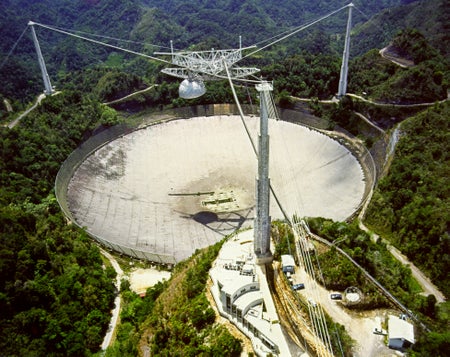
Private funding for the Arecibo Observatory—the largest single-dish radio telescope in the world—may be a poison pill
Search for Alien Life Ignites Battle over Giant Telescope
Private funding for the Arecibo Observatory—the largest single-dish radio telescope in the world—may be a poison pill

Search for Extraterrestrial Intelligence Nets Historic Cash Infusion
With a $100-million donation, billionaire Yuri Milner plans to revolutionize the astronomical quest to find alien life


Dark Matter Dominates Just-Discovered Galaxies
Astronomers have discovered more than 800 so-called "ultradiffuse galaxies" that are virtually invisible because they have relatively few stars and are mostly dark matter. Clara Moskowitz reports
Hubble's Proposed Supersize Successor Generates Controversy
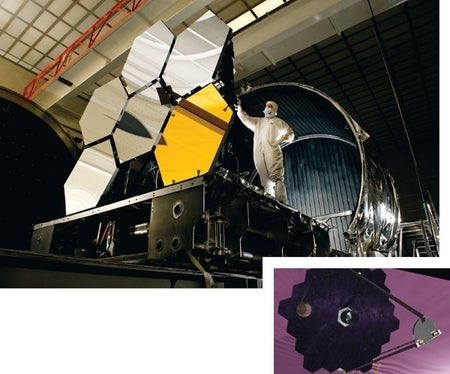
As the legendary space telescope enters its twilight years, astronomers are searching for a replacement, but no one agrees about what it should accomplish
Cosmic Turbulence May Spawn Monster Magnetic Fields
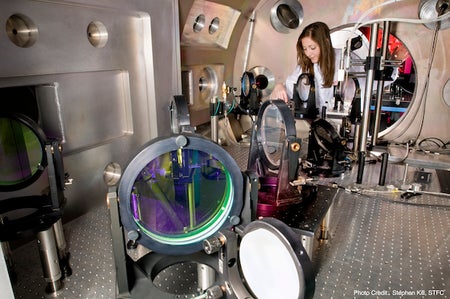
Galactic collisions replicated in the lab help researchers investigate the origins of vastly amplified magnetic fields in the universe
Astronomers Claim to Take First Glimpse of Primordial Stars
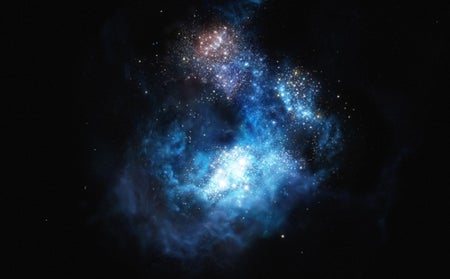
A bright galaxy may hold starts from a generation that seeded the rest of the universe

Making Space for Everyone: A Q&A with BoldlyGo's Jon Morse
NASA’s former director of astrophysics plans to revolutionize space science with agile, privately funded missions
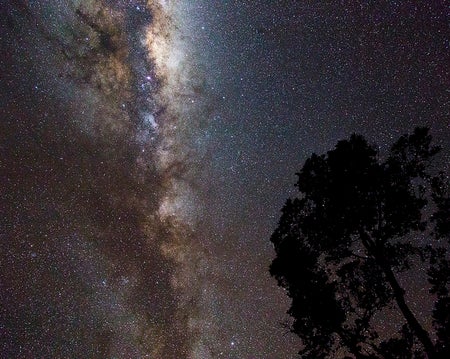
What if Dark Matter Is Stranger Than We Thought? [Video]
The universe’s hidden stuff could be a mirror world of invisible particles and “dark atoms”
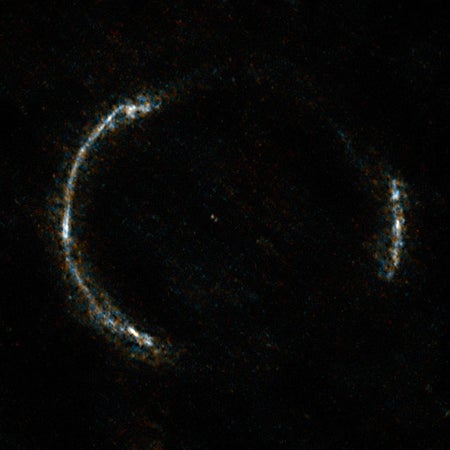
Galaxy-Sized Lens Reveals Star Birth in the Deep Universe
The ALMA telescope array glimpses a far-distant galaxy through an Einstein ring
Frenzy-Feeding Black Hole Makes Galaxy Most Luminous
A galaxy 12.5 billion light-years away gives off the light of 300 trillion suns, because its feeding black hole produces enough heat to set the whole galaxy's dust glowing. Lee Billings reports
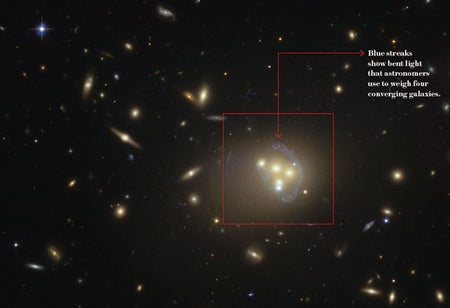
Dark Matter Particles Interact with Themselves
This never-before-seen phenomenon could help explain what comprises dark matter

How Astronomers Discovered the Universe's Hidden Light
Galaxies in every corner of the universe have been sending out photons, or light particles, since nearly the beginning of time. Astronomers are now beginning to read this extragalactic background light