
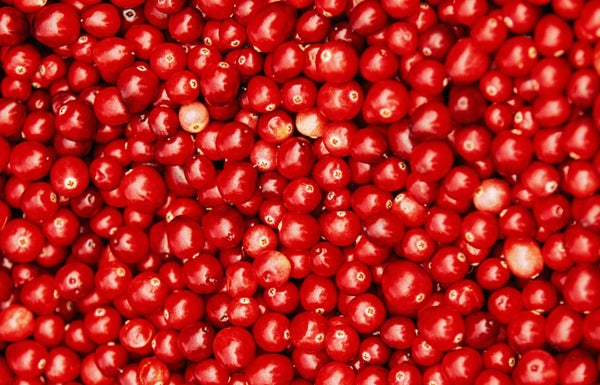

Wisconsin is famous for cheese. But it's also the United States' number-one producer of a tart, red fruit that’s on pretty much every Thanksgiving dinner table.
"We have this reputation of being the dairy state, but cranberries outnumber the cows." Susan Hagness, an electrical engineer at the University of Wisconsin—Madison.
Cranberries, she says, are big business—they’re the official state fruit! And supply chain managers need estimates of the size of the upcoming harvest. Which can be hard to make.
On supporting science journalism
If you're enjoying this article, consider supporting our award-winning journalism by subscribing. By purchasing a subscription you are helping to ensure the future of impactful stories about the discoveries and ideas shaping our world today.
"The current approach for estimating cranberry yield is literally to go out into the field and hand pick and hand count all the cranberries in a one-square-foot area. This is obviously an inefficient and laborious approach. There can be up to 900 berries per square foot."
So scientists from Ocean Spray asked Hagness for help. And she and her team found in lab tests that zapping cranberry plants with microwaves, and then studying the signal that bounces back, might work. Recall that your microwave oven works by exciting water molecules in whatever you’re heating up. Same concept here: microwaves interact differently with plump, juicy cranberries—which contain lots of water—than they do with leaves. The return signal thus provides a good estimate of the number of cranberry clusters in a given plot.
By the way, the microwaves for this application are very low power—on par with the radiation that comes out of a cell phone. "You know we're not cooking the cranberries right there in the field."
The team presented their preliminary results at an IEEE conference earlier this year. [A Haufler et al., Feasibility of Efficient and Accurate Estimation of Cranberry Crop Yield using Microwave Sensing]
Since then they’ve moved from the lab to the bog—they’re currently analyzing data from tests done during this year's crop. If the method holds up, it might give cranberry growers something to be thankful for.
—Christopher Intagliata
[The above text is a transcript of this podcast.]
