

Kristen Choi was flipping through Instagram this summer when she came upon an ad.
“I happened to get an Instagram ad one day for the Pfizer trial.”
The Pfizer trial for the COVID-19 vaccine.
On supporting science journalism
If you're enjoying this article, consider supporting our award-winning journalism by subscribing. By purchasing a subscription you are helping to ensure the future of impactful stories about the discoveries and ideas shaping our world today.
“And it just occurred to me that it was really important for people to volunteer to build the science for these vaccines.”
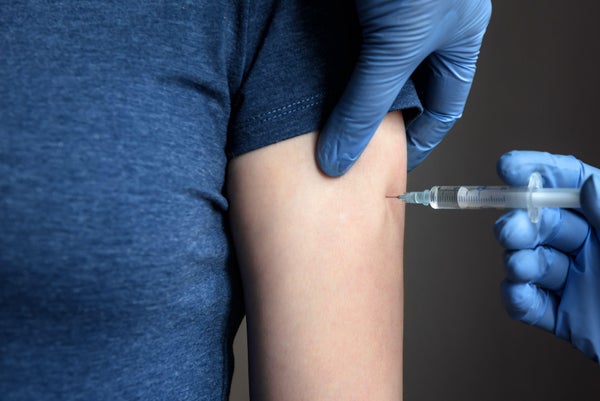
Choi is a nurse and researcher at U.C.L.A. She filled out a form to apply. And in August, she got the first shot.
“I had a long study visit, physical exam, blood tests, other tests, a coronavirus test to make sure I was healthy and able to participate. And then I got the injection the same day.”
That first shot didn’t seem that unusual, she says—a little soreness in her arm. She didn’t know whether she’d gotten the real thing or just a placebo. A month later, she went in for round two.
“The second shot, though, came with a lot more symptoms than I had ever experienced with another vaccine. I developed chills, nausea and headache fatigue a few hours after the vaccine. I was feeling pretty sick that day. I went to bed early and woke up in the middle of the night with a fever.”
The next morning, her fever spiked to nearly 105. Her symptoms matched the side effects of the real vaccine, leading her to believe she’d gotten the real thing.
Later that day, her symptoms subsided. But she became concerned that others might feel similarly sick—and conclude, mistakenly, that the vaccine had given them COVID-19.
“It’s a common myth in America that vaccines can cause diseases rather than prevent them. I see this belief or fear come up with the flu shot. And I think what’s important to communicate with the COVID-19 vaccine is the signals we get from a vaccine—fevers, chills, nausea, muscle pain, all the things I experienced—those are signs our body is learning to fight the virus.”
Choi wrote about her experience in JAMA Internal Medicine. [Kristen R. Choi, A nursing researcher’s experience in a COVID-19 vaccine trial]
She says health care providers like herself should prepare their patients for these possible side effects—and explain why they occur—to avoid the development of misinformation about the vaccine and its effects.
“I also think it goes a long ways to be able to say to patients as a nurse or a health care provider, ‘I’ve taken this vaccine myself, and I think you should, too.’”
As for Choi—she still hasn’t learned whether she got the real thing. But she says being sick for a day is a small price to pay for protection against the virus.
—Christopher Intagliata
[The above text is a transcript of this podcast.]
