
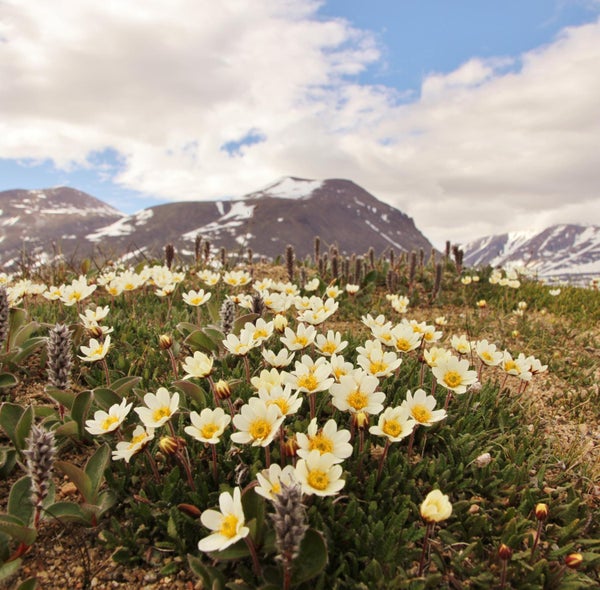

The Greenland High Arctic is a bare, sparse place. Rather than tall trees, it has tundra—ground hugging vegetation—and rugged, Lord-of-the-Rings-style vistas. "Well I don't know, it's not exactly New Zealand, but kind of similar landscape."
Mikko Tiusanen, an ecologist at Helsinki University in Finland. "The winter season is like six, seven months. So everything basically happens during the short summer season." Including the white-yellow bloom of mountain avens, a hardy arctic shrub. "Even though it's small it can be over 100 yrs old. It's pretty good at surviving harsh conditions."
Tiusanen and his colleagues set out to census which of the many local insects visit mountain avens by summer, and help with pollination. So they planted 2100 sticky flower lookalikes, as traps, and identified stuck visitors by their DNA.
On supporting science journalism
If you're enjoying this article, consider supporting our award-winning journalism by subscribing. By purchasing a subscription you are helping to ensure the future of impactful stories about the discoveries and ideas shaping our world today.
Two-thirds of all local insect species visited. But it was one particular fly, a relative of the humble housefly, that showed up most often in those spots where the tundra shrubs had successfully set seed. Meaning more flies appeared to be a good thing for the avens. The study appears in the Proceedings of the Royal Society: B. [Mikko Tiusanen et al, One fly to rule them all—muscid flies are the key pollinators in the Arctic]
Here's the bad news: a 2013 study found that the Arctic flowering season is shortening. The numbers of fly pollinators is down, as is the the number of visits by these fly pollinators. Which could be bad for mountain avens—and beyond. "One could expect that also the other pollinators and flower visitors visiting the mountain avens could get more uncommon and even become extinct in the long run." Meaning "shoo fly" could spell trouble for the life of the tundra.
—Christopher Intagliata
[The above text is a transcript of this podcast.]
