People speak thousands of languages in the world today. And same goes for the bird world.
"Each bird species has effectively its own language." Andy Radford, a professor of behavioral ecology at the University of Bristol. "And there might be similarities between some languages just as there are in the human world. And then there are other languages that sound extremely different, even though they're conveying exactly the same meaning."
In fact some birds are known to pick up on the "language" of other species…in particular, they've learned to detect danger by eavesdropping on the alarm calls of other birds.
On supporting science journalism
If you're enjoying this article, consider supporting our award-winning journalism by subscribing. By purchasing a subscription you are helping to ensure the future of impactful stories about the discoveries and ideas shaping our world today.
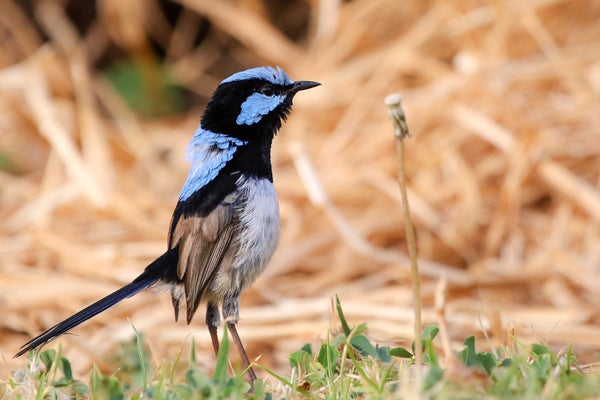
Radford and his colleagues wanted to investigate how that learning occurs. So they first played an alarm call that fairy wrens, an Australian bird, shouldn't be familiar with - a computer-generated alarm call <> meant to mimic a bird's. The unfamiliar sound had no effect on the fairy wrens.
But then the researchers paired the synthetic call with a chorus of alarm calls the wrens would recognize. <> And after this training, the sound of the initially unfamiliar synthetic call alone < was enough to send the birds ducking HA! for cover. The results are in the journal Current Biology. [Dominique A. Potvin et al., Birds Learn Socially to Recognize Heterospecific Alarm Calls by Acoustic Association]
Radford says the study shows birds can learn from their peers, without ever seeing them…or a predator either. "And so I think that's the coolest thing of all, is that you can learn with your eyes shut about something really important in the natural world."
—Christopher Intagliata
[The above text is a transcript of this podcast.]
Subscribe to Support Independent Journalism
Great science journalism requires human expertise, time, effort and creativity. And it costs money. That’s why I and the journalists here at Scientific American hope you’ll join our community.
When you subscribe, you are supporting staff and freelance journalists who are passionate about telling science stories that are true, important and compelling. Our editors and reporters are often experts in their fields, which means they understand the nuances of big discoveries and can untangle the breakthroughs from the hype. With a subscription, you are also supporting rigorous fact-checking to ensure the words we publish are precise and accurate. And you’re supporting original illustrations, graphics and photos that bring you closer to an advanced laboratory, an ice sheet in Antarctica or a space mission in orbit. You’re helping us craft other types of high-quality journalism as well: Our newsletters are carefully written, edited and curated by staffers you have or will come to know and love. Our Science Quickly podcast is based on original reporting, collaboration with editors and scientists and exacting production.
Subscriptions keep this engine running so we can continue to deliver thoughtful, rigorous and independent science journalism to you. In an era of viral misinformation, this work is crucial. If you value what we do, I hope you’ll consider joining us as a subscriber