

Head to the mountains, and if the steep trails don't slow you down, the thin air will. There's less oxygen up there—so strenuous activity can leave you dizzy, out of breath…or worse. But even though you're beat, biochemical processes are already busy at work, acclimating your body.
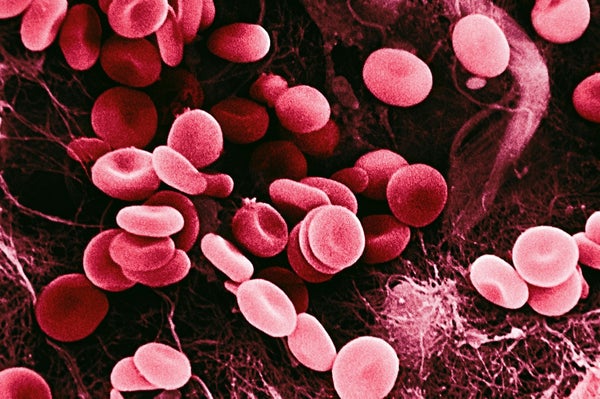
Scientists investigated those pathways in humans and mice. They found that exposure to low oxygen depletes stores of a red-blood-cell protein called eENT1. That's a good thing. Because now other substances that protect your body against low oxygen are free to rapidly accumulate and help the body adapt.
But here's the kicker—once the eENT1 protein goes away, it doesn’t come back. Meaning red blood cells kind of 'remember' their altitude exposure. And that means if you hit the mountains again soon enough, you can acclimate faster than you did the first time. The findings are in the journal Nature Communications. [Anren Song et al., Erythrocytes retain hypoxic adenosine response for faster acclimatization upon re-ascent]
On supporting science journalism
If you're enjoying this article, consider supporting our award-winning journalism by subscribing. By purchasing a subscription you are helping to ensure the future of impactful stories about the discoveries and ideas shaping our world today.
There is one caveat. "In humans the red blood cell lifespan is 120 days." Study author Yang Xia, a biochemist with the UT Health Science Center in Houston. "So the longer you stay at sea level before you re-climb to high altitude, then such memory will gradually disappear." So unless you're a frequent mountain climber—there's really no shortcut to acclimatization. Then again, there's no shortcut to the summit, either.
—Christopher Intagliata
[The above text is a transcript of this podcast.]
