

If you've ever gone snorkeling or scuba diving—you know how peaceful it sounds under there… <
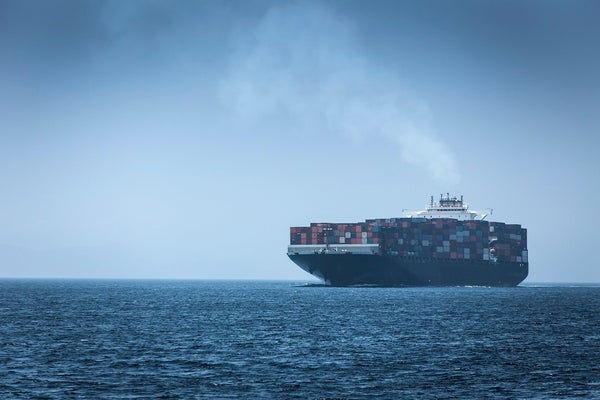
Compare that to a reef with boat traffic. <
And now scientists have found one more side-effect of noise: impaired learning abilities, for fish. The study is in the Proceedings of the Royal Society B. [Maud C. O. Ferrari, School is out on noisy reefs: the effect of boat noise on predator learning and survival of juvenile coral reef fishes]
On supporting science journalism
If you're enjoying this article, consider supporting our award-winning journalism by subscribing. By purchasing a subscription you are helping to ensure the future of impactful stories about the discoveries and ideas shaping our world today.
Researchers started by teaching juvenile damselfish in the laboratory about the predators they'd encounter, once they settled on an Australian reef. The training consisted of injecting the damselfishes' tanks with seawater fouled with both the scent of a predator, and alarm cues from injured damselfish. A message that, hey, this predator smell? It means dead friends. Maybe dead you.
To reinforce that lesson, they also lowered ziploc bags with the predators themselves into the damselfish's tanks, together with the scents, to teach them: these guys are your enemies.
They conducted all this training to a soundtrack of peaceful reef sounds <
"It appeared that the presence of boat noise was interfering with the learning process. So when later on we said 'hey, here's a predator, are you scared?' they didn't respond."
Maud Ferrari, a behavioral ecologist at the University of Saskatchewan. She says same thing held true in the real world, too, once they released the fish. Three days later, two thirds of the quiet-trained fish were still alive. Compared to only 20 percent of the fish trained with the boat noise backdrop…the same severe mortality rate suffered by fish with no training at all.
The silver lining, Ferrari says, is boat noise is a stressor that local legislators can actually regulate. "You want to change the environment, slow down the warming, the acidification, but it's really out of our hands, you know what I mean? The results we found with noise pollution, what is nice is it's one of those stressors we can actually control."
So that young fish can learn their lessons. Alone or in schools.
—Christopher Intagliata
[The above text is a transcript of this podcast.]

