
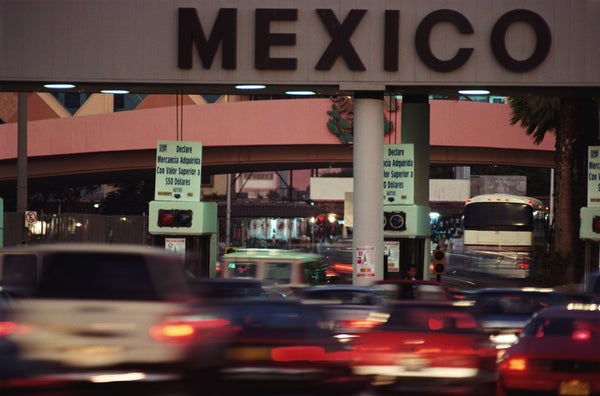

The U.S.–Mexico border is a hotspot for biodiversity. "You have deserts, you have grasslands, you have mountain ranges." Paul Ehrlich, an evolutionary biologist and ecologist at Stanford. "It is a borderland between the temperate zone and the tropics."
The border is also—if the Trump administration has its way—a future construction zone, the site of an expanded wall. Which Ehrlich, and more than 2,500 scientists from around the world, say could threaten some 1,500 native plants and animals along the border, 62 of which are endangered.
"When you build barriers you first-of-all prevent organisms from migrating in response to the climate change we're causing. That leads to extinctions. We also divide populations which then makes them smaller and more susceptible to extinction. And we of course destroy them directly by wrecking their habitat."
On supporting science journalism
If you're enjoying this article, consider supporting our award-winning journalism by subscribing. By purchasing a subscription you are helping to ensure the future of impactful stories about the discoveries and ideas shaping our world today.
The species at risk include bighorn sheep, gray wolves, pronghorn antelope and jaguars. Even low-flying creatures could be blocked by a 30-foot wall, he says… like the ferruginous pygmy-owl and the endangered checkerspot butterfly.
"The butterflies pretty much won't fly over a five-to-10-foot bush. They're organisms that are used to flying in grasslands. And they view forest or bushlands as barriers." The article by Ehrlich, colleagues and scientist signatories is in the journal BioScience. [Peters et al., Nature Divided, Scientists United: U.S.-Mexico Border Wall Threatens Biodiversity and Binational Conservation]
As for whether President Trump will read their article?
"I think he's got other problems at the moment."
—Christopher Intagliata
[The above text is a transcript of this podcast.]

