
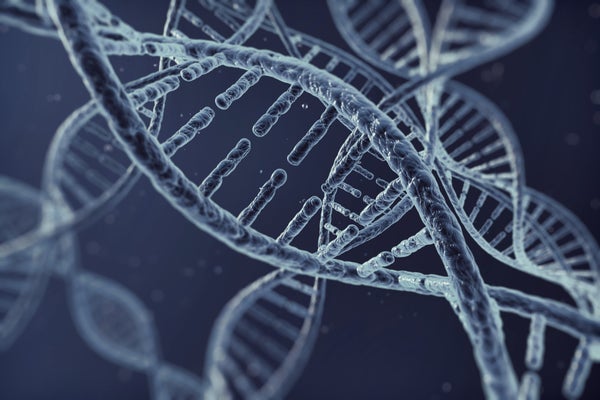

Our smartphones, tablets, laptops—they all compute things electronically. But, think outside that silicon box for a second: "There's nothing special about electrons and using silicon as part of computing." Chris Voigt, a bioengineer at M.I.T.. "You can do computing with any number of things." Including, he says, DNA.
"Cells do computing all the time. So they're constantly trying to interpret their environment and be able to turn on different genes and respond to it." And those genes in a cellular circuit are like the logic gates, the memory, and other systems found in conventional computers.
So Voigt and his colleagues created what he calls the first human-made "programming language" for living cells. It’s an open-source design environment called "Cello." Just write what you want the cell to do, and Cello spits out the DNA sequence—as if you were compiling code. The researchers used the platform to design 60 genetic circuits, which they then ran inside E. coli bacteria. Many of these DNA-based circuits allow bacteria to sense environmental data - like levels of oxygen or glucose in the gut - and respond in various ways. They detail the findings in the journal Science. [Alec A. K. Nielsen et al, Genetic circuit design automation]
On supporting science journalism
If you're enjoying this article, consider supporting our award-winning journalism by subscribing. By purchasing a subscription you are helping to ensure the future of impactful stories about the discoveries and ideas shaping our world today.
Not all the circuits worked as intended. A quarter of them failed, and some were toxic to the cells. But the idea is to make cellular circuit design easier—and more approachable—to creative people. "When I was a graduate student I had a computer file for Microsoft Word that had all my favorite pieces of DNA. And I would have to sit there and stitch it together and try to remember how each one worked, and constantly run programs to try to look for mistakes."
Cello takes care of all that. And now, Voigt says, biology is right about where electrical engineering was in the early 80s: ready for a computing revolution.
—Christopher Intagliata
[The above text is a transcript of this podcast.]
