
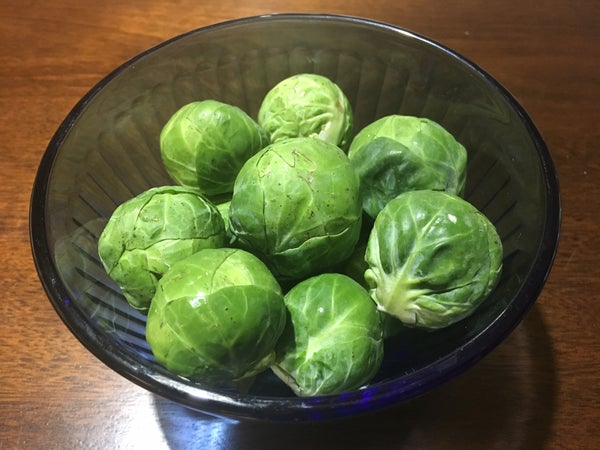

Thanksgiving is, of course, really all about the side dishes. And alongside mashed potatoes and yams, Brussels sprouts are a common side on many Thanksgiving tables. Not that they're equally appreciated. But science is here to save turkey day, with a way to mitigate the sprouts' intense, slightly bitter flavor: take swigs of red wine as you eat 'em.
Like any human research study, or perhaps more importantly for one in which you'll be forcing people to eat Brussels sprouts, the project started off with approval from an ethics committee.
Researchers then served 28 volunteers slices of microwaved Brussels sprouts, and asked them to rate the intensity or bitterness of their flavor on a scale of 1 to 10. They then alternated their bites with red wine, gravy, and bottled water. And rated the flavor again.
On supporting science journalism
If you're enjoying this article, consider supporting our award-winning journalism by subscribing. By purchasing a subscription you are helping to ensure the future of impactful stories about the discoveries and ideas shaping our world today.
Turns out, the subjects scored the sprouts as significantly less intense after a sip of wine: 3.5 out of 10, compared to 5.5. Maybe, the scientists write, because the astringency of wine interferes with saliva's ability to deliver bitter flavor molecules to the taste buds.
The results are in the Journal of Texture Studies…a real publication. [Guy Carpenter et al., Wine astringency reduces flavour intensity of Brussels Sprouts]
Unfortunately for the kids at the table, gravy and water did not do the taste trick. But for adults who choose to use this Thanksgiving hack—please imbibe responsibly. Though I don't imagine you'll be eating that many Brussels sprouts.
—Christopher Intagliata
[The above text is a transcript of this podcast.]
