Earlier Springs May Mean Mistimed Bird Migrations

Springtime's arriving earlier across North America. But the degree of change isn't the same everywhere, which could spell trouble for migratory birds. Christopher Intagliata reports. 

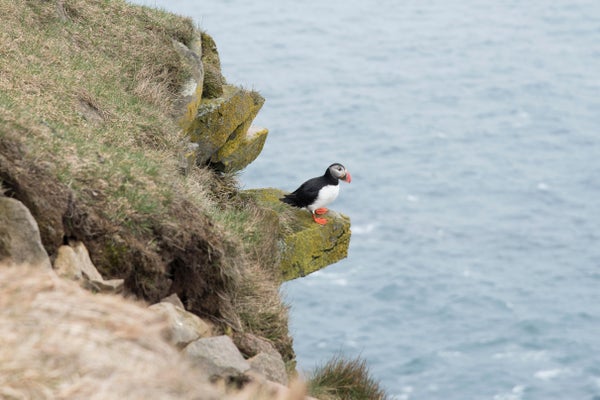
Atlantic puffin.

Illustration of a Bohr atom model spinning around the words Science Quickly with various science and medicine related icons around the text

Join Our Community of Science Lovers!

Climate change means springtime's arriving earlier across North America. But the season's onset isn't changing at the same rate across the nation.

"Spring is not advancing as quickly in southern regions as it is in northern regions." Eric Waller, a biogeographer at the U.S. Geological Survey. 

He and his team analyzed more than a hundred years of data on when the first leaves and flowers emerge across North America. And they found that although spring has sprung earlier nearly everywhere, in certain wildlife refuges, the season hits extremely early. 


On supporting science journalism

If you're enjoying this article, consider supporting our award-winning journalism by subscribing. By purchasing a subscription you are helping to ensure the future of impactful stories about the discoveries and ideas shaping our world today.


And that mismatch could be a problem for migratory birds, who might leave their temperate overwintering grounds down south at the usual time, only to find they've arrived up north too late. "Their food resources might be withering and they might not have as much food available to them. And that could affect their reproduction, their breeding."

The analysis is in the journal PLOS ONE. [Eric K. Waller et al., Differential changes in the onset of spring across US National Wildlife Refuges and North American migratory bird flyways

The upshot: it may be more difficult than we thought to predict the effects of climate change on migratory birds. But the data might help land managers decide which plots of land to acquire, to augment existing reserves—and in doing so, ensure that even later birds still get the worm.

—Christopher Intagliata

[The above text is a transcript of this podcast.]

It’s Time to Stand Up for Science

If you enjoyed this article, I’d like to ask for your support. Scientific American has served as an advocate for science and industry for 180 years, and right now may be the most critical moment in that two-century history.

I’ve been a Scientific American subscriber since I was 12 years old, and it helped shape the way I look at the world. SciAm always educates and delights me, and inspires a sense of awe for our vast, beautiful universe. I hope it does that for you, too.

If you subscribe to Scientific American, you help ensure that our coverage is centered on meaningful research and discovery; that we have the resources to report on the decisions that threaten labs across the U.S.; and that we support both budding and working scientists at a time when the value of science itself too often goes unrecognized.

In return, you get essential news, captivating podcasts, brilliant infographics, can't-miss newsletters, must-watch videos, challenging games, and the science world's best writing and reporting. You can even gift someone a subscription.

There has never been a more important time for us to stand up and show why science matters. I hope you’ll support us in that mission.

Thank you,

David M. Ewalt, Editor in Chief, Scientific American

Subscribe