Election Science Stakes: Energy

Scientific American senior editor Mark Fischetti and associate editor Andrea Thompson talk about this election and the future of U.S. energy research and policy.

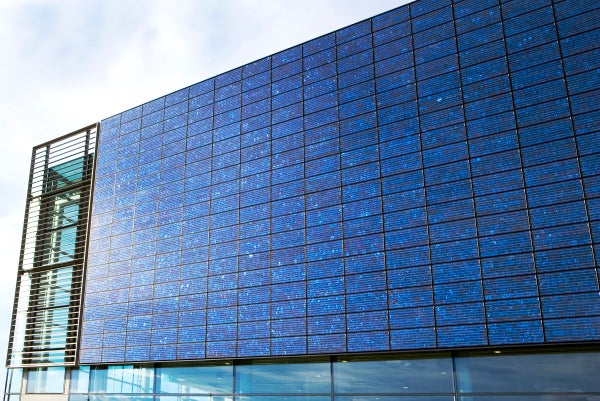
Wall of solar panels on a building in Manchester, England.

Illustration of a Bohr atom model spinning around the words Science Quickly with various science and medicine related icons around the text

Join Our Community of Science Lovers!

Steve Mirsky: For this energy installment of our pre-election podcast series I spoke once again to Scientific American editors Mark Fischetti and Andrea Thompson.

SM: What's at stake in this election in terms of energy in this country?

Mark Fischetti: So I think there's two things, Steve. One is oil. On October 27, the U.S. Department of Interior approved a huge oil development project in western Alaska by ConocoPhillips. So that's clearly where the current administration is happy to go. The other issue is electricity. Will it continue to be built on fossil fuels or more so on renewable energy? And I think there's a lot of interesting state races that have some bearing in that too.


On supporting science journalism

If you're enjoying this article, consider supporting our award-winning journalism by subscribing. By purchasing a subscription you are helping to ensure the future of impactful stories about the discoveries and ideas shaping our world today.


SM: That's a good point, because we're not just talking about the presidential election. We're talking about the election in general.

Andrea Thompson: It's an interesting area, because the President and Congress can shape things to a large degree. But then there are also market forces that come into play that can counteract things he's trying to do. So despite during the first four years of the Trump administration, this push towards fossil fuels and to boost them, we still see renewables really surge in their use, and they’ve become comparatively cheaper, especially compared to coal. And that's really happened in spite of any efforts the Trump administration has made, because of technological developments, because companies are moving in that direction regardless of what the administration wants to do. So that will kind of complicate or mitigate what could happen in the next four years.

SM: What can the government do to nudge that market selection pressure one way or the other.

AT: So besides allowing for fossil fuel development on public lands, which the federal government controls, and there's hundreds of millions of acres of public lands in the U.S, they also can affect it through things like tariffs and subsidies. So one thing President Trump has indicated he wants to do is to increase tariffs on solar panels. And so that could actually impact the solar power market. And that's partly been for trade reasons, not necessarily energy-specific reasons, that he's done that. But that, you know, that adds to the cost and makes it a little bit harder for them to compete.

MF: By the way, I would add that, you know, there are still subsidies to this day for oil and natural gas. They're hardly new technologies. It really does change the equation because there are plenty of studies that show purely on cost and energy delivery that renewables—wind and solar—are actually cheaper than many fossil fuels, but they don't stay cheaper if fossil fuels have subsidies.

SM: So what's the story on fracking right now?

AT: Generally, following the Trump administration general pro-fossil-fuel stance they are for allowing fracking on on federal lands and new leases Whereas the Biden position has been that they would discontinue new leases, although leases that are already established would be allowed. And then those don't impact any fracking on private land. So it’s a little bit of a mixed bag.

—Steve Mirsky

(The above text is a transcript of this podcast)

Andrea Thompson is senior desk editor for life science at Scientific American, covering the environment, energy and earth sciences. She has been covering these issues for nearly two decades. Prior to joining Scientific American, she was a senior writer covering climate science at Climate Central and a reporter and editor at Live Science, where she primarily covered earth science and the environment. She has moderated panels, including as part of the United Nations Sustainable Development Media Zone, and appeared in radio and television interviews on major networks. She holds a graduate degree in science, health and environmental reporting from New York University, as well as a B.S. and an M.S. in atmospheric chemistry from the Georgia Institute of Technology. Follow Thompson on Bluesky @andreatweather.bsky.social

More by Andrea Thompson

Mark Fischetti was a senior editor at Scientific American for nearly 20 years and covered sustainability issues, including climate, environment, energy, and more. He assigned and edited feature articles and news by journalists and scientists and also wrote in those formats. He was founding managing editor of two spin-off magazines: Scientific American Mind and Scientific American Earth 3.0. His 2001 article “Drowning New Orleans” predicted the widespread disaster that a storm like Hurricane Katrina would impose on the city. Fischetti has written as a freelancer for the New York Times, Sports Illustrated, Smithsonian and many other outlets. He co-authored the book Weaving the Web with Tim Berners-Lee, inventor of the World Wide Web, which tells the real story of how the Web was created. He also co-authored The New Killer Diseases with microbiologist Elinor Levy. Fischetti has a physics degree and has twice served as Attaway Fellow in Civic Culture at Centenary College of Louisiana, which awarded him an honorary doctorate. In 2021 he received the American Geophysical Union’s Robert C. Cowen Award for Sustained Achievement in Science Journalism. He has appeared on NBC’s Meet the Press, CNN, the History Channel, NPR News and many radio stations.

More by Mark Fischetti

Steve Mirsky was the winner of a Twist contest in 1962, for which he received three crayons and three pieces of construction paper. It remains his most prestigious award.

More by Steve Mirsky

It’s Time to Stand Up for Science

If you enjoyed this article, I’d like to ask for your support. Scientific American has served as an advocate for science and industry for 180 years, and right now may be the most critical moment in that two-century history.

I’ve been a Scientific American subscriber since I was 12 years old, and it helped shape the way I look at the world. SciAm always educates and delights me, and inspires a sense of awe for our vast, beautiful universe. I hope it does that for you, too.

If you subscribe to Scientific American, you help ensure that our coverage is centered on meaningful research and discovery; that we have the resources to report on the decisions that threaten labs across the U.S.; and that we support both budding and working scientists at a time when the value of science itself too often goes unrecognized.

In return, you get essential news, captivating podcasts, brilliant infographics, can't-miss newsletters, must-watch videos, challenging games, and the science world's best writing and reporting. You can even gift someone a subscription.

There has never been a more important time for us to stand up and show why science matters. I hope you’ll support us in that mission.

Thank you,

David M. Ewalt, Editor in Chief, Scientific American

Subscribe