
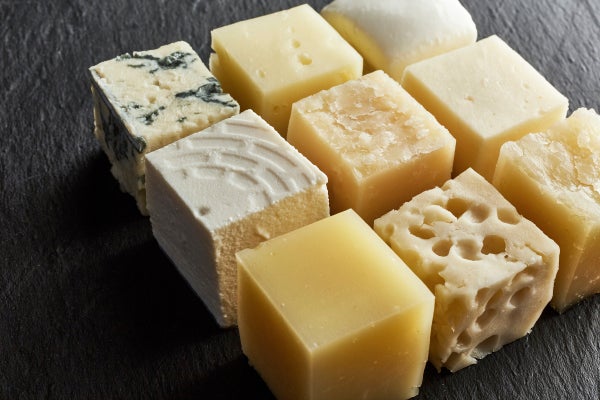

Aged cheeses like Camembert or Taleggio produce a powerful stench: the funk of cabbage, mushrooms, sulfur, even smelly feet.
“And those aromas are chemicals that are being kicked off, being emitted by the cheese, and that’s through the microbes that are living in the rind, as they slowly decompose the cheese.”
Benjamin Wolfe is a microbiologist at Tufts University. He says in addition to alerting our noses to the cheese, the aromas produced by certain microbes living in and on the cheese can feed and sculpt other members of the microbial garden living on the cheese.
On supporting science journalism
If you're enjoying this article, consider supporting our award-winning journalism by subscribing. By purchasing a subscription you are helping to ensure the future of impactful stories about the discoveries and ideas shaping our world today.
Wolfe and his colleagues identified the microbial interactions by growing various cheese-dwelling fungi and bacteria in separate but adjacent dishes in the lab. The microbes couldn’t touch—they could interact only via the volatile compounds they released.
“When we did this screen, we quickly noticed there was this one bacterium, a Vibrio species, that really loved living in the aromas produced by the various fungi that you find in a typical wheel of camembert.”
Wolfe says the Vibrio bacteria may be able to actually eat the aromas—which, after all, consist of chemical compounds. And the odor of the cheese may also switch on certain genetic pathways in the bacteria—pathways that regulate the bacteria’s ability to thrive in harsh conditions.
“It’s a backup plan: when things aren’t going well, and you’re starving, you can turn on this other pathway and still make a living but on these less ideal substrates that are around.”
The end result is that the stench we perceive may also shape the microbiome of the cheese. The results appear in the journal Environmental Microbiology. [Casey M. Cosetta et al., Fungal volatiles mediate cheese rind microbiome assembly]
As for the practical outcomes of this research—well, it’s a little early for that.
“We don’t necessarily do our science to make cheese better. Honestly, a lot of it is to figure out how cheese works.”
In other words, he says, the tools of modern microbiology allow scientists to finally listen in to the conversations happening in these tiny cheese-rind communities.
—Christopher Intagliata
[The above text is a transcript of this podcast.]
