
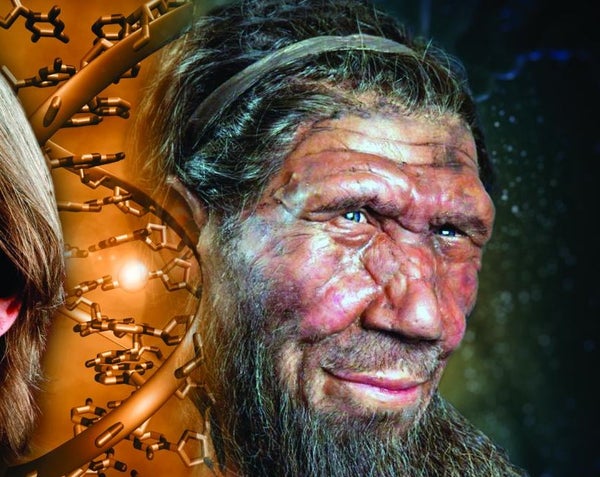

Health care isn't just a benefit of the modern human age. It goes way back. All the way, even, to the Neandertals.
"We imagine they would have been cleaning wounds, dressing wounds." Penny Spikins, a paleolithic archaeologist at the University of York in the U.K. "They may have used things like splints when you've got broken limbs. We know they had some forms of painkillers."
And they most likely needed them. Because remains of Neandertals show that most individuals seem to have suffered a serious injury at least once. The key detail being that those injuries didn't always kill them.
On supporting science journalism
If you're enjoying this article, consider supporting our award-winning journalism by subscribing. By purchasing a subscription you are helping to ensure the future of impactful stories about the discoveries and ideas shaping our world today.
Spikins and her team catalogued more than 30 cases of Neandertals who'd been injured but didn't die of their wounds, to investigate the pattern of health care in premodern humans. And they concluded that health care may have been key to their colonizing extreme environments, and pursuing dangerous prey, like mammoths and woolly rhinos.
"Health care wasn't just something cultural for Neandertals. It also performed an ecological function. It allowed them to punch above their weight as a predator."
Their conclusions are in the journal Quaternary Science Reviews. [Penny Spikins et al., Living to fight another day: The ecological and evolutionary significance of Neanderthal healthcare]
And the results are one more reminder that Neandertals shared many of the qualities we think of as human. Except, of course, that they never made it out of the Pleistocene.
—Christopher Intagliata
[The above text is a transcript of this podcast.]
