

If you watch nature documentaries, it’s easy to come away with the impression that lush tropical forests have been largely undisturbed until modern times.
“Tropical forests have sort of long been considered to be these pristine wildernesses that humans haven’t really touched until recent industrial forces have started to invade them and challenge them with 21st-century capitalism.”
Archaeological scientist Patrick Roberts of the Max Planck Institute for the Science of Human History.
On supporting science journalism
If you're enjoying this article, consider supporting our award-winning journalism by subscribing. By purchasing a subscription you are helping to ensure the future of impactful stories about the discoveries and ideas shaping our world today.
“However, in the last two decades, archaeological data have shown that, actually, human societies have occupied and modified these environments over many millennia.”
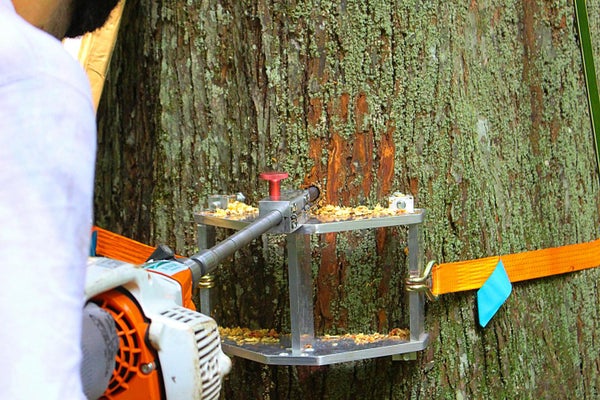
Roberts says some of the trees alive in tropical forests are up to a thousand years old. And they’re sort of like time capsules, storing a record of past human activity in their tree rings, chemistry and DNA.
“So we wanted to see how different existing methods might come together to explore past tree populations, tree growth, tree ages by looking at the largest witnesses of the changes in human activity in the tropics—the trees themselves.”
For example, indigenous peoples of the Amazon basin cultivated Brazil nuts for thousands of years. Roberts’s colleague Victor Caetano-Andrade analyzed tree rings to determine the age and growth rates of Brazil nut trees near the city of Manaus. He found that many trees were established in the late 1600s, but there was a steep drop-off in new trees around the middle of the 18th century.
“As colonial communities came into Manaus and developed the city, they drove indigenous people out, often killing them. And what Victor found is that, actually, their growth slowed after this period without these traditional management strategies. So these Brazil nut trees that were still standing near Manaus are actually affected by these pre- and postcolonial changes in human settlement and activity.”
Another example is how communities selected for genetic traits in a variety of tropical trees, such as the cocoa tree—used, of course, to make chocolate.
“A more detailed full genome analysis of this plant has shown that humans may have even selected genes that reduced bitterness and improved its resistance to disease for their own economic benefit.”
The study is in the journal Trends in Plant Science. [Victor Lery Caetano-Andrade et al., Tropical trees as time capsules of anthropogenic activity]
Roberts says recognizing tropical trees as time capsules of cultural heritage gives us yet another reason to protect them.
“Not just because of their ecological benefits, which are hugely significant, but also the information that they store about human history, about our past.”
—Susanne Bard
[The above text is a transcript of this podcast.]
