

Nature documentaries are known for their sweeping natural vistas, their amazing footage—seriously, how did they get that shot?—and, often, the soothing baritone of Sir David Attenborough.
[CLIP: Attenborough clip]
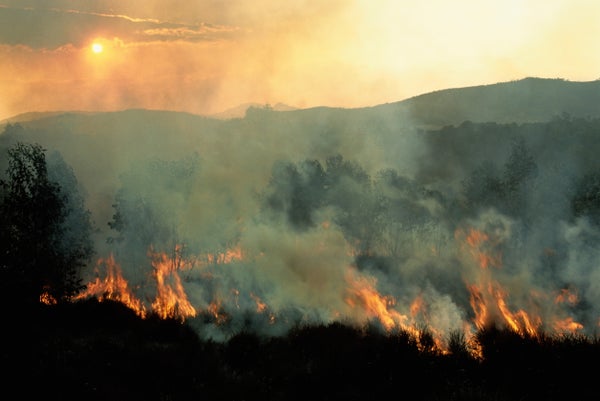
What those documentaries don’t do, though, is show the realities of environmental destruction.
On supporting science journalism
If you're enjoying this article, consider supporting our award-winning journalism by subscribing. By purchasing a subscription you are helping to ensure the future of impactful stories about the discoveries and ideas shaping our world today.
“Historically, particularly BBC documentaries have shied away from that.”Niki Rust is an environmental social scientist at Newcastle University in the U.K.
Rust studied work by the BBC and by the World Wildlife Fund, which had teamed up with Netflix to make what they said would be a whole new kind of production. “They wanted it to reach a billion people, and it was going to revolutionize nature documentaries.” (Except for the fact, maybe, that Attenborough would be the narrator.)
The Netflix series, Our Planet, aimed to be different, because it promised to reveal the threats facing wildlife and the natural world. So did it deliver?
Rust and her colleagues analyzed scripts of Our Planet, along with three recent BBC series—Planet Earth II, Dynasties, and Blue Planet II—and logged everything they saw on-screen.
Turns out, “Our Planet only talks about threats and successes a little bit more than Blue Planet II.” Fifteen percent of the script focused on the woes of the natural world. But very little devastation was actually shown on screen—despite being filmed.
The analysis is in the journal People and Nature. [Julia P. G. Jones et al., Nature documentaries and saving nature: reflections on the new Netflix series Our Planet]
“The lead author of the study, Julia Jones, was in Madagascar at the time, when Netflix was there filming. She knows they were filming the destruction of habitat and burning and lots of environmental devastation. They’ve got the footage. It just, unfortunately, wasn’t chosen to be included."
It’s not clear if that's really a bad thing, though—we still don’t really know whether showing environmental tragedies on-screen motivates people to support conservation. But what climate change communication has taught us, Rust says, is that the ideal way to motivate audiences is with optimism—tinged with trepidation.
—Christopher Intagliata
[The above text is a transcript of this podcast.]
