
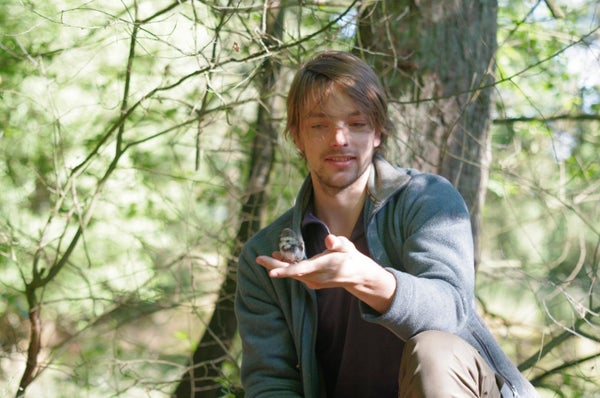

Birds in Europe have the same problem as residents of cities like New York and L.A.: a housing crisis. Not enough nest space to go around. For a species called pied flycatchers that migrate from west Africa, things can get be deadly if they end up nesting in the wrong spot.
"There's no chance for them." Jelmer Samplonius is a climate change ecologist at the University of Edinburgh. He says the flycatchers face fearsome foes, in the form of bigger resident songbirds, called great tits. "The great tit basically splits open the skull at the back and eats the brain. That's the gist of it."
Samplonius and his colleague Christiaan Both recorded more than a decade's worth of those conflicts in nearly a thousand nest boxes in the Dutch countryside. They determined that warmer winters can boost resident great tit numbers—increasing the chance of flycatcher slaughter.
On supporting science journalism
If you're enjoying this article, consider supporting our award-winning journalism by subscribing. By purchasing a subscription you are helping to ensure the future of impactful stories about the discoveries and ideas shaping our world today.
But warmer springtime temperatures can throw the two species' nesting times out of sync—actually reducing deadly conflict. In addition, over the past 30 years, male flycatchers seem to be arriving earlier and earlier, regardless of springtime temperature trends. In other words: "It's complex."
But the upshot is that conflicts between the birds are on the rise, when some of these shifting factors align. And when they do, as many as one in ten male flycatchers can die at the claws of great tits. The death tolls are in the journal Current Biology. [Jelmer M. Samplonius and Christiaan Both, Climate Change May Affect Fatal Competition between Two Bird Species]
The bloodbath doesn't seem to be affecting the overall flycatcher population…yet. Perhaps because the victims are primarily late-arriving males, destined to fail at the mating game. But Samplonius says if climate change increases the numbers of resident birds, the migrants could increasingly arrive at their breeding grounds, and find an eviction notice…, or worse, a literally head-splitting situation.
—Christopher Intagliata
[The above text is a transcript of this podcast.]
