
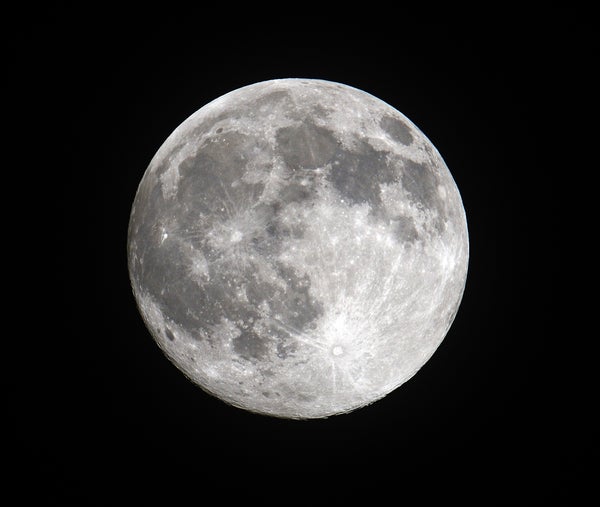

On March 27th, 1964, a huge earthquake struck the Prince William Sound, off the coast of Alaska. <
The quake is the second most powerful ever recorded, at 9.2 on the Richter scale, and it killed more than a hundred people. And just like the devastating Sumatra quake of 2004…or the Chilean quake in 2010…the great Alaska earthquake struck right around the time of the full moon. Coincidence?
In 2016 Japanese researchers concluded that large earthquakes might indeed be more likely to occur during times of significant tidal stress… when it's either a new or full moon. And the news rumbled through the media, despite the study's small sample size, of just a dozen large quakes.
On supporting science journalism
If you're enjoying this article, consider supporting our award-winning journalism by subscribing. By purchasing a subscription you are helping to ensure the future of impactful stories about the discoveries and ideas shaping our world today.
Now seismologist Susan Hough of the U.S. Geological Survey has done a much larger analysis. She plotted more than 200 big quakes—magnitude 8.0 or above—over the past four centuries, looking to see if they were more likely to strike on certain days of the year, or during key phases of the moon. The answer, neatly summed up in the study's one-word abstract? "No."
The study is in the journal Seismological Research Letters. [Susan E. Hough, Do Large (Magnitude ≥8) Global Earthquakes Occur on Preferred Days of the Calendar Year or Lunar Cycle?]
That's not to say we don't know of certain factors that actually do increase the risk of quakes. Hough says the ground injection of wastewater, oil and gas production, fracking, and damming up waterways can in some cases cause quakes. Just don't blame it on the moon.
—Christopher Intagliata
[The above text is a transcript of this podcast.]
