

Just below the Arctic Circle in northern Sweden sits a town called Överkalix. It’s home to only about a thousand people. But those inhabitants were the subjects of a seminal study in human genetics: the research suggested that what our parents, or even grandparents ate—if they grew up during feast or famine—could actually affect our risk of heart disease and diabetes.
"It shows that either caloric restriction or excess of food, can send, depending on the window of your own development, a similar message to the next generation." Romain Barres, a molecular biologist at the University of Copenhagen.
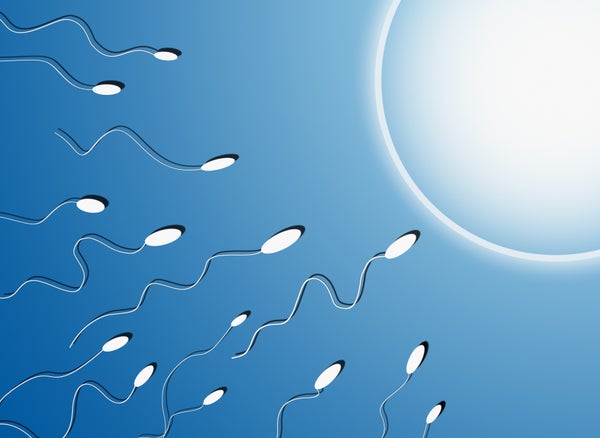
That trans-generational message is sent, of course, through sperm and eggs. So Barres and his colleagues compared the sperm of 13 lean versus 10 obese men. And they found that the heavyweights had epigenetic changes to their sperm—meaning additional chemical groups on their DNA that affect how genes are expressed. And many of those changes were to sequences known to affect brain development—including genes that regulate appetite.
On supporting science journalism
If you're enjoying this article, consider supporting our award-winning journalism by subscribing. By purchasing a subscription you are helping to ensure the future of impactful stories about the discoveries and ideas shaping our world today.
But the changes were not permanent. Because when the researchers studied the sperm of men who underwent weight loss surgery, they found that many of those genetic alterations reversed post-surgery, especially the ones in areas related to appetite control. The study is in the journal Cell Metabolism. [Ida Donkin et al, Obesity and Bariatric Surgery Drive Epigenetic Variation of Spermatozoa in Humans]
The big question now is how much these epigenetic changes actually influence the next generation. Barres is now comparing fathers' sperm to the cord blood of their babies, to find out. But the finding suggests a mechanism by which our actions, our eating habits, our fitness, can affect our children. Which might make you wonder: what should you be eating?
"And how long should you be doing pushups before you conceive your child? It's a long road before what we know is optimal for our children."
And what may seem optimal today—like partaking of holiday feasting—may come back to haunt your children's children, like the ghost of Christmas past.
—Christopher Intagliata
[The above text is a transcript of this podcast.]
