

Pregnancy brings big physical changes to a woman's body. But what three neuroscientists were more interested in was, what does it do to the woman’s brain? "We were in our 30s, and we were thinking I'd like to have a baby, but look at this, look at this." Susana Carmona, a neuroscientist at the University of Carlos the Third in Madrid.
"And then we realized most of this data came from animal studies. And that there were no solid studies about what really happens to your brain when you get pregnant. And that's how we convinced the boss we should do that even without any funding at this point."
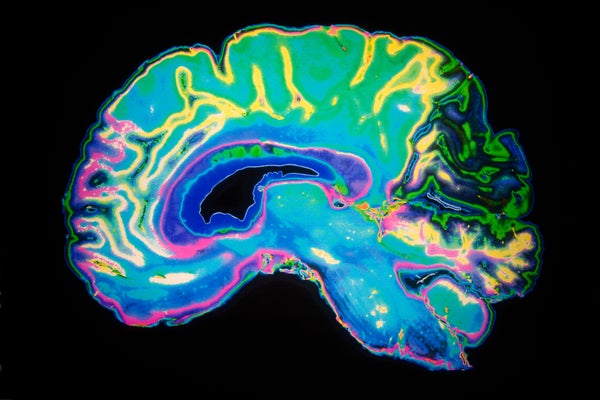
Carmona and her team took MRI scans of 25 women's brains, before and after their first child. They found that parts of the brain dealing with social cognition actually shrunk—reduced in volume—in women who successfully conceived and had kids. That's compared to no changes among control women, and no changes in men—whether they were new fathers or not.
On supporting science journalism
If you're enjoying this article, consider supporting our award-winning journalism by subscribing. By purchasing a subscription you are helping to ensure the future of impactful stories about the discoveries and ideas shaping our world today.
Shrinking sounds bad though: why would you want less grey matter? But Carmona says less does not result in deficits in thinking or memory, and might actually be the result of a good thing: the fine-tuning of connections between neurons. "When you have a lot of routes that arrive to a different place, and there's one that is the shorter and the faster one, the optimal thing would be to close the rest so you never get lost, from point A to point B."
Hormonal fluxes cause similar fine-tuning in the adolescent brain—and hormones might be the culprit for these changes as well. Changes that can last at least two years after pregnancy. The study is in the journal Nature Neuroscience. [Elseline Hoekzema et al., Pregnancy leads to long-lasting changes in human brain structure]
The effect of all this? Could be a boost in maternal attachment. Fewer hostile feelings towards the baby, and more pleasure playing together. As for Carmona and her two colleagues? They decided not to wait til the study was complete to start their families. "We decided that whatever happens to your brain, we wanted to be mothers."
—Christopher Intagliata
[The above text is a transcript of this podcast.]
