

For a long time, archaeologists have dug for the shiny stuff, the sorts of artifacts that belong in museums. "They like pots and jewelry and gold and stuff like that."
Piers Mitchell, a biological anthropologist at the University of Cambridge. Mitchell spends his time looking for something decidedly different from such handmade relics. The thing he seeks? "A preserved piece of human feces."
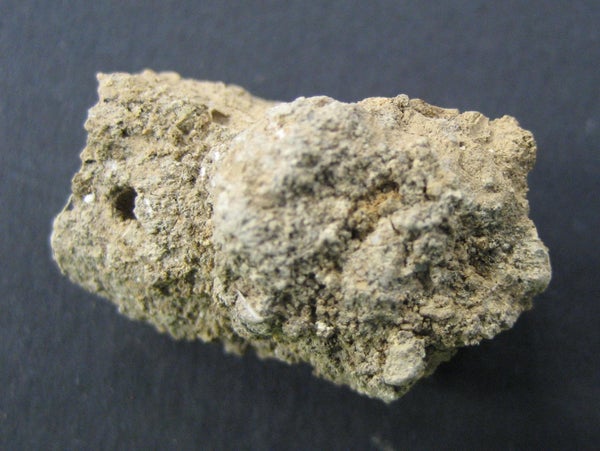
Coprolites, as they're called, are dried or mineralized pieces of poop. And Mitchell and his team found some prime specimens in a trash heap at the ancient settlement of Çatalhöyük in modern-day Turkey, which dates from 6000 to 7000 B.C.
On supporting science journalism
If you're enjoying this article, consider supporting our award-winning journalism by subscribing. By purchasing a subscription you are helping to ensure the future of impactful stories about the discoveries and ideas shaping our world today.
Mitchell's team ground up the poop samples with a mortar and pestle, then dissolved them and used microsieves to filter out particles of various sizes. The presence of certain molecules tipped them off that it was indeed human poop.
And in two of the samples they found the intact eggs of whipworm, an intestinal parasite that is far more likely to flourish in settlements than among people who poop and then move along to a new location. The discovery gives us a glimpse of how human health may have changed as hunter-gatherers started to adopt a stationary, agricultural lifestyle.
"It's only by looking at these earliest villages and towns that were set up in the Middle East that we can really start to understand that when humans change their lifestyle to a different way of getting food, how it can increase or decrease their risk of getting different kinds of diseases."
The results are in the journal Antiquity. [Marissa L. Ledger et al., Parasite infection at the early farming community of Çatalhöyük]
The findings prove that ancient poop is flush ... with details about past civilizations.
—Christopher Intagliata
[The above text is a transcript of this podcast.]
