

Hi, I’m Scott Hershberger, with Scientific American as an American Association for the Advancement of Science Mass Media Science and Engineering Fellow. And here’s a short piece from the November 2020 issue of the magazine, in the section called Advances: Dispatches from the Frontiers of Science, Technology and Medicine. The article is titled “Quick Hits,” and it’s a rundown of some stories from around the globe.
Panama: Vampire bats monitored at the Smithsonian Tropical Research Institute have fewer interactions with family and friends when ill, biologists say. But they do not seem to stay apart intentionally—instead sick bats are simply too lethargic to call out to or groom one another.
Canada: The last fully intact ice shelf in Canada collapsed into the Arctic Ocean this summer. Located in the territory of Nunavut, the Milne Ice Shelf lost 80 square kilometers of ice—40 percent of its area—in just two days.
On supporting science journalism
If you're enjoying this article, consider supporting our award-winning journalism by subscribing. By purchasing a subscription you are helping to ensure the future of impactful stories about the discoveries and ideas shaping our world today.
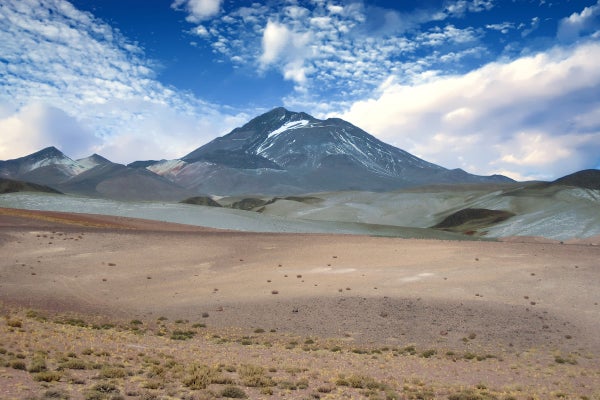
Chile: Living 6,700 meters above sea level, a yellow-rumped leafeared mouse found at the summit of the dormant volcano Llullaillaco is the highest-dwelling mammal ever documented. It remains unclear how the animal survives the oxygen scarcity and freezing temperatures at this elevation.
Russia: An analysis of ancient woolly rhino DNA from Siberia revealed that the population size was stable for thousands of years before the mammal's extinction 14,000 years ago, suggesting that a warming climate—not hunting by humans—most likely triggered its demise.
Ethiopia: Paleoanthropologists unearthed a 1.4-million-year old hand ax made from a hippo's leg bone. Together with recently discovered stone tools, the ax indicates that Homo erectus had a diverse tool kit several hundred thousand years earlier than scientists had suspected.
Antarctica: Contrary to researchers' expectations, methane-eating microbes failed to rapidly contain the first methane leak detected on the Antarctic seafloor. The finding means more of the potent greenhouse gas may have been pouring into the atmosphere than previously thought.
That was “Quick Hits.” I’m Scott Hershberger.
(The above text is a transcript of this podcast)
