
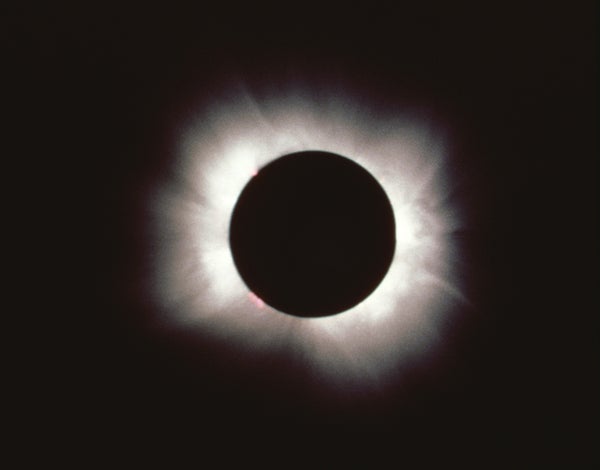

“I expected to have this interesting intellectual experience, and instead it was just completely visceral.”
Author and journalist David Baron talking about the first time he saw a total solar eclipse, in 1998 in Aruba.
“It just tapped into something very, very deep in my brain. I mean, I really think even though I knew what was going on, the gut reaction was one of absolute horror and at the same time awe. That it just sort of put my whole existence into a whole new perspective, of appreciating just how powerless and puny I am, but at the same time just how marvelous and spectacular the universe is. And so it’s both incredibly humbling and also incredibly empowering. I mean, it’s this great paradox.
On supporting science journalism
If you're enjoying this article, consider supporting our award-winning journalism by subscribing. By purchasing a subscription you are helping to ensure the future of impactful stories about the discoveries and ideas shaping our world today.
“And that’s, I think, what makes it so addictive and why I chase eclipses and why there are other people who are eclipse junkies and why I think, frankly, after August 21st of this year there will be thousands more people who will find themselves chasing eclipses all over the world. It’s just an experience unlike anything else that you just want to have again.”
David Baron will be in Jackson Hole, Wyoming, August 21st, to see his sixth total solar eclipse. You can hear my entire half-hour discussion with Baron, available on the Scientific American Web site as a Science Talk podcast. We also talk about his new book American Eclipse: A Nation's Epic Race to Catch the Shadow of the Moon and Win the Glory of the World. It’s about a scientifically and socially important eclipse back in 1878.
If you can’t make it to the path of totality on August 21st check out the NASA Web site for live coverage. And then visit the Scientific American Web site for our post-eclipse wrap-up. If you will be in the path of totality, I wish you clear skies and a blown mind.
—Steve Mirsky
[The above text is a transcript of this podcast.]
