
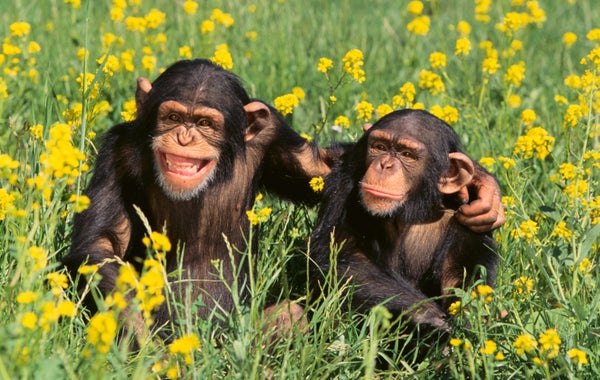

Chimpanzees. They’re notoriously social creatures. They snack together, snooze together and work hard to keep each other flea- and tick-free. But this simian intimacy does more than just spread the love. It also helps to spread the bacteria that inhabit their guts—which is a good thing. That’s according to a new study in the journal Science Advances. [Andrew H. Moeller et al, Social behavior shapes the chimpanzee pan-microbiome]
When we think about the germs that get swapped during social interactions, we tend to focus on the bad guys: the bugs that cause everything from Ebola to the common cold. But could togetherness also promote the exchange of health-promoting microbes, like those in the intestine?
To find out, researchers spent eight years scooping the poop from a troop of 40 chimpanzees in Tanzania. And they analyzed the bacteria present in the samples. What they found was that during the rainy season, when food is plentiful and the chimps are more chummy, the apes harbor an increased number of different bacterial species in their bellies—more microbiodiversity, if you will. Which could make them more resistant to infections.
On supporting science journalism
If you're enjoying this article, consider supporting our award-winning journalism by subscribing. By purchasing a subscription you are helping to ensure the future of impactful stories about the discoveries and ideas shaping our world today.
And the chimps' increased microbe load was not due to them all eating the same stuff. In fact, the more time the animals spent together, the more varied they were in terms of how much fruit they consumed.
The researchers say it’s thus likely the hobnobbing chimps are indeed sharing the microbial wealth while they’re grooming or mating. Or when they’re otherwise too busy to watch where they step.
—Karen Hopkin
[The above text is a transcript of this podcast.]
[Chimp audio via SOUND IDEAS (MARS)]
