
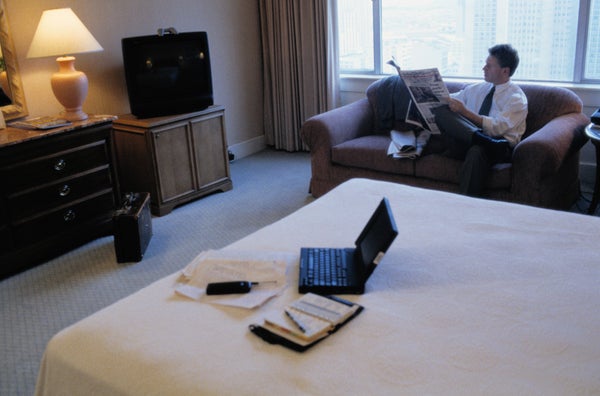

If you're a savvy traveler, when you hunt for a hotel you probably search TripAdvisor for any mention of bed bugs. But here's the dirty secret behind those bed bug sightings: "The fact that roughly two thirds of travelers can't pick a bed bug out of a lineup means that probably in some cases these are unsubstantiated reports." Mike Potter, an entomology professor at the University of Kentucky.
He and his colleagues quizzed 2,000 business and leisure travelers on their bedbug ID skills, through an online survey—asking them to select the bed bug silhouette in a lineup that also included ants, termites, lice and ticks. Only a third of the respondents correctly nailed the bed bug.
And those incorrect insect IDs could hit hotel owners hard. Because more than half the survey takers said they'd book a different hotel if they saw just one review mentioning the bloodsuckers. Potter's co-author Jerrod Penn, an economist: "The implications of not knowing what a bed bug really is, and just kind of jumping to the worst conclusion—it can be costly for people."
On supporting science journalism
If you're enjoying this article, consider supporting our award-winning journalism by subscribing. By purchasing a subscription you are helping to ensure the future of impactful stories about the discoveries and ideas shaping our world today.
The study is in the journal American Entomologist. [Jerrod M. Penn et al., Bed Bugs and Hotels: Traveler Insights and Implications for the Industry]
Some cities, like New York, already require landlords to disclose past bed bug infestations. And 80 percent of survey respondents want hotels to do the same—even if the infestation is long gone. Armed with that knowledge, good luck sleeping tight.
—Christopher Intagliata
[The above text is a transcript of this podcast.]
