

Tracking wildlife is a tough job. Take the case of a one-eared leopard named Pavarotti. For this guy: <“Nessun Dorma” clip> “He was a very big beautiful male, and he had a very, very deep, deep roar, and so they named him after Pavarotti.”
Kasim Rafiq, a wildlife biologist at Liverpool John Moores University.
“So I used to get up at the crack of dawn, follow his tracks and try and find him. It’d been a few months since I'd seen him. One day, I went out, and I was looking for him. His tracks took me off road through this woodland area....”
On supporting science journalism
If you're enjoying this article, consider supporting our award-winning journalism by subscribing. By purchasing a subscription you are helping to ensure the future of impactful stories about the discoveries and ideas shaping our world today.
Before he knew it, the wheel of his Land Rover was stuck in a warthog burrow. He wasted several hours getting out. Then, on the way back to camp, he bumped into some local tour guides and their safari guests, who’d had better luck spotting Pavarotti.
“Basically, they laughed and explained that they’d seen him that morning.”
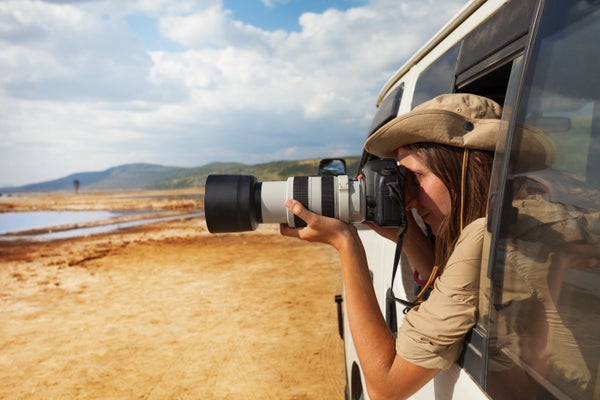
Rafiq then realized that tourist wildlife sightings might be an untapped source of information about wild animals.
So he and his team worked with a safari lodge in Botswana to analyze 25,000 tourist photographs of wildlife. They used those as sightings of lions, spotted hyenas, leopards, cheetahs and wild dogs. They then compared those data to the estimates they made with traditional wildlife biology tactics: camera traps, track surveys, and “call-in stations”—where they play sounds of distressed animals in the middle of the night and see who pops by.
Turned out that the estimates from tourist photos were just as good as those gleaned from traditional methods. And the tourists were actually the only ones to see elusive cheetahs—the researchers would have missed the cats without the citizen science data. The results are in the journal Current Biology. [Kasim Rafiq et al., Tourist photographs as a scalable framework for wildlife monitoring in protected areas]
The idea is not to put wildlife researchers out of a job. "“The reality is there’s so many interesting things we still have to find out about these large carnivores and so many conservation projects that need to be carried out that we don’t have the time or resources to do them all.”
And tourist photos might help make sure that all the local carnivores are spotted.
—Christopher Intagliata
[The above text is a transcript of this podcast.]
