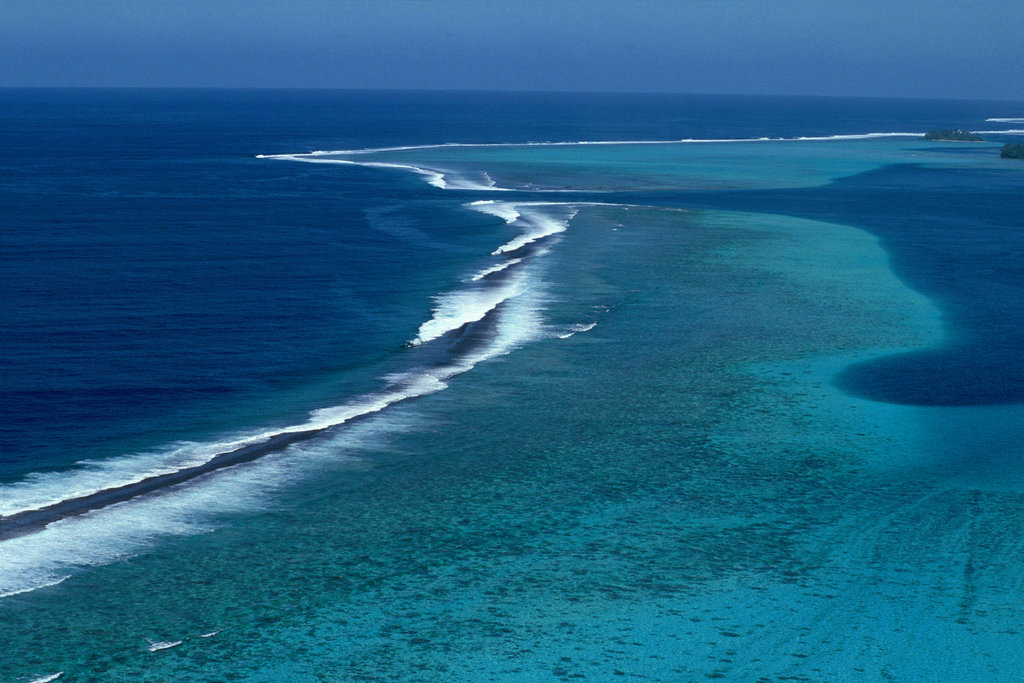

A physics lesson may be the last thing on your mind as you relax at the ocean, but:
"If you're sitting on a lovely Hawaiian beach with your Mai Tai and you're looking offshore and you see 20-foot waves and people surfing on them, and you notice that it's only lapping up on the shoreline here with teeny little waves, that's the reef working to dissipate that energy."
Mike Beck studies the intersection of engineering, ecology, economics and finance at UC Santa Cruz. He says reefs act a whole lot like our human-built coastal infrastructure to tame the energy of incoming waves.
On supporting science journalism
If you're enjoying this article, consider supporting our award-winning journalism by subscribing. By purchasing a subscription you are helping to ensure the future of impactful stories about the discoveries and ideas shaping our world today.
"Coral reefs act just like a low crested submerged breakwater. That's an engineering term. But it means there are really good engineering models for describing the benefits of reefs."
And those models are the key behind a new report from the U.S. Geological Survey, with Beck as one of its authors. The researchers modeled hypothetical storms hitting coastlines in areas with offshore reefs, like Florida, Hawaii and Puerto Rico. They studied how reefs of various heights would dampen waves and hold back flooding, and they found that every year the country's reefs save the U.S. an estimated $1.8 billion dollars in direct flooding damages and other economic losses. [Curt D. Storlazzi et al., Rigorously Valuing the Role of U.S. Coral Reefs in Coastal Hazard Risk Reduction]
That dollar number is important because it allows reef rebuilding projects—like gluing little healthy coral nubbins on damaged reefs—to tap into billions of dollars of federal money set aside for hurricane and disaster resilience.
"If you can rigorously value the benefits of any of these habitats, you can unlock any of the funding mechanisms that would have typically been applied to developing a seawall or a breakwater."
That's a win-win—for life below the water and for those of us who live on land as well.
—Christopher Intagliata
[The above text is a transcript of this podcast.]