
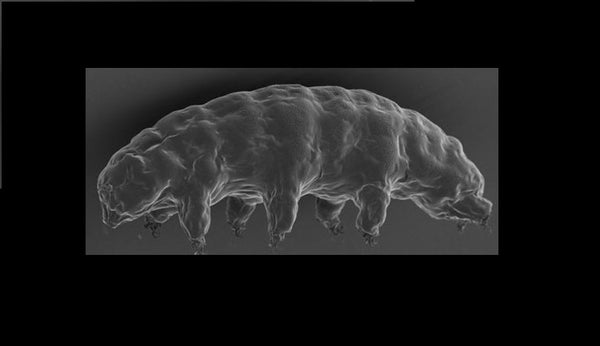

Forget cockroaches. Forget Superman. Forget any other tough-as-nails creatures you’ve ever heard of. The most indestructible multicellular organisms on Earth are undoubtedly tardigrades—microscopic eight-legged aquatic invertebrates also known as water bears.
These wee beasties can withstand severe dehydration, extreme temperatures and pressures, several days in Earth orbit exposed to the vacuum of space, and whopping doses of radiation that would kill most anything else. And, being Earthlings, there’s no reason to think they’d be vulnerable to kryptonite.
Scientists are beginning to understand the genetic basis of tardigrades’ death-defying superpowers. And what they’re learning may have profound implications for human health.
On supporting science journalism
If you're enjoying this article, consider supporting our award-winning journalism by subscribing. By purchasing a subscription you are helping to ensure the future of impactful stories about the discoveries and ideas shaping our world today.
The genome for a species of tardigrade was first sequenced last year. The analysis suggested that about one-sixth of the DNA was imported from notoriously hard-to-kill bacteria—but that conclusion was soon disputed, with all that bacterial DNA blamed on laboratory contamination.
Now, a new genome has been published of an exceptionally hardy tardigrade species. And it finds that almost all of the DNA is homegrown—and chock-full of sequences responsible for cellular protection and repair. The study is in the journal Nature Communications. [Takuma Hashimoto et al., Extremotolerant tardigrade genome and improved radiotolerance of human cultured cells by tardigrade-unique protein]
In particular, the researchers discovered the gene for a protein apparently unique to water bears that shields their DNA from radiation damage. Called “DSup” for “damage suppressor,” the protein binds to tardigrade DNA to keep it from snapping apart when bombarded by x-rays and other harsh radiation. The protein’s protective effects against radiation may be a by-product of the tardigrades’ resistance to dehydration, which causes similar damage to cells.
The most remarkable thing about the Dsup protein, though, is that it also seems to work in other organisms—including humans. When the researchers inserted Dsup into cultured human kidney cells, the protein boosted the cells’ tolerance to x-ray damage by about 40 percent.
In theory, Dsup or something much like it could protect workers at nuclear power plants, cancer patients receiving radiation therapy or astronauts on interplanetary voyages. For now, the ethics and practicality of genetic engineering make such applications highly speculative. But, just maybe, if human beings someday stand on the surface of Mars, they could have water bear DNA to thank for helping them survive.
—Lee Billings
[The above text is a transcript of this podcast.]
