
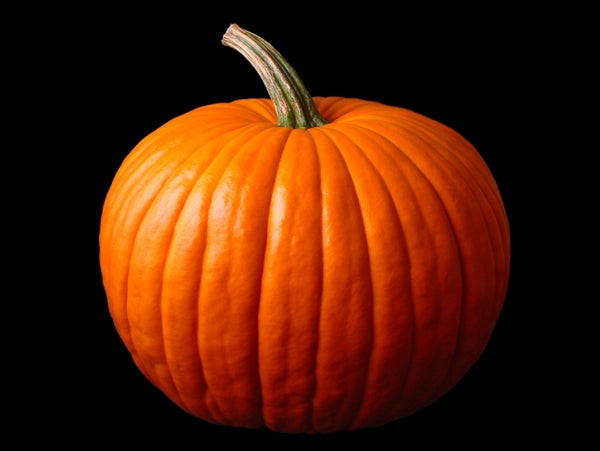

This Halloween, as you carve jack-o’-lanterns and make pumpkin pie, take a moment to appreciate just how far the humble pumpkin has come.
“The wild form of a pumpkin looks like a tennis ball, and it tastes like one. It’s incredibly bitter, it’s got a really hard rind, and it’s incredibly unpalatable to humans.”
Logan Kistler, an archaeologist at the Smithsonian’s National Museum of Natural History. He says as unpalatable as those early squashes were, they made a tasty tidbit for mastodons.
On supporting science journalism
If you're enjoying this article, consider supporting our award-winning journalism by subscribing. By purchasing a subscription you are helping to ensure the future of impactful stories about the discoveries and ideas shaping our world today.
“And we know that because there are deposits of mastodon dung in Florida that are over 30,000 years old. And so in those mastodon dung deposits, sure enough, what we can find are wild squash seeds.”
Kistler says mastodons probably weren’t put off by the gourds’ bitter taste. Because a few years back, his team analyzed the genomes of more than 40 mammals. And they found that the larger the animal, the fewer copies of a bitter-taste-perception gene they tended to have.
“Turns out there’s this absolutely beautiful correlation between body size and the ability to taste bitter compounds. So what we think is going on is that these are really plants adapted to a landscape with large herbivores. They evolved this bitter toxicity in order to deter small mammals who would destroy the seeds, but they’ve evolved it at just the right level where large mammals are not put off by the bitterness, and they can disperse the seeds.”
Through their poop.
Kistler reported those findings in the Proceedings of the National Academy of Sciences in 2015. [Logan Kistler et al., Gourds and squashes (Cucurbita spp.) adapted to megafaunal extinction and ecological anachronism through domestication]
Along with dispersing seeds, mastodons, like modern elephants, probably stomped around a lot and vacuumed up vegetation—creating the sort of disturbed environments where squash plants thrive. So it was a beneficial match.
But then, of course, the mastodons died out. And humans, Kistler says—which also tend to disturb the environments around them, creating great squash habitat—may have taken the mastodon’s place. The details are murky.
“The way that the domestication of squashes started is still a little bit of a mystery, because they’re bitter and toxic in the wild, and they get to this place of palatability.”
Perhaps, he says, humans grew the gourds first to use them as storage vessels—and later tamed the bitterness. Either way, squash seeds, stems and rinds discovered in a cave in Oaxaca, Mexico, provide evidence that, at least 10,000 years ago, ancient people had already begun domesticating a squash that would, eventually, carve a place for itself as our modern pumpkin.
—Christopher Intagliata
[The above text is a transcript of this podcast.]
