
OpinionNovember 24, 2020
The Scientific Benefits of Social Distancing
Avoiding too much direct contact with colleagues can lead to more independent thinking
The Scientific Benefits of Social Distancing
Avoiding too much direct contact with colleagues can lead to more independent thinking
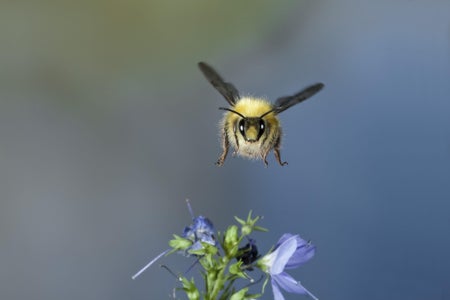
Bumblebees’ Self-Image Gets Them through Tight Spots
Sridhar Ravi was outdoors with his colleagues on a summer day in Germany when a group of bumblebees grabbed his attention.
As the bees made their way from flower to flower, they skillfully flew between obstacles, dodging branches and shrubs. These actions seemed to require a complex awareness of one's physical body in relation to one’s environment that had only been proven to exist in animals with large brains.
To examine this, a team of researchers at Australia’s University of New South Wales, Canberra, led by Ravi, set up a hive of bumblebees inside their laboratory. The bees could come and go via a tunnel, which could be partially blocked with an adjustable barrier. Ravi and his team made the gap progressively smaller over time, and observed how the bees’ reactions changed.
The study, published in the Proceedings of the National Academy of Sciences, found the bumblebees measured the gap by flying side-to-side to scan it. When the gap became narrower than their wingspan, the bees took a longer time to scan the opening. And then they did something remarkable: they turned their bodies to fly through sideways. Some of the bees’ bodies did bump the sides of the narrowed opening—but every one of the 400 recorded flights through the gap was a success.
“Over thousands of years nature has coded insects with some amazing attributes,” Ravi says. “Our challenge now is to see how we can take this and apply similar coding to future robotic systems, enhancing their performance in the natural world.”


Distrust Authorities, Including Me
The presidential election and pandemic have highlighted the fallibility of experts, but that doesn’t mean we should dismiss them all
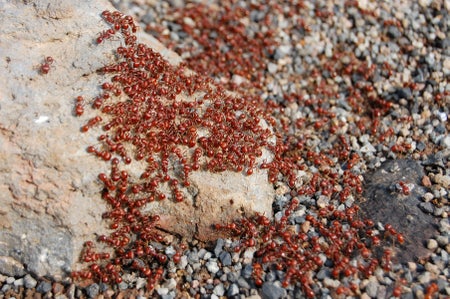
If It Smells like Dirt, Fire Ants Are Interested
For these swarming, stinging insects, it’s the aroma of home sweet home
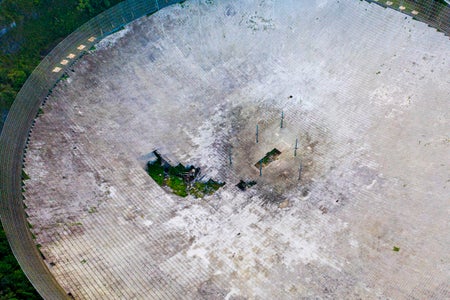
Arecibo Observatory to Close Its Giant Eye on the Sky
After suffering severe damage from broken cables that cannot be readily repaired, the observatory’s enormous radio telescope is now slated for “controlled decommissioning”
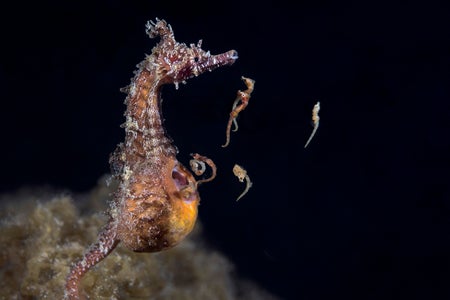
See a Male Seahorse Give Birth
Unlike almost all other animal species, it is male seahorses who become pregnant and birth young
Doing the Touchy Math on Who Should Get a COVID Vaccine First
Mathematicians model pandemic scenarios by plugging thorny ethical and logistical issues into calculations

New Scientist-Candidates for U.S. Congress Fared Worse Than Expected in 2020
Even with big health issues in the headlines, most of these challengers lost, though advocates hope the races gave science a higher policy profile
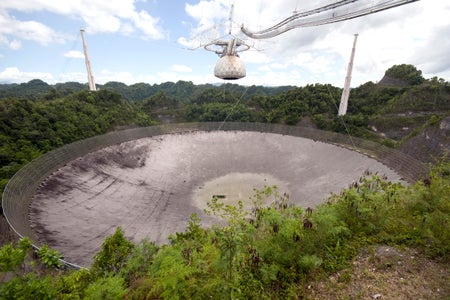
Legendary Arecibo Telescope Will Close Forever, and Scientists Are Reeling
A new satellite image reveals the damage that shut down the facility, ending an era in astronomical observation

The Antibiotic Gamble
Paratek Pharmaceuticals made a life-saving drug and got it approved. So why is the company’s long-term survival still in question?
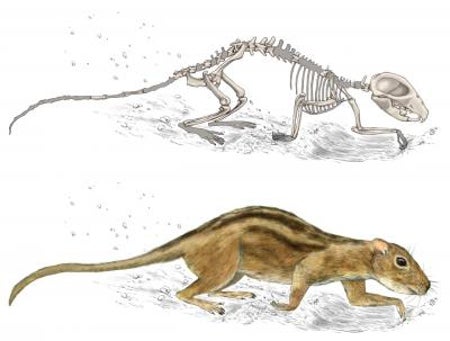
Early Mammals Had Social Lives, Too
Chipmunklike animals that lived among the dinosaurs appear to have been social creatures, which suggests that sociality arose in mammals earlier than scientists thought. Christopher Intagliata reports.
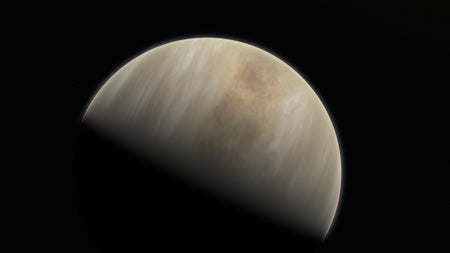
Prospects for Life on Venus Fade—but Aren’t Dead Yet
Debate continues over a controversial report of phosphine in the planet’s atmosphere, as researchers reanalyze data and find a fainter signal