Space & PhysicsJune 8, 2021
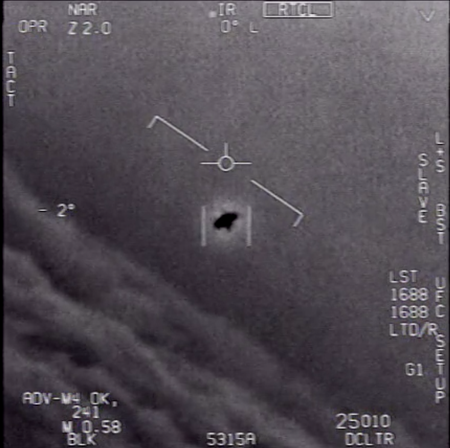
Experts Weigh In on Pentagon UFO Report
The vast majority of examined incidents were not caused by U.S. advanced technology programs, the forthcoming report concludes. So what’s going on?
Experts Weigh In on Pentagon UFO Report
The vast majority of examined incidents were not caused by U.S. advanced technology programs, the forthcoming report concludes. So what’s going on?
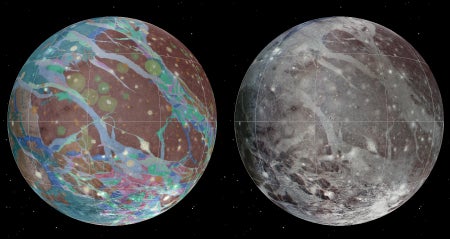
NASA’s Juno Set for Close Encounter with Jupiter’s Moon Ganymede
The flyby will be the closest a spacecraft has come to the gas giant’s largest moon in 20 years


Biden’s New Science Adviser Talks COVID, Spying, and More
A conversation with Eric Lander during his first day as the director of the White House Office of Science and Technology Policy

Transcendence Happens All the Time
We’ve long fantasized about transformations from one mode of life to another, but nature has already beaten us to it
Science Shouldn’t Come at the Expense of Black Lives
We must say no to science that exploits people
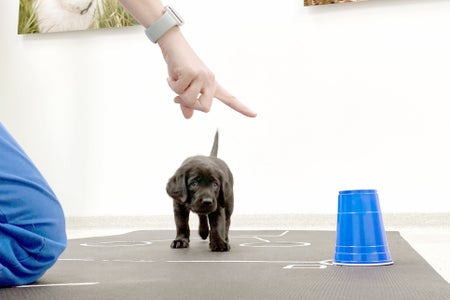
Puppies Understand You Even at a Young Age, Most Adorable Study of the Year Confirms
Researchers in the happiest lab in the world tested 375 pups and found they connected with people by eight weeks

Creative Thinking in both Science and the Arts Is Not for the Faint of Heart
To put it another way, be yourself; everyone else is already taken
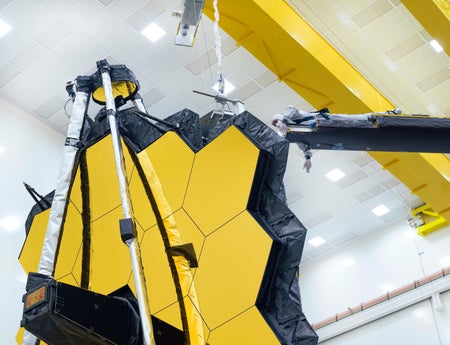
NASA’s James Webb Space Telescope Is Delayed—Again
A Halloween launch for the space agency’s long-awaited flagship observatory is all but certain to slip into mid-November or later
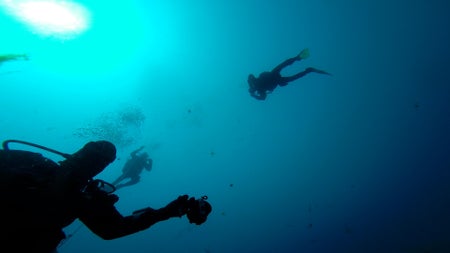
At the Bottom of Lake Huron, an Ancient Mystery Materializes
The air was likely frigid as the hunter lit a small fire. The caribou would come in the morning—forced through the narrow strip of marshland where he camped. There was nowhere else to go. The land was flanked by water on both sides, and large stones had been laid out in slanting lines to funnel the animals into this bottleneck. The hunter struck his weapon to sharpen its edge in anticipation. In that moment, two glassy flakes splintered away from the point of impact and fell to his feet. They would be buried there for nearly 10,000 years.
In 2013 those two shards of obsidian, a natural volcanic glass, would be recovered from a sample of earth, roughly the volume of a quart of milk, that was pulled from the bottom of Lake Huron, under 100 feet of water. And the story the flakes would tell was one of an even longer journey.
John M. O’Shea of the University of Michigan and his team of underwater archaeologists have found something extraordinary about these two pieces of obsidian: they traveled nearly 2,500 miles from central Oregon before coming to rest at what is now the bottom of one of the Great Lakes.
The samples were recovered from the Alpena-Amberley Ridge, a geologic formation below Lake Huron that connects Michigan to Ontario. O’Shea and his team have been diving at the site for more than a decade, collecting artifacts and environmental samples to prove that 9,000 years ago—as ice age glaciers were receding and the Great Lakes were forming—the area was dry land inhabited by Native Americans, who built hunting structures on it to trap and kill caribou.
Obsidian was highly prized by ancient stone toolmakers. The flakes identified by Brendan Nash, a member of O’Shea’s team at the University of Michigan, have strike marks and sharp, feathered edges—both telltale signs of human modification. This evidence, combined with the distance to the obsidian’s original source, paint a picture of an extensive trade or exchange network that spanned the continent nearly 3,000 years after the end of the last ice age.
Stone tools recovered from the Alpena-Amberley Ridge are much smaller than artifacts found nearby that date to the same time period. This suggests that a group of ancient people, with a different way of life and system of hunting, existed on the ridge around 9,000 years ago.
In their study, O’Shea, Nash and their colleagues wrote, “These specimens provide greater resolution, as well as greater complexity, to an important and poorly understood time period in the North American past.”
In two small flakes, one can gain a view of a world lost to time and the waves.
In Case You Missed It
Top news from around the world
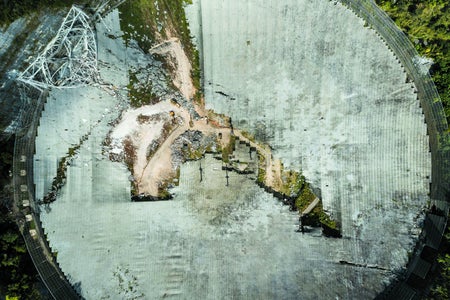
Are We Doing Enough to Protect Earth from Asteroids?
Scientists lost one of their best tools with the demise of the Arecibo telescope
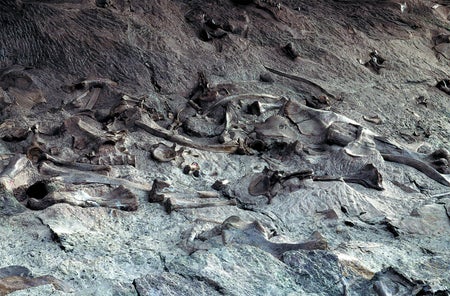
New Process Helps Unscramble Dinosaur Boneyard Chaos
Piecing together a paleontological puzzle