
Basic ChemistryAugust 20, 2021
The Science inside Your Ice Cream
A new video series from Scientific American and Spektrum der Wissenschaft gives you a serving of science.
The Science inside Your Ice Cream
A new video series from Scientific American and Spektrum der Wissenschaft gives you a serving of science.
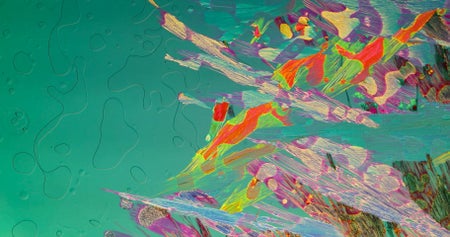
Watch Countless Small Worlds Pulse: From Liquid Crystals to Sea Cucumbers
Nikon’s Small World in Motion video competition is filled with moving delights.
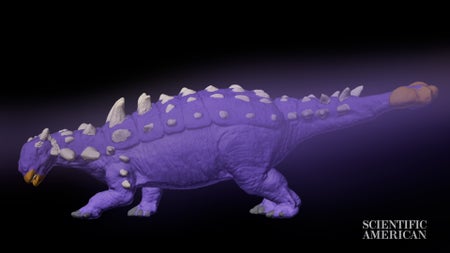
These Dinosaurs Had a Complicated Air Conditioner in Their Skull
Cooling 5,000-pound, armor-plated giants was no small feat.
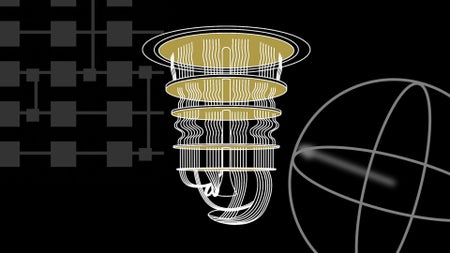
How Does a Quantum Computer Work?
If you understand how these systems operate, then you understand why they could change everything.
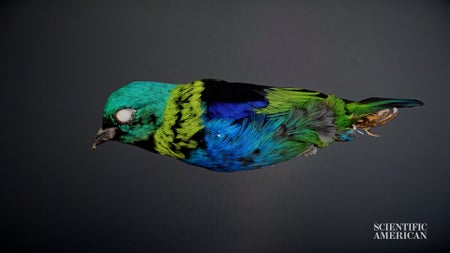
See the Beautiful Color of Rare Birds from Every Angle and in Three Dimensions
A new project will create high-definition interactive models of 2,000 feathered flyers.
What Is the Immune System, and How Does It Work?
Through evolution, we’ve gained an entire arsenal for fighting off potentially harmful microbes of all sorts.

Nutrition, Immunity and a Global Pandemic
The COVID-19 pandemic has focused attention on the importance of having a well-functioning immune system.

What Is CRISPR, and Why Is It So Important?
This revolutionary gene-editing system has taken science by storm.

On the Louisiana Coast, an Indigenous Community Loses Homes to Climate Change
For the Biloxi-Chitimacha-Choctaw,climate change has forced a permanent retreat inland
Decoded: What Are Neurons?
You have 86 billion of them inside you, but do you understand how hard it was for us to learn that?
At the Bottom of Lake Huron, an Ancient Mystery Materializes
The air was likely frigid as the hunter lit a small fire. The caribou would come in the morning—forced through the narrow strip of marshland where he camped. There was nowhere else to go. The land was flanked by water on both sides, and large stones had been laid out in slanting lines to funnel the animals into this bottleneck. The hunter struck his weapon to sharpen its edge in anticipation. In that moment, two glassy flakes splintered away from the point of impact and fell to his feet. They would be buried there for nearly 10,000 years.
In 2013 those two shards of obsidian, a natural volcanic glass, would be recovered from a sample of earth, roughly the volume of a quart of milk, that was pulled from the bottom of Lake Huron, under 100 feet of water. And the story the flakes would tell was one of an even longer journey.
John M. O’Shea of the University of Michigan and his team of underwater archaeologists have found something extraordinary about these two pieces of obsidian: they traveled nearly 2,500 miles from central Oregon before coming to rest at what is now the bottom of one of the Great Lakes.
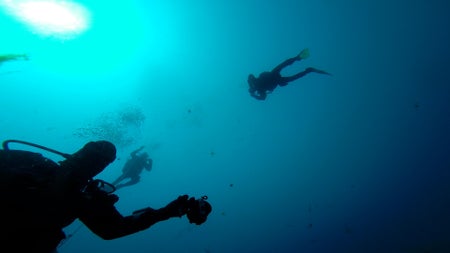
The samples were recovered from the Alpena-Amberley Ridge, a geologic formation below Lake Huron that connects Michigan to Ontario. O’Shea and his team have been diving at the site for more than a decade, collecting artifacts and environmental samples to prove that 9,000 years ago—as ice age glaciers were receding and the Great Lakes were forming—the area was dry land inhabited by Native Americans, who built hunting structures on it to trap and kill caribou.
Obsidian was highly prized by ancient stone toolmakers. The flakes identified by Brendan Nash, a member of O’Shea’s team at the University of Michigan, have strike marks and sharp, feathered edges—both telltale signs of human modification. This evidence, combined with the distance to the obsidian’s original source, paint a picture of an extensive trade or exchange network that spanned the continent nearly 3,000 years after the end of the last ice age.
Stone tools recovered from the Alpena-Amberley Ridge are much smaller than artifacts found nearby that date to the same time period. This suggests that a group of ancient people, with a different way of life and system of hunting, existed on the ridge around 9,000 years ago.
In their study, O’Shea, Nash and their colleagues wrote, “These specimens provide greater resolution, as well as greater complexity, to an important and poorly understood time period in the North American past.”
In two small flakes, one can gain a view of a world lost to time and the waves.

Decoded: What Are Black Holes?
The mysteries packed inside these invisible space objects stretch our concepts of space and time.