Public HealthMay 12, 2021
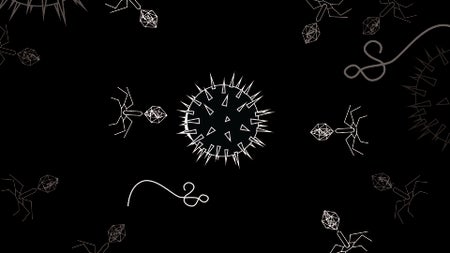
Decoded: What Is a Virus, Exactly?
These sometimes deadly packets of genetic information are more numerous in number than the stars in the cosmos.
Decoded: What Is a Virus, Exactly?
These sometimes deadly packets of genetic information are more numerous in number than the stars in the cosmos.
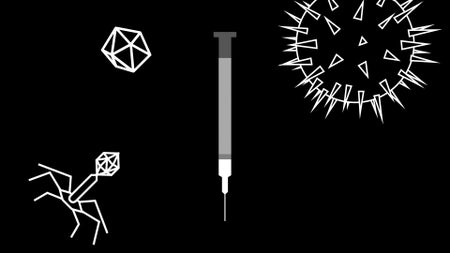
Decoded: How Do Vaccines Actually Work?
Vaccines are medicines that train the body to defend itself against future disease, and they have been saving human lives for hundreds of years.
Nature Can Help Us Prepare for the Next Pandemic
In March 2020 Ruth DeFries finished a manuscript more than five years in the making. It turned out to be both prescient and prophetic. In this document, the Columbia University professor argued that global crises arenow inevitable because of the complexity and interconnectedness of our modern civilization. And just as she wrapped up the project, as she puts it, “all hell broke loose with COVID.”
That manuscript would become a book, released at the end of 2020. “These were exactly the kinds of shocks that I was trying to be convincing [about], in the book, [when I told readers] that they could actually happen,” DeFries says. But her tome is more guide and less screed. It shows that there is good news—and hope—to be found in a model that surrounds all of us every day and that has survived for billions of years: nature.
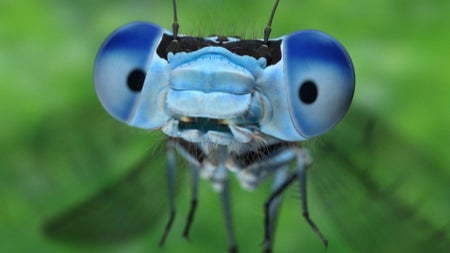
DeFries points to the shortage of personal protective equipment and hand sanitizer at the start of the pandemic as an example of what she means. Instead of depending on single sources for important goods, she writes, we can look at coral skeletons and the tiny veins of dragonfly wings and leaves. They loop into one another, creating what is called a redundant network. That way, for instance, if a bug takes a bite of a leaf, it can still transport water and sugar to the rest of the plant. In the face of uncertainty, one of the best ways we can protect ourselves is to invest in flexibility—such as by maintaining a diverse set of trade partners when it comes to both food and medical supplies.
The idea that we should observe nature when designing our modern world has ancient roots in Indigenous cultures. But the common scientific term for this approach is only a couple of decades old: “biomimicry” according to Lex Amore, who directs partnerships and advocacy at the nonprofit Biomimicry Institute, “is the conscious emulation of nature’s genius.”
Copying nature’s strategies can have real-world benefits when we’re put in a tough spot. For example, in March 2020 northern Italy–based manufacturer COPANwas impacted by COVID-19, which led to a nationwide shortage of diagnostic nasal swabs in the U.S. In response, a network of scientists and industry partners in Boston mobilized to source and manufacture new designs. As part of this effort, the Wyss Institute for Biologically Inspired Engineering at Harvard University drew inspiration from an unlikely place: cat tongues. The team’s lead engineer Richard Novak ended up designing injection-molded nasal-testing swabs modeled on a feline’s oral multitool.
This kind of nature-inspired thinking is needed now more than ever because “the solutions we seek are right outside,” Amore says. Her organization supports innovations that not only serve humans in the short term but that, in its words, also sustainably “create conditions conducive to life”—for all species.
The novel coronavirus has created conditions that are less than conducive to human life, and there will likely be more existential shocks to follow. Beyond the pandemic, we still have to deal with the fact that humans have altered 70 percent of the planet’s land surface and compromised two thirds of its oceans. As a result, 20 percent of all species are facing near-term extinction, and the world is warming.
It used to be easy to go through our daily lives and ignore the invisible processes that keep us afloat. This was a delusion, DeFries says. “We depend on nature for food, for water, for taking care of our wastes, for air, for everything,” she adds. The pandemic perhaps shook us out of our routines. The thing to do now, according to DeFries, is to deepen this dependency. “The more connected we are, the more we become a complex system, which is more and more like nature,” she says.
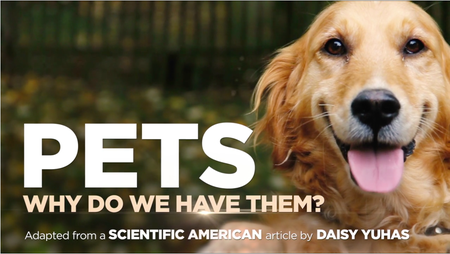
Pets: Why Do We Have Them?
Video produced in partnership with The Great Courses. All Great Courses video content is available only to subscribers with the password sent via email.
Six Ways to Boost Brainpower
Video produced in partnership with The Great Courses. All Great Courses video content is available only to subscribers with the password sent via email.
The First Monster Black Holes
Video produced in partnership with The Great Courses. All Great Courses video content is available only to subscribers with the password sent via email.
Why Your Brain Needs Exercise
Video produced in partnership with The Great Courses. All Great Courses video content is available only to subscribers with the password sent via email.
Decoding the Puzzle of Human Consciousness
Video produced in partnership with The Great Courses. All Great Courses video content is available only to subscribers with the password sent via email.
The Mysteries of Neandertal Art
Video produced in partnership with The Great Courses. All Great Courses video content is available only to subscribers with the password sent via email.
Are We the Only Intelligent Life in the Galaxy?
Video produced in partnership with The Great Courses. All Great Courses video content is available only to subscribers with the password sent via email.
Earthquakes in the Sky
Video produced in partnership with The Great Courses. All Great Courses video content is available only to subscribers with the password sent via email.
How Dinosaurs Grew So Large and So Small
Video produced in partnership with The Great Courses. All Great Courses video content is available only to subscribers with the password sent via email.