
The SciencesFebruary 3, 2014
4,600-Year-Old Step Pyramid Uncovered in Egypt
The pyramid, which predates the Great Pyramid of Giza, is one of seven for which its function remains a mystery
4,600-Year-Old Step Pyramid Uncovered in Egypt
The pyramid, which predates the Great Pyramid of Giza, is one of seven for which its function remains a mystery
Rare Whale Skull Fossil Found at California School
Long unnoticed, the skull may represent a new species of extinct sperm whale

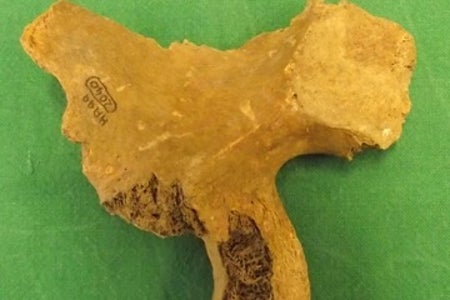
Pelvic Bone in Museum Storage May Belong to English King
Researchers may have found the remains of King Alfred the Great in museum storage

Extinct Freshwater Sharks That Spawned in Saltwater Had Been Mistaken for Separate Species
In 1967 the fossilized remains of a strange new shark species were discovered in Will County, Ill., an area known for its marine fossils dating back more than 300 million years.
Preagricultural People Had Cavities, Too
Cavities are associated with the carbohydrate-rich diet made possible by farming. But an archaeological site shows that hunter–gatherers were also plagued by cavities. Cynthia Graber reports
Nature's Best Science Features of 2013
The editors of Nature picked these feature stories as the best among the magazine's longer journalistic reports of the year
Readers' Choices of Nature's Top Science Blog Posts in 2013
See which science blog posts were most-read on Nature's Web site this year
Scientific American's Top 10 Science Stories of 2013
A carbon threshold breached, commitments to brain science made, mystery neutrinos found and human evolution revised—these and other events highlight the year in science and technology as picked by the editors of Scientific American
Ancient Roman Metal Used for Physics Experiments Ignites Science Feud
Physicists prefer Roman-era lead ingots to recently mined metal for shielding particle experiments, but archaeologists want them preserved
Science Scorecard: Did 2013 Live Up to Expectations?
The existence of the Higgs boson particle was confirmed, a strong case for human-caused climate change was released and scientists analyzed the oldest-known human DNA
Cats Were Kept In China 5 Millennia Ago
Archaeologists found evidence of cat domestication in China dating back some 5,300 years. Cynthia Graber reports
Puckish Wine Cellar Found After Serious Aging
This past summer, at a 3700-year-old Canaanite city called Tel Kabri in northern Israel, archaeologists found what appears to be the oldest known wine cellar. Cynthia Graber reports.