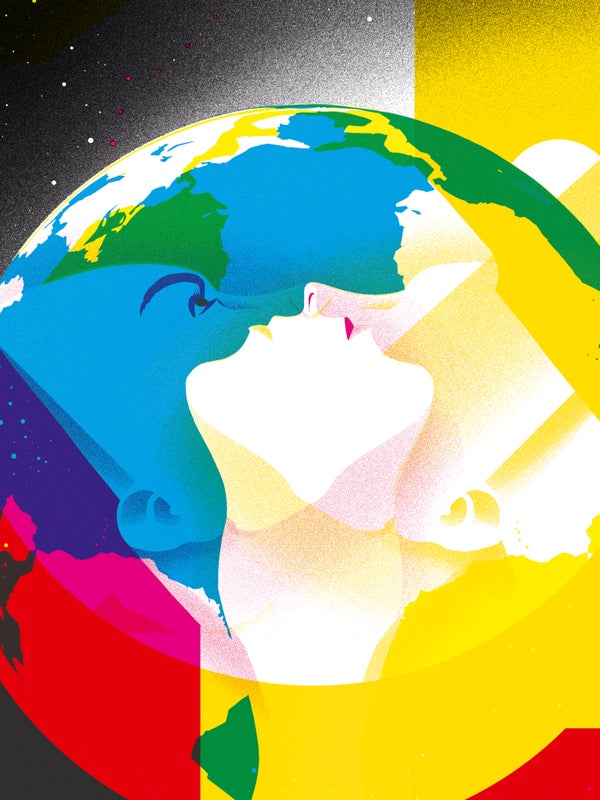
2016 World Changing Ideas

10 big advances with the potential to solve problems and improve life for all of us

Daniel Stolle

Join Our Community of Science Lovers!

The phrase “world changing” is overused. Yet how else do you capture the full world-historical influence of an invention like the transistor, or the World Wide Web, or the cellular phone? Some ideas really do bend history. It's too early to know whether carbon-breathing batteries, ingestible robots, quantum satellites, and the seven other ideas described in these pages will have a similar effect. Most plans fail, and the biggest ideas tend to carry the greatest risk. But it doesn't take long for an idea to go from laughable to inevitable. And a few of those, of course, go on to become transformative.

1

Batteries Could Pull Carbon from the Atmosphere


On supporting science journalism

If you're enjoying this article, consider supporting our award-winning journalism by subscribing. By purchasing a subscription you are helping to ensure the future of impactful stories about the discoveries and ideas shaping our world today.


2

How to Make Novel Antibiotics from Scratch

3

Quantum Satellites Are a Big Step toward the Unhackable Internet

4

Ingestible Robots Perform Surgery from Inside the Body

5

Machine-Learning Software Scans Satellite Images to Find Hidden Poverty

6

Fabric Made from Battery Material Cools Its Wearers

7

A Rare Genetic Mutation Might Inspire the First Drug That Fights All Viruses

8

Computers Now Recognize Patterns Better Than Humans

9

Cheap Paper Diagnostics Would Save Lives in Remote, Impoverished Places

10

“Supermolecules” Could Yield Materials the Periodic Table Won’t Allow

Scientific American Magazine Vol 315 Issue 6This article was published with the title “2016 World Changing Ideas” in Scientific American Magazine Vol. 315 No. 6 (), p. 32
doi:10.1038/scientificamerican1216-32

It’s Time to Stand Up for Science

If you enjoyed this article, I’d like to ask for your support. Scientific American has served as an advocate for science and industry for 180 years, and right now may be the most critical moment in that two-century history.

I’ve been a Scientific American subscriber since I was 12 years old, and it helped shape the way I look at the world. SciAm always educates and delights me, and inspires a sense of awe for our vast, beautiful universe. I hope it does that for you, too.

If you subscribe to Scientific American, you help ensure that our coverage is centered on meaningful research and discovery; that we have the resources to report on the decisions that threaten labs across the U.S.; and that we support both budding and working scientists at a time when the value of science itself too often goes unrecognized.

In return, you get essential news, captivating podcasts, brilliant infographics, can't-miss newsletters, must-watch videos, challenging games, and the science world's best writing and reporting. You can even gift someone a subscription.

There has never been a more important time for us to stand up and show why science matters. I hope you’ll support us in that mission.

Thank you,

David M. Ewalt, Editor in Chief, Scientific American

Subscribe