
A protective shield at Ukraine’s Chernobyl power plant, the site of the world’s worst nuclear disaster, has been in disrepair for 10 months as a result of a Russian drone strike.
Officials from the International Atomic Energy Agency (IAEA) on Friday confirmed that the damage from the strike has not been fixed. IAEA officials said on Sunday, however, that radiation levels outside the nuclear plant appeared to be holding steady, suggesting radioactive material from inside the plant is not currently leeching into the surrounding environment.
No one is allowed to live within 1,000 square miles of the plant.
On supporting science journalism
If you're enjoying this article, consider supporting our award-winning journalism by subscribing. By purchasing a subscription you are helping to ensure the future of impactful stories about the discoveries and ideas shaping our world today.
The shield in question is a massive steel dome known as the New Safe Confinement that sits on top of Chernobyl’s Reactor No. 4. It was this reactor that exploded on April 26, 1986—and the catastrophe remains the worst nuclear accident in history.
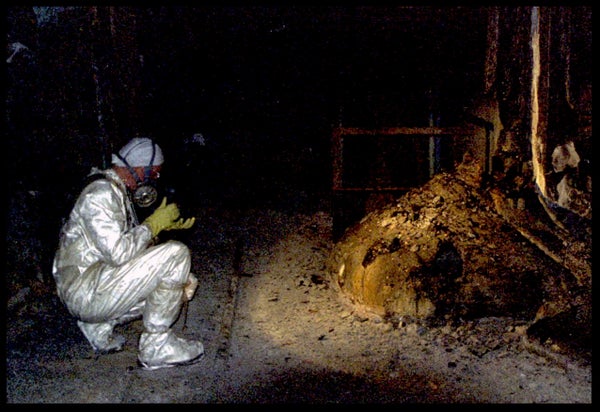
Still today, there is a large mass of radioactive material underneath the reactor’s remains at the plant, known as the “Elephant’s Foot.” Initially, Soviet engineers encased the damaged reactor in a concrete and lead sarcophagus, before it was covered again in 2016 by the steel dome. Russia’s invasion of Ukraine in 2022 derailed a plan to clean up the plant, and officials are now working to patch the shield as best they can.
“Timely and comprehensive restoration remains essential to prevent further degradation and ensure long-term nuclear safety,” the director general of the IAEA said in a statement.