
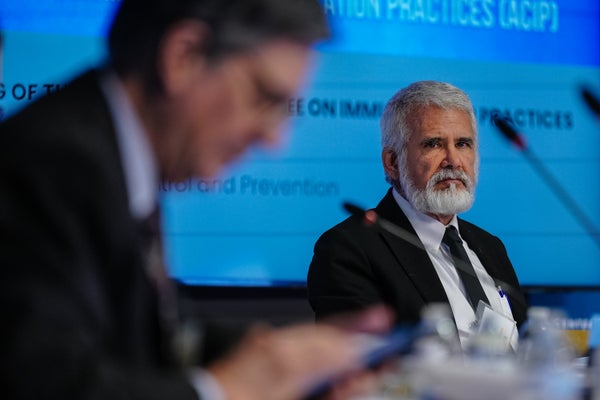
The Trump administration is considering disbanding an influential and independent vaccine advisory panel, according to its former vice chair, Robert Malone. For more than half a century, the Advisory Committee on Immunization Practices (ACIP) has informed U.S. public health policy, helping to set the country’s recommended routine childhood and adult vaccine schedules.
In a social media post on Thursday, Malone said that the Trump administration had made the decision to disband and “recreate a new ACIP committee.” Malone said the move was a response to a lawsuit filed by the American Academy of Pediatrics and five other medical groups that contested the appointments of ACIP members made in the past year by Secretary of Health and Human Services Robert F. Kennedy, Jr.
He later clarified that “the decision about how to proceed has not been made, and dissolving and reforming remains one of options being considered.” HHS spokesperson Andrew Nixon said in a statement that “unless officially announced by us, any assertions about what we are doing next is baseless speculation.”
On supporting science journalism
If you're enjoying this article, consider supporting our award-winning journalism by subscribing. By purchasing a subscription you are helping to ensure the future of impactful stories about the discoveries and ideas shaping our world today.
A federal judge on Monday ruled that Kennedy, a longtime vaccine skeptic, had likely appointed 13 ACIP panelists in violation of the Federal Advisory Committee Act (FACA), which holds that such advisory groups should be “fair and balanced.” The ruling blocked their appointments, effectively stalling ACIP’s work.
“Any new iteration of the committee must conform to the laws at issue in our case, including FACA,” says Richard Hughes, a lead counsel for the AAP in its case against Kennedy. “Anything short of a qualified committee selected through the proper process will meet our challenge.”
Reporting by CNN suggests other members of ACIP, including chair Kirk Milhoan, had also been told that the committee would be disbanded. In his earlier post, Malone suggested that HHS may intend “to disband and then recreate a new ACIP committee, as this will take less time than would be required to file and prosecute an appeal.” Its future remains unclear.
It is also unclear if the Trump administration plans to appeal any part of the judge’s decision, which also temporarily blocked sweeping changes to the country’s vaccine recommendations made under Kennedy. At the time of the ruling, spokesperson for the Department of Health and Human Services told Scientific American that the department looked forward to the decision being overturned. Robert Malone did not immediately respond to a request for comment.
Editor’s Note (3/20/26): This story has been updated to include comment from a representative of the Department of Health and Human Services and Robert Malone’s later clarification about the status of the Advisory Committee for Immunization Practices, as well as additional reporting from CNN. This is a breaking news story and may be updated further.