
This article is part of “Innovations In: Type 1 Diabetes,” an editorially independent special report that was produced with financial support from Vertex.
More than 9.5 million people globally live with type 1 diabetes, and this figure is increasing rapidly everywhere, across all age groups. The burden of this autoimmune disease—the risks of which include premature death—is unequally carried: the condition is more deadly in lower-income countries.
“Data speak for themselves,” says Stephanie Pearson, senior director of global responsibility at the nonprofit Breakthrough T1D. “Type 1 [diabetes] is being diagnosed more than it ever has been before, but you need more in-depth studies to understand why these numbers continue to rise.” Scientists know that with more education and awareness, diagnoses tend to go up. They are also looking into additional possible causes for this increase, including potential triggers that make a person’s body kill off its own insulin-producing cells. Bacterial and viral infections, diet, lifestyle choices and even factors related to pregnancy may all contribute.
On supporting science journalism
If you're enjoying this article, consider supporting our award-winning journalism by subscribing. By purchasing a subscription you are helping to ensure the future of impactful stories about the discoveries and ideas shaping our world today.
Ultimately, Pearson says, patients hope for a cure for diabetes, but they also need better access to advanced therapies, treatments for complications and technology to manage their illness.
The Growing Burden of Type 1 Diabetes in Youths
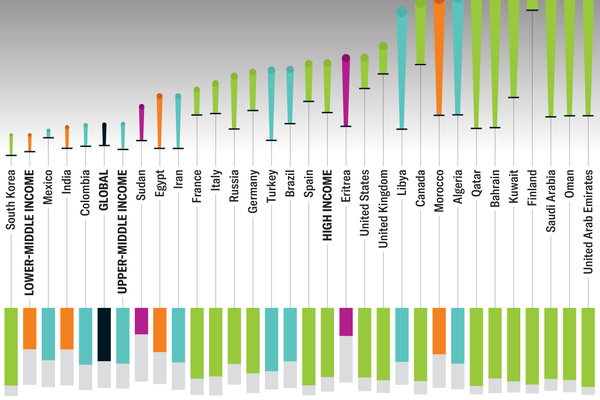
More people are being diagnosed with type 1 diabetes (T1D) than ever before—an estimated half a million this year—and at increasingly younger ages. Over the past three decades improvements in diagnostic tools and awareness have underpinned a steady rise in the number of people receiving a diagnosis of T1D in almost every country in the world. For people younger than 20, the sharpest increases have been recorded in high-income nations of the Middle East.
In lower-income countries, where health-care systems are less equipped to detect and manage the disease, T1D remains far more lethal. A 10-year-old child with the condition in the United Arab Emirates can expect to live to about age 76, roughly eight years shy of the national average. In Niger, however, a 10-year-old with T1D faces a drastically different reality—this child could expect to live just another decade on average, losing out on as many as 50 years.

Miriam Quick and Jen Christiansen; Source: T1D Index (www.t1dindex.org) (data)
Type 1 On The Rise
The number of people worldwide living with T1D is climbing rapidly, driven by rising incidence coupled with longer lifespans, lower mortality and overall population growth. Rates are increasing relative to population numbers in both wealthy and poor nations and across all age groups. The growing burden is not confined to the young: it reflects both a general rise in cases and earlier diagnosis.
But the picture is uneven, and inequalities are stark. In high-income countries, data suggest that nearly everyone younger than 25 with T1D is diagnosed. In low-income nations, however, only about two thirds of such cases are identified, according to estimates from the International Diabetes Federation and the T1D Index. Reported incidence in children and adolescents is therefore much lower than expected, reflecting missed or delayed diagnoses. These figures are modeled because more than half of countries lack current data, underscoring the urgent need for better epidemiological research worldwide.

Miriam Quick and Jen Christiansen; Source: T1D Index (www.t1dindex.org) (data)
Why Are Cases Rising?
Scientists still do not fully understand why the number of T1D diagnoses has climbed so quickly. Earlier and more accurate detection is certainly part of the story, but the sharp rise in new cases relative to population numbers hints that underlying rates of the disease may also be increasing. A range of environmental influences have been linked to greater risk, with many tied to gut microbiome health. Early-life infections, along with factors related to pregnancy and birth, can trigger autoimmune disorders such as T1D, in which the immune system destroys insulin-producing beta cells in the pancreas. Lifestyle factors may also contribute. Obesity and poor diet are well-known drivers of type 2 diabetes, and some researchers suspect they could influence the development of type 1 as well.
No Longer a Death Sentence
Untreated diabetes can be deadly even in the young. This year an estimated 174,000 people worldwide will die from T1D; about 30,000 of them will be younger than 25 and never formally diagnosed. Many of these deaths stem from diabetic ketoacidosis, a complication in which ketones build up in the blood, raising its acidity. The condition is often mistaken for something else, leading to delays in critical care. Children and adolescents with T1D also face heightened risks of long-term complications, including cardiovascular disease and kidney failure. Around 30 percent of patients eventually develop end-stage kidney disease.
Yet T1D is highly treatable. Insulin therapy, combined with tools to monitor blood glucose, can extend life expectancy and improve quality of life dramatically. Where treatment is accessible, a diagnosis no longer amounts to a death sentence, and death rates have plummeted as treatment has improved. Global modeling by the T1D Index suggests that if everyone received a timely diagnosis and proper care—and nobody died prematurely from diabetes—more than four million additional people would be alive today.

Miriam Quick and Jen Christiansen; Source: T1D Index (www.t1dindex.org) (data)