
The world is more at risk of a pandemic and less safe from deadly viral outbreaks now than it was before COVID, a major pandemic preparedness report found.
“The evidence is clear: health, economic, social and political impacts of health emergencies have not diminished, and in important areas are growing,” the report authors wrote. “In short, reforms have not kept pace with rising pandemic risk—the world is not yet meaningfully safer.”
The report is the final analysis by the Global Preparedness Monitoring Board, a World Health Organization (WHO) group established in the wake of West Africa’s 2016 Ebola epidemic to assess how well countries were prepared to face a deadly pandemic. The report, which first published in 2019, has provided an annual snapshot of pandemic preparedness since—and the world is moving in the wrong direction, the authors concluded.
On supporting science journalism
If you're enjoying this article, consider supporting our award-winning journalism by subscribing. By purchasing a subscription you are helping to ensure the future of impactful stories about the discoveries and ideas shaping our world today.
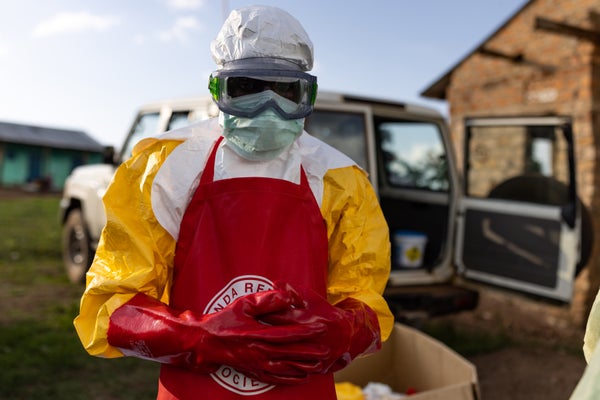
On May 17 the WHO declared a global health emergency over an outbreak of a type of Ebola virus in Africa that has killed scores of people and sickened hundreds more; meanwhile, the organization and national health agencies are trying to contain a deadly hantavirus outbreak that has killed three who were onboard the cruise ship where the spread began.
“Global health security is facing a convergence of threats that place the world at a greater risk of a devastating global pandemic than it was previously,” says Jessica Justman, an epidemiologist and senior technical director of ICAP at Columbia University, a research center focused on global health emergencies and pandemics. The Ebola and hantavirus outbreaks show that “infectious disease outbreaks have not gone away.”
The report authors point to several reasons for the growing risks: these include a lack of public trust in health institutions, increased threat of climate change and armed conflict, geopolitical fragmentation, a dearth of funding for health initiatives, weakened access to medical treatment and commercial self-interest. On the latter, the authors note artificial intelligence’s potential to transform pandemic preparedness, but they argue that without guidance, it will likely exacerbate health risks.
“The threats are broad,” says Justman, who was not involved in the report. Many national governments aren’t adequately funding public health infrastructure, while the scope of threats to global health has grown to include AI risks, war, accelerating climate change and antimicrobial resistance, she says.
The report warns that the future will see increasingly frequent pandemics and public health emergencies that will be harder to manage and more disruptive even than COVID.
“The world risks entering a cycle of accelerating health crises, where each new shock further erodes resilience and widens existing fractures,” the authors wrote.
“To change course, global health security needs to be financially prioritized in national budgets, especially by the countries that have the resources to do so,” Justman says. Whether the political will is there remains to be seen, however: in the U.S., the Trump administration has slashed funding to research infectious diseases such as COVID, while also cutting off support for global health initiatives by dismantling organizations such as the U.S. Agency for International Development, or USAID.
The administration also pulled the U.S. out of the WHO, removing the world’s top health body’s biggest funder and cutting off crucial support for responding to emerging pandemic threats. At the same time, the WHO has for months struggled to finalize its own Pandemic Agreement, a treaty aimed at improving international pandemic preparedness and response in the wake of COVID—at issue is how countries are expected to share emerging pathogen information with one another.
That disagreement may be symptomatic of what the report authors say is a broad “democratic erosion” in the wake of successive pandemics and health emergencies through the last decade. Trust is critical to pandemic preparedness—and it is in steep decline.
“These pressures make the world not only more likely to face epidemics and pandemics going forward, but also more vulnerable to their cascading impacts,” the authors wrote.