
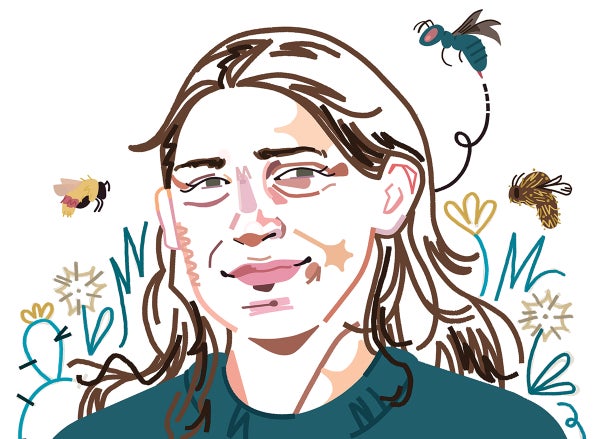
Spring has arrived in the U.S., bringing its bright spectacle of budding trees and migrating birds, along with more subtle but equally important changes—among them the annual emergence of native bees.
But “native bees” doesn’t include the insect most of us picture when we hear the word “bee.” That yellow-and-black-striped, hive-living, honey-making critter—formally Apis mellifera—hails from Europe. Farmers rely on these tiny imports as, essentially, livestock animals that pollinate food crops and produce honey. But their wild, native counterparts are something completely different.
“Take the majority of what you know about honeybees and throw it away,” says Sydney Shumar, a biologist and manager of the U.S. Geological Survey’s Bee Lab. “It does not apply to our native bee friends.” To celebrate spring, Scientific American spoke with Shumar about North American native bee species’ variety, differences from honeybees and importance in their ecosystem.
On supporting science journalism
If you're enjoying this article, consider supporting our award-winning journalism by subscribing. By purchasing a subscription you are helping to ensure the future of impactful stories about the discoveries and ideas shaping our world today.

A Martinapis luteicornis bee found in the desert in Cochise County, Arizona.
Amanda Robinson/USGS Bee Lab via Flickr
An edited transcript of the interview follows.
Do I have it right that there are more than 4,000 native bee species in the U.S.? How is that number so big?
The reason there are so many native bees is that you have all these different little things evolving to pollinate particular groups or species of plants. So they all have very different characteristics. When you look at pictures of our native bees, they look totally different than a honeybee, and you have huge ranges of color, size, how they collect pollen and how they nest.

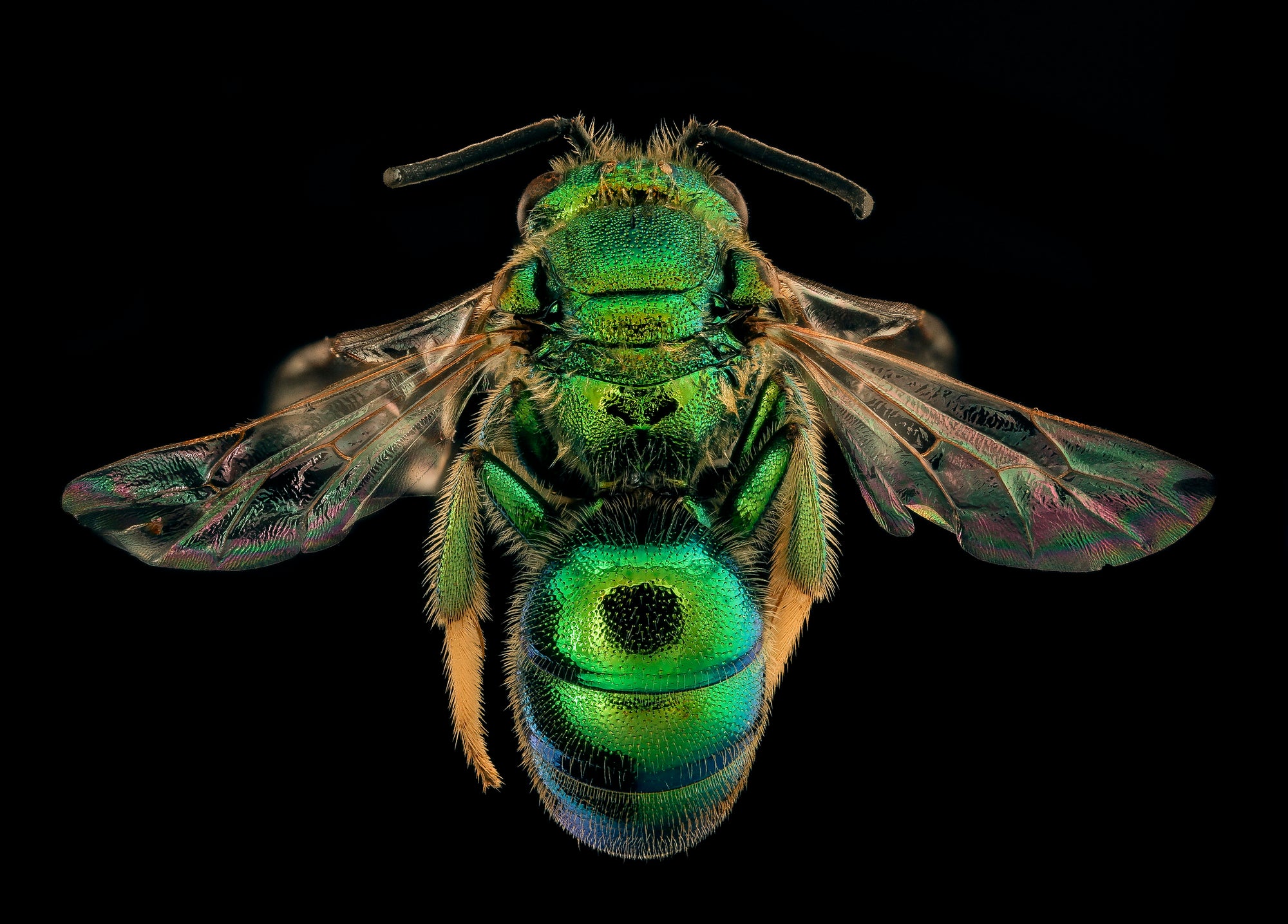
An Agapostemon sericeus found in Prince George’s County, Maryland. The genus Agapostemon is full of bright blue or green, metallic-looking bees that are classified as “sweat bees,” even though, unlike their relatives, they are not attracted to human sweat.
Wayne Boo/USGS Bee Lab via Flickr
What are they like, and how do they live?
There are no native bees in North America that live in a hive or produce honey. Most of them live in very small family units; you could think of it more like an apartment where you might have families aggregating together.
None of them produce honey; none of them produce wax; none of them make big structures like you would think of with a honeybee. Some are stem nesters. Most of them are ground nesters, so when you’re walking around in the winter, you are walking on top of millions of ground-nesting bees that are just laying low until it’s time for them to come out in spring.

A Melissodes desponsa found in Maine. The species is closely associated with thistles and can be found across much of the eastern U.S. and Canada.
Dejen Mengis/USGS Bee Lab via Flickr
Is this true even in cities? Do they have preferences or types of ground that they need?
Many of our native bees are specialists, so they do like a certain type of soil; a couple particularly like sand. In cities and more urban areas, you have a lot of impervious surfaces, which makes it harder for them. But if you have loose soil, if you have native plants, you’re most likely going to find native bees.
“If you go anywhere in the U.S., you are bound to find some native bees.” —Sydney Shumar, U.S. Geological Survey's Bee Lab
Are there any U.S. ecosystems that don’t have native bees, such as deserts?
No. We worked on a project on xeric habitats, and when you think of xeric, you think of dry; you think of nothing blooming, just arid. The researchers caught hundreds—hundreds—of bees. If you go anywhere in the U.S., you are bound to find some native bees.
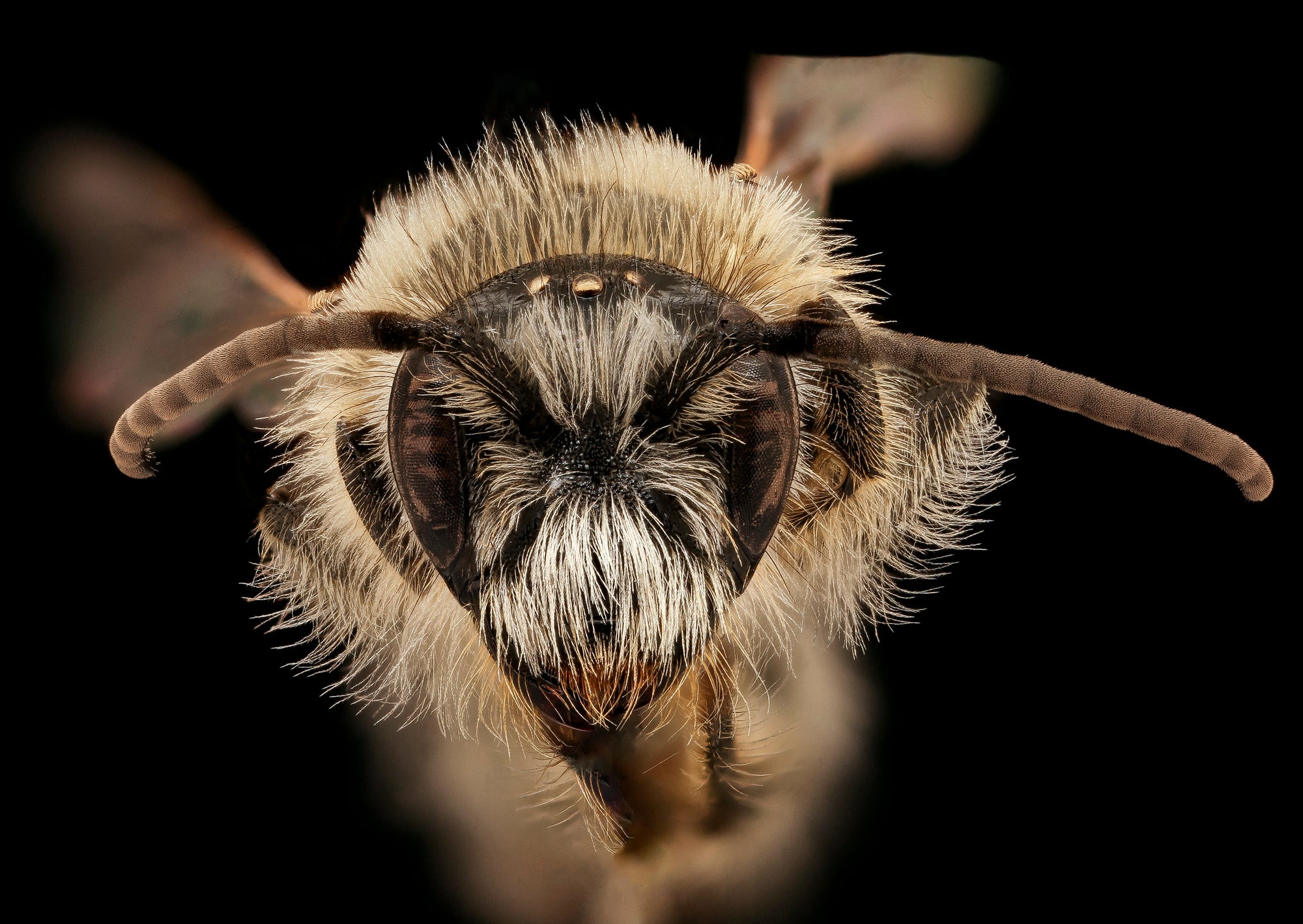
A Melitta eickworti found in Rockingham, Va. The species is a type of blunt-horn bee that specializes in pollenating deerberry shrubs.
Erick Hernandez/USGS Bee Lab via Flickr
Are there any groups or species of bees that you find particularly cool?
Besides all of them? I am very fond of squash bees. They’re medium-size and very cute and fluffy. And as you might guess, they are squash specialists. They come out super early in the morning; you have to get there at first light. And if you have squash plants, then you most likely have them. The scientific name of the most widespread species is Peponapis pruinosa, and you’ll find them just relaxing in a big squash bloom.

An Osmia atriventris found in Washington County, Maryland. The species is also known as the Maine blueberry bee, named for its special talent for accessing blueberry pollen. Blueberry flowers store pollen behind special pores that the bees vibrate open.
Brooke Alexander/USGS Bee Lab via Flickr
You mentioned that ground-nesting bees are underfoot all winter. What does a year in the life of a native bee look like?
With more than 4,000 species, they are not all coming out at the same time. You have some that emerge very early in the season, when the first spring ephemerals [long-lived plants that are only briefly active aboveground every year] start to bloom. In Maryland, that’s typically around April. And then as you get the different flowers, you have this continuing crescendo of bees coming out.
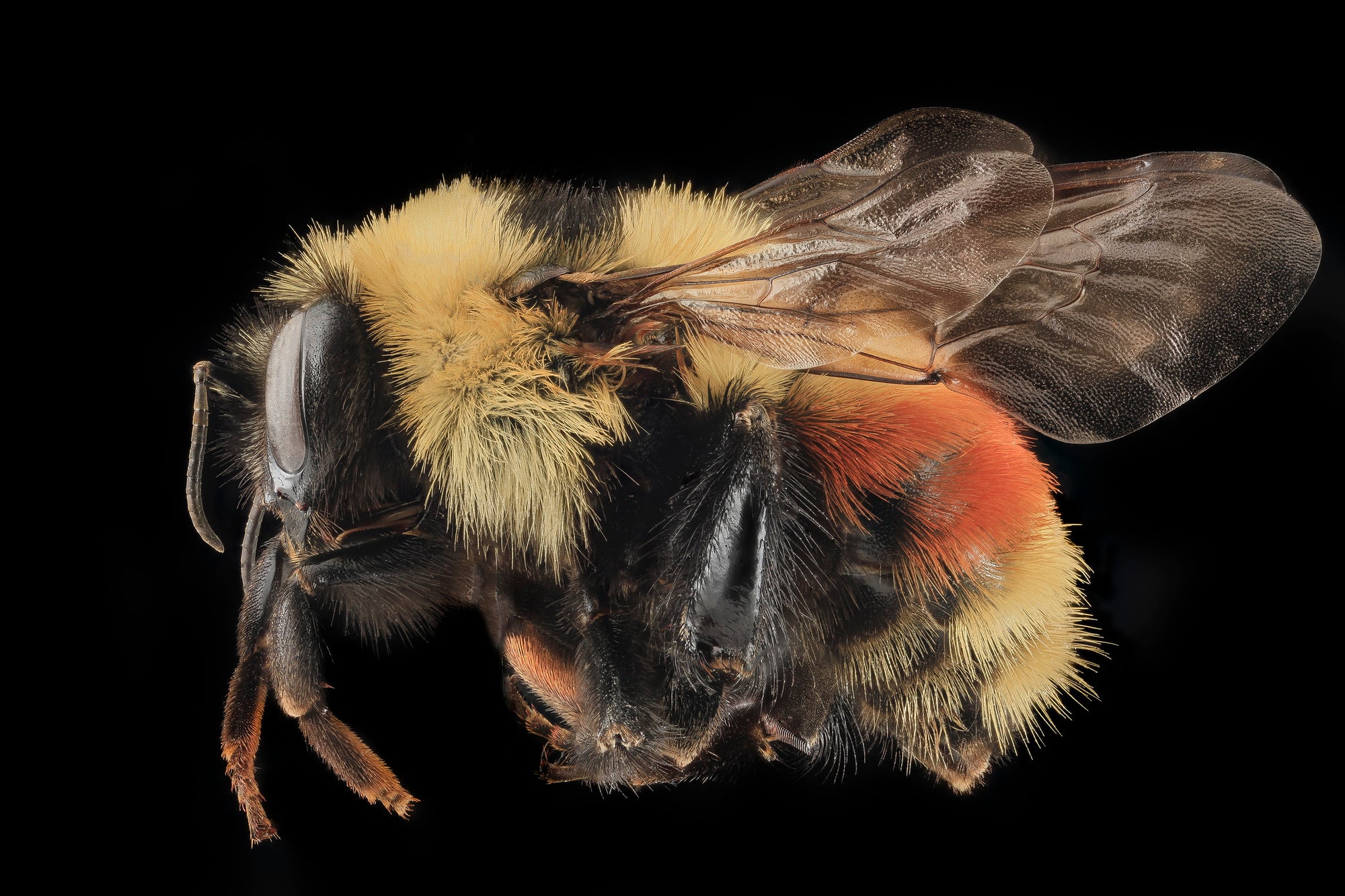
A Bombus rufocinctus bumblebee found in Yellowstone National Park. The species is fairly common and can sport a wide varieties of different color patterns, such as the red patch on this example, earning B. rufocinctus the common name red-belted bumblebee.
Colby Francoeur/USGS Bee Lab via Flickr
Usually you’re seeing only a really small snapshot of a bee’s life. Most of the time bees exist as eggs and as little larvae, and then they’re in this weird grub form underground. And then they emerge as what we think of as bees, and that’s when they are looking for food, finding a mate and continuing that cycle over again.
Typically a bee is out for only maybe a month or two. They are kind of fragile—they have very thin wings and very thin antennae—so when you catch one, you can kind of tell if it’s been out for a little while. If it looks somewhat battered, it’s been flying around and bumping into things and damaging its wings. Or if it looks pristine, you can guess that it’s recently emerged or it’s a little bit fresher than some of the other bees out there.
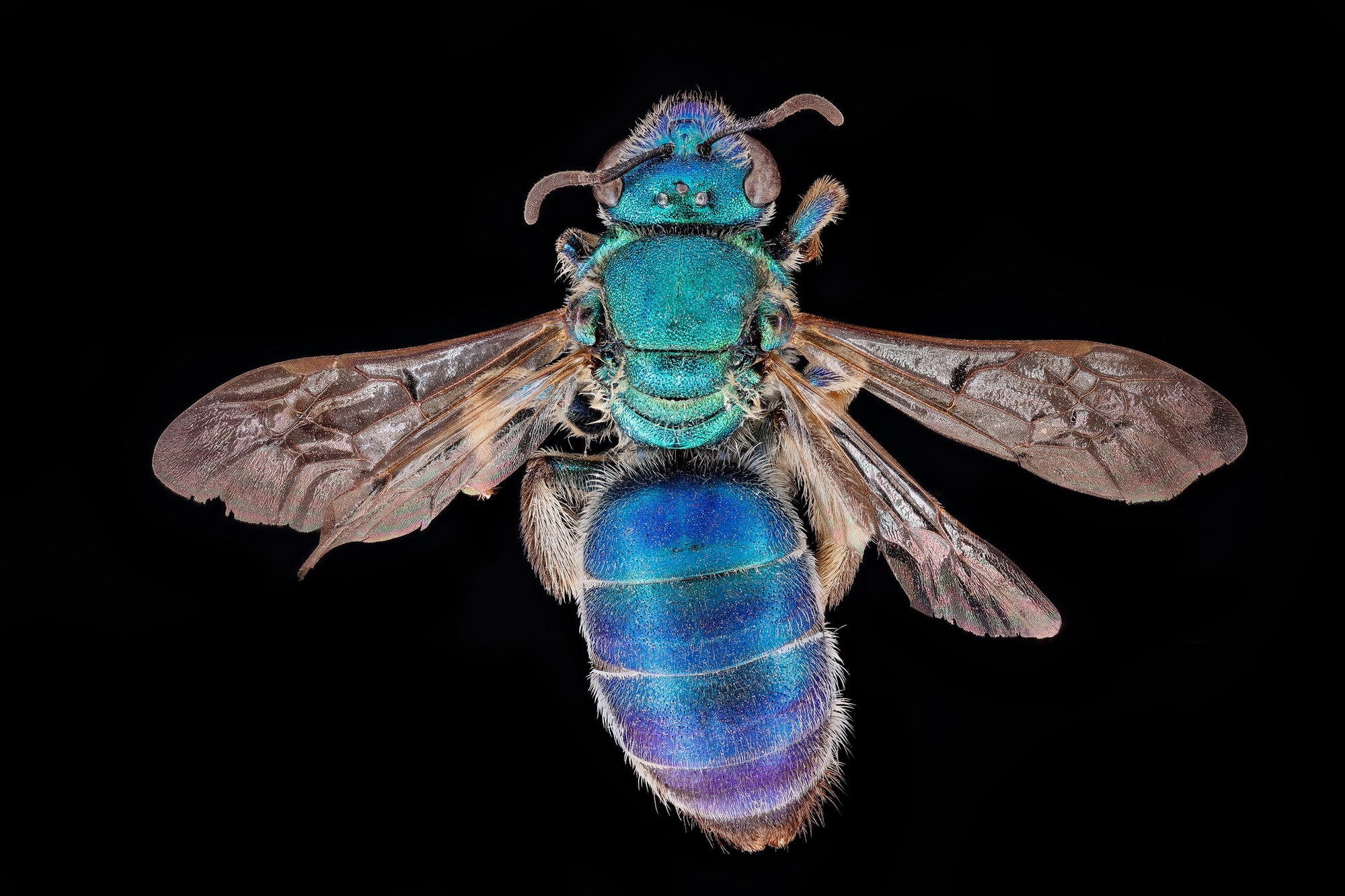
A sand-dwelling Augochloropsis sumptuosa found in the bootheel of Missouri.
Orr Uzan-Tidhar and Grace Schilling/USGS Bee Lab via Flickr
Do the larvae and grubs look really different from an adult?
They look more grublike, more caterpillarlike. If you were to see one, you definitely would not guess that it’s a bee larva. A lot of our native bees are very tiny—but they’re not baby bees. Baby bees actually don’t look anything like the bees we think of. They don’t have the three-segment body; they don’t have six legs; they don’t have wings; they don’t have antennae.

A Bombus affinis queen bumblebee found in Racine, Wis. The historical specimen was collected in 1965, before steep population declines led the so-called rusty patched bumblebee to be declared an endangered species in 2017.
USGS Bee Lab via Flickr
With honeybees, we see only females out and about. Is that the same with native bees?
With native bees, there are very seldom queens—bumblebees are the exception. But there are males and females. You do typically find more females than males, but you don’t have the queens or male drones or those differences unless you are talking about the bumblebees. In general, most females and males do look a little different within the same species. Under a microscope, males have more coloration in the face or a bit more coloration in general. And they usually have longer antennae compared with females. The biggest difference of all, even in native bees, is that females have a stinger and males do not.
An Augochloropsis fulgida bee found in Lincoln County, West Virginia.
USGS Bee Lab via Flickr
Can humans get stung by them, then?
Technically yes. Now, the stinger is completely different from a honeybee’s. It is not a barbed stinger, which means, one, it’s not as painful, and two, the native bee would not die after you got stung by it. That’s the mechanism that kills the honeybee: the barbed stinger gets embedded. [When the honeybee flies away, the stinger detaches, and the bee dies.]
A lot of the time, if people are stung by native bees, it’s because they were handling them—actively netting them or trying to grab them. That happens often with our bigger native bees: bumblebees, carpenter bees, things of that size. Everything else has such minuscule stingers that they’re lucky if it even breaks the skin, much less gets through their clothing.
Also, they’re not very territorial. The main reason honeybees would sting you is that you’re encroaching on the hive or they are resource guarding honey or flowers. Because native bees don’t really have a hive to protect and also don’t resource guard, you’re a lot less likely to get in their way.

A Coelioxys novomexicana found in California’s Central Valley. The species is a parasite that lays its eggs in the nests of another group of bees called Megachile.
Erick Hernandez/USGS Bee Lab via Flickr
What do we know about how native bees are doing?
In general, native bee species are declining—and that is a result of habitat loss, pesticide use, more rural areas becoming urbanized, more impervious surfaces, and the like.

An Andrena obscuripennis bee collected in Georgia.
USGS Bee Lab via Flickr
If someone wants to start paying more attention to native bees, how easy is it to start learning to identify these insects in their area?
Bumblebees are the easiest to get started with, and there’s tons of resources online. They’re bigger, and typically you identify them based on the coloration of the hair on the back of the bee. So if one of them is just sitting on a flower, you can go up to it and figure out with decent certainty which one it is, depending on your region. In terms of the other groups, it’s hard. You definitely need a microscope and access to a reference collection where someone who is an expert has already identified some groups.

An Anthophora affabilis bee found in Badlands National Park in South Dakota. The species is common and widespread in the western U.S.
USGS Bee Lab via Flickr
Is there anything people can do to help native bees around them?
The most well-researched and well-documented way of trying to introduce native bees to your area is to plant their habitat and plant their food source. It doesn’t have to be anything crazy. Native bees are tiny—they’re really small. So even if you have an apartment, if you have a little garden area or a pot, put some native plants in there, and I think you’ll be astounded by what you wind up seeing coming to visit.