New Issue: Orbital Catastrophe Ahead? Read Now

Why History Urges Caution on Coronavirus Immunity Testing

Being immune was once a status symbol—and another way to segregate and divide humanity

Join Our Community of Science Lovers!

“The Destroying Monster Continues the Work of Destruction Making a Vast Graveyard of Stricken Cities.” That is how a newspaper headline from Little Rock, Ark., described a yellow fever outbreak in 1878. The mosquito-borne illness infected 120,000 individuals and killed between 13,000 and 20,000 during the spring and summer of that year in the southern U.S.

What is most relevant to the current coronavirus pandemic is not how the yellow fever killed people. It is how the disease changed society for those who remained.


On supporting science journalism

If you're enjoying this article, consider supporting our award-winning journalism by subscribing. By purchasing a subscription you are helping to ensure the future of impactful stories about the discoveries and ideas shaping our world today.


“I’ve seen examples of young men hopping into the beds of their recently dead friends,” says Kathryn Olivarius, an assistant professor of history at Stanford University, regarding historical accounts of people seeking to become immune to the illness in the 1878 outbreak.“They were literally risking their lives—seeking sickness as a pathway to prosperity.”

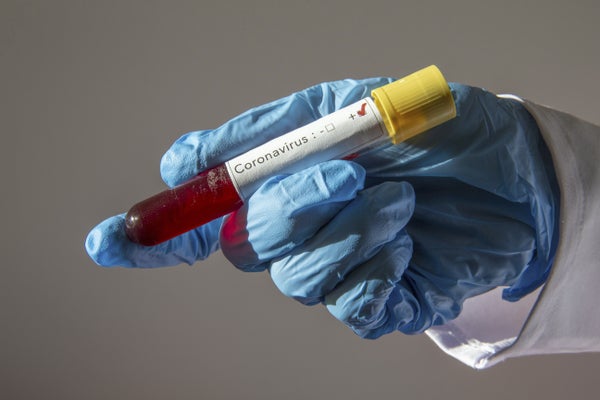
Yellow fever in the U.S. at that time—and earlier, smallpox in Europe in the 1700s—brought with it an understandable fixation on immunity. In the current coronavirus pandemic this attitude has been globally reborn in the form of an “immunity passport.” The idea is that if individuals successfully weather COVID-19, they could be allowed to reenter work and public spaces. There are fundamental problems with this concept, however, because of the many unknowns surrounding coronavirus immunity itself.

In an 1847 yellow fever outbreak in the southern U.S., such presumed immunity was called “acclimation.” History, at times, shows striking parallels to the present.

“The decisions that policy makers have to make in the face of an epidemic are always uncertain,” says Michael Stein, chair of Boston University’s health law, policy and management department. “But history can offer us lessons in these moments when we’re scared and in a rush.”

This video—a collaboration between Retro Report and Scientific American—lays out some lessons, and perils, of those past desperate quests for immunity in the face of a novel disease. As states start to “reopen” over the coming weeks and months, this same quest will surely play out yet again.

Read more about the coronavirus outbreak from Scientific American here. And read coverage from our international network of magazines here.

Kit R. Roane is a producer at Retro Report. He has worked as a journalist and documentary photographer for more than 20 years, covering local, national and foreign assignments for a variety of publications, including The New York Times and U.S. News & World Report.

More by Kit R. Roane

Jeffery DelViscio is currently chief multimedia editor/executive producer at Scientific American. He is former director of multimedia at STAT, where he oversaw all visual, audio and interactive journalism. Before that he spent more than eight years at the New York Times, where he worked on five different desks across the paper. He holds dual master's degrees in journalism and in Earth and environmental sciences from Columbia University. He has worked onboard oceanographic research vessels and tracked money and politics in science from Washington, D.C. He was a Knight Science Journalism Fellow at the Massachusetts Institute of Technology in 2018. His work has won numerous awards, including two News and Documentary Emmy Awards.

More by Jeffery DelViscio

Retro Report is a documentary news organization dedicated to examining stories after their headlines fade; it is non-partisan, independent and nonprofit.

More by Retro Report

Subscribe to Support Independent Journalism

Great science journalism requires human expertise, time, effort and creativity. And it costs money. That’s why I and the journalists here at Scientific American hope you’ll join our community.

When you subscribe, you are supporting staff and freelance journalists who are passionate about telling science stories that are true, important and compelling. Our editors and reporters are often experts in their fields, which means they understand the nuances of big discoveries and can untangle the breakthroughs from the hype. With a subscription, you are also supporting rigorous fact-checking to ensure the words we publish are precise and accurate. And you’re supporting original illustrations, graphics and photos that bring you closer to an advanced laboratory, an ice sheet in Antarctica or a space mission in orbit. You’re helping us craft other types of high-quality journalism as well: Our newsletters are carefully written, edited and curated by staffers you have or will come to know and love. Our Science Quickly podcast is based on original reporting, collaboration with editors and scientists and exacting production.

Subscriptions keep this engine running so we can continue to deliver thoughtful, rigorous and independent science journalism to you. In an era of viral misinformation, this work is crucial. If you value what we do, I hope you’ll consider joining us as a subscriber

Thank you,

Jeanna Bryner, Editor in Chief, Scientific American

Subscribe