EvolutionApril 7, 2023
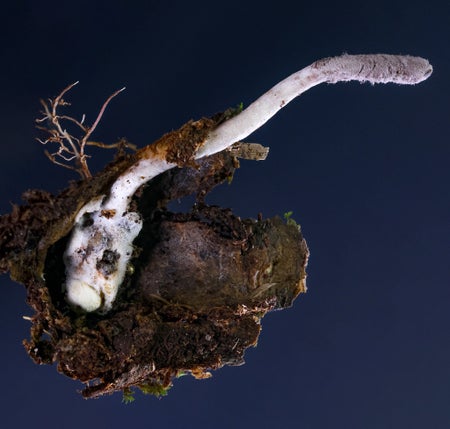
How Zombifying Fungi Became Master Manipulators
The real-life fungi that inspired The Last of Us hijack the bodies of ants, wasps, cicadas, and more.
Allison Parshall is associate editor for mind and brain at Scientific American and she writes the weekly online Science Quizzes. As a multimedia journalist, she contributes to Scientific American's podcast Science Quickly. Parshall's work has also appeared in Quanta Magazine and Inverse. She graduated from New York University's Arthur L. Carter Journalism Institute with a master's degree in science, health and environmental reporting. She has a bachelor's degree in psychology from Georgetown University.
How Zombifying Fungi Became Master Manipulators
The real-life fungi that inspired The Last of Us hijack the bodies of ants, wasps, cicadas, and more.
Science News Briefs from around the World: April 2023
Ancient Maya cities in laser focus, chickens gone wild in Singapore, high-tech drug research in the U.S., and much more in this month’s Quick Hits
Northern Lights Dance across U.S. because of ‘Stealthy’ Sun Eruptions
A severe geomagnetic storm created auroras that were visible as far south as Arizona in the U.S.
If AI Starts Making Music on Its Own, What Happens to Musicians?
Music made with artificial intelligence could upend the music industry. Here’s what that might look like.
Music-Making Artificial Intelligence Is Getting Scary Good
Google’s new AI model can generate entirely new music from text prompts. Here’s what they sound like.
Artificial Intelligence Helped Make the Coolest Song You’ve Heard This Week
Machine-learning algorithms are getting so good that they can translate Western instruments into Thai ones with ease.
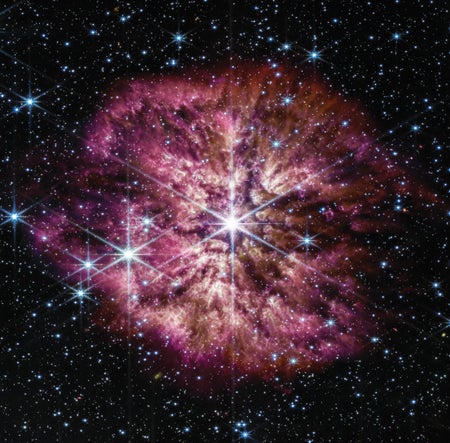
Rare, Dust-Shrouded Dying Star Revealed in New JWST Image
Before exploding as supernovae, massive Wolf-Rayet stars spew gas and dust into space, seeding the formation of future stellar and planetary systems
AI Can Re-create What You See from a Brain Scan
Image-generating AI is getting better at re-creating what people are looking at from their fMRI data. But this isn’t mind reading—yet
New Home Test Can Tell If You Have the Flu or COVID
Flu and COVID symptoms are easily confused. A new home test—the first for flu—tells them apart in minutes

New Color-Changing Coating Could Both Heat and Cool Buildings
A thin film can switch from releasing heat to trapping it, and wrapping the coating around buildings could make them more energy-efficient
Could the Zombie Fungus in TV’s The Last of Us Really Infect People?
The pandemic fungus in the television program The Last of Us is real. But an expert says other fungi are much more threatening to humans

A Common Antibiotic Could Prevent Deaths from Childbirth Complications
One in three cases of maternal sepsis can be prevented with a single dose of antibiotic, a study in low- and middle-income countries shows
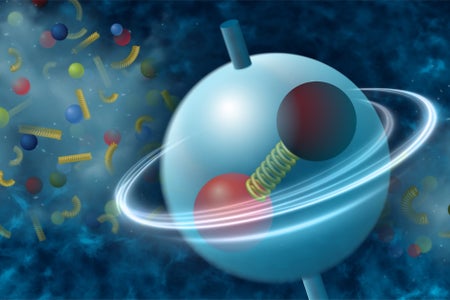
‘Unbelievable’ Spinning Particles Probe Nature’s Most Mysterious Force
The strong force holds our atoms together. Scientists may have observed its small-scale fluctuations for the first time
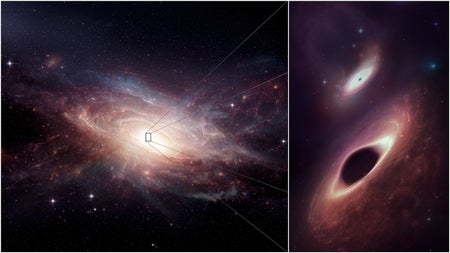
Colliding Supermassive Black Holes Discovered in Nearby Galaxy
These merging supermassive black holes are among the closest ever observed and could help unlock deeper secrets of cosmic history

Scientists Fire Lasers at the Sky to Control Lightning
Laser beams could be used to deflect lightning strikes from vulnerable places such as airports and wind farms
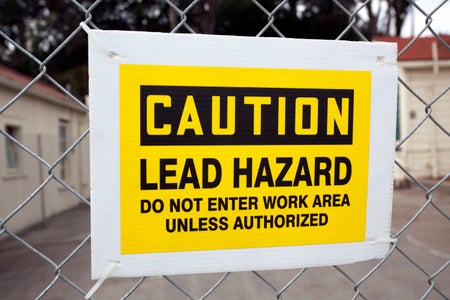
Living with Lead Creates Antibiotic-Resistant ‘Superbugs’
People are infected by bacteria that, after contacting heavy metals, develop drug-resistant traits