
The SciencesSeptember 1, 2015
Copernicus, Darwin and Freud: A Tale of Science and Narcissism
Freud did not originate his famous description of Copernicus and Darwin as deflators of humanity's anthropomorphic world-view.
John Horgan is a freelance journalist and a former Scientific American staff writer. He comments on science in his free online journal, Cross-Check, and he has also posted his self-published books Mind-Body Problems (2018) and My Quantum Experiment (2023) online. Horgan teaches science writing at the Stevens Institute of Technology.
Copernicus, Darwin and Freud: A Tale of Science and Narcissism
Freud did not originate his famous description of Copernicus and Darwin as deflators of humanity's anthropomorphic world-view.
Einstein, "The Anxiety of Influence" and "The End of Science"
An influential theory of literature can help explain the angst that afflicts some modern scientists.

Why There Will Never Be Another Einstein
No modern scientist comes close to Einstein's moral as well as scientific stature

Bethe, Teller, Trinity and the End of Earth
A leader of the Manhattan Project recalls a discussion of whether the Trinity test would ignite Earth's atmosphere and destroy the planet

The Risks of Nuclear Weapons: An Exchange
A prominent poitical scientist argues that our fears of nuclear weapons have been excessive.
Science versus Religion: Excerpts from an Interview
How science and religion conflict converge--or not.
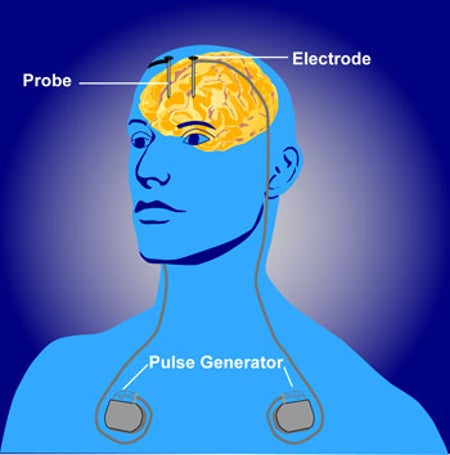
Much-touted Deep-Brain-Stimulation Treatment for Depression Fails Another Trial
The much-touted deep-brain-stimulation treatment for depression has failed a second major trial.
Meta-Meditation: A Skeptic Meditates on Meditation
The media are touting meditation’s potential for treating everything from anxiety to AIDS, but strong, objective evidence is lacking.

Why "Color Cures" for Mental Illness Endure
The persistence of "color therapy" reveals the weakness of conventional treatments for mental illness.
Are We Too Afraid of Nuclear Weapons?
"Optimists" argue that our fears of nuclear weapons have been "alarmist" and counter-productive.

Return of Electro-Cures: Symptom of Psychiatry's Crisis?
TMS and other "electro-cures" for depression are becoming popular in spite of limited demonstrated effectiveness
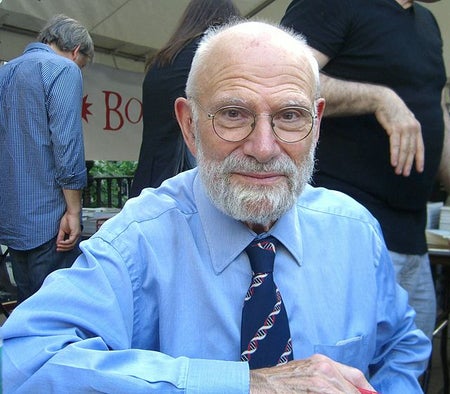
Oliver Sacks on Stage Fright
Neurologist Oiver Sacks, a best-selling chronicler of disorders of the brain and mind, describes how he copes with stage fright.

Cancer Spending Higher in U.S. Than in Europe--and So Is Cancer Mortality
A new study shows that the U.S. spends far more than Europe on cancer care but has a higher mortality rate for lung cancer, the leading killer
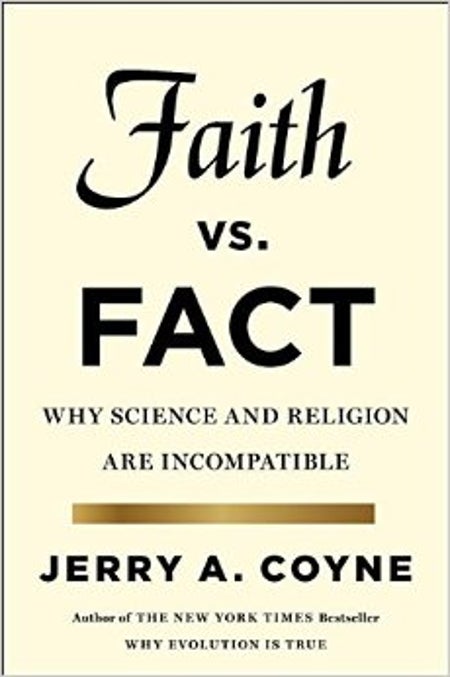
Book by Biologist Jerry Coyne Goes Too Far in Denouncing Religion, Defending Science
John Horgan critiques biologist Jerry Coyne's new book Faith vs. Fact: Why Science and Religion Are Incompatible.

"Infidelity Gene" Hyped in the News
The claimed existence of a "feel-good gene," like nearly all reported linkages of complex human traints and disorders to specific genes, is based on flimsy, contractictory evidence
25 Terrific Science(y) Books
John Horgan lists 25 of his favorite science(y) books, from Freud's The Interpretation of Dreams to Joyce's Ulysses
Oliver Sacks and the Binding Power of Rhythm
Neurologist Oliver Sacks has conjectured that rhythm serve as a binding force both within individual brains and at the level of societies.
An Appreciation of Oliver Sacks, Anti-Theorist of the Mind
So many people are singing the praises of neurologist and author Oliver Sacks that I hesitate to chime in. In February, Sacks revealed in The New York Times that he has terminal cancer, and reviewers are now raving about his new autobiography, On the Move, and entire oeuvre.
Profile of Steven Weinberg: from The End of Science
In my last post Steven Weinberg, one of history’s greatest physicists, answers questions about progress—or the lack thereof—in particle physics, cosmology and politics.
Nobel Laureate Steven Weinberg Still Dreams of Final Theory
One might think that success in science requires seeing through your own bullshit as well as the bullshit of others. But in my experience, this quality is quite rare.
Can a Hole in Your Head Get You High?
Of the weird conversations I’ve had in my life, many of the weirdest took place while I was researching my 2003 book Rational Mysticism, which explores religious experiences and other exotic states of consciousness.
How to Handle Doubts about Evolution, Global Warming, Multiverses: Teach the Controversy!
I’ve been blabbing a lot about free speech lately–in posts here and here, on New Hampshire Public Radio and the online chat show Bloggingheads.tv, in my classes.
“Ecomodernists” Envision Utopia—but What about War?
For an in-class exercise, I like asking students: “What’s your utopia?” I tell them that utopias aren’t fashionable these days; “utopian” is generally employed in a derogatory sense, meaning naively optimistic
Was I Wrong about “The End of Science”?
One of the coolest—and most stressful–moments of my career took place November 7, 1996, when I was a staff writer for Scientific American.