EvolutionNovember 1, 2009
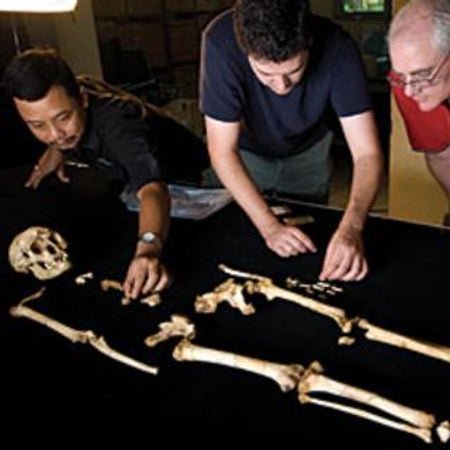
Rethinking "Hobbits": What They Mean for Human Evolution
New analyses reveal the mini human species to be even stranger than previously thought and hint that major tenets of human evolution need revision
Kate Wong is an award-winning science writer and senior editor for features at Scientific American, where she has focused on evolution, ecology, anthropology, archaeology, paleontology and animal behavior. She is fascinated by human origins, which she has covered for nearly 30 years. Recently she has become obsessed with birds. Her reporting has taken her to caves in France and Croatia that Neandertals once called home to the shores of Kenya’s Lake Turkana in search of the oldest stone tools in the world, as well as to Madagascar on an expedition to unearth ancient mammals and dinosaurs, the icy waters of Antarctica, where humpback whales feast on krill, and a “Big Day” race around the state of Connecticut to find as many bird species as possible in 24 hours. Wong is co-author, with Donald Johanson, of Lucy’s Legacy: The Quest for Human Origins. She holds a bachelor of science degree in biological anthropology and zoology from the University of Michigan. Follow her on Bluesky @katewong.bsky.social
Rethinking "Hobbits": What They Mean for Human Evolution
New analyses reveal the mini human species to be even stranger than previously thought and hint that major tenets of human evolution need revision
Recommended: The Age of Empathy
Scientific American also suggests The Sibley Guide to Trees

Are Torosaurus and Triceratops one and the same?
Love
Large brains may have led to the evolution of amour

Origins: The Start of Everything
Where do rainbows come from? What about flying cars, love and LSD?
Facial Expressions
Our unique expressiveness may have a three-million-year-old pedigree
Legs, Feet and Toes
The essential parts for walking on land evolved in water
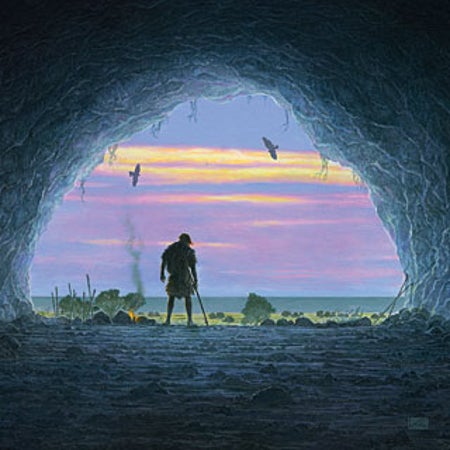
The Mysterious Downfall of the Neandertals
Paleoanthropologists know more about Neandertals than any other extinct human. But their demise remains a mystery, one that gets curiouser and curiouser
Reviews: August 2009
Celestial Views, Bigfoot Pursuits and Scientific Twitterers
Weak Link: Fossil Darwinius Has Its 15 Minutes
Skepticism about a fossil cast as a missing link in human ancestry
Homo Sapiens Fingered in Neandertal Cold Case
A forensic analysis suggests that the weapon wielded in a stabbing attack came from modern humans
Moon Walking, Becoming Human and Amazing Animals
The books highlighted below commemorate the 40th anniversary this month of the first manned landing on the moon
Crawling May Be Unnecessary for Normal Child Development
In some tribes, babies skip the crawl
Living Alike
News Scan Briefs: Hand Transplant Recipients Switch Handedness
Also: ending nerve damage from needles, "caveman" connection to humans, electromagnetic chatter, and laser beams that curve
Pssst: Gossip hurts--but friends can protect you from the worst of it
How similar was Neandertal behavior to that of modern humans?
Neandertal cannibalism? Maybe not
Super Serpent: Bus-Size Snake Ruled Rainforest 2 Million Years Ago (Thankfully)
The 13-meter-long Titanoboa could easily outstretch today's anaconda
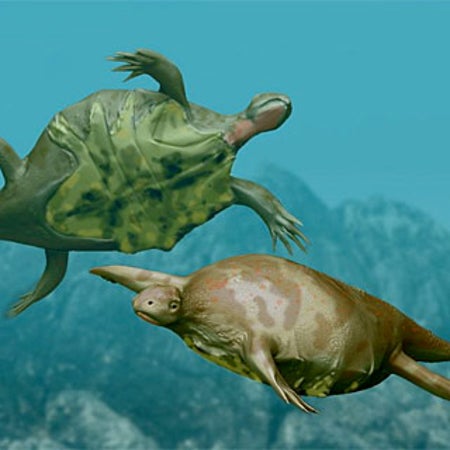
New Fossil Shows How the Turtle Got Its Shell
Odontochelys semitestacea, the oldest turtle fossil yet, has a fully formed lower shell, or plastron, but lacks a fully formed upper shell
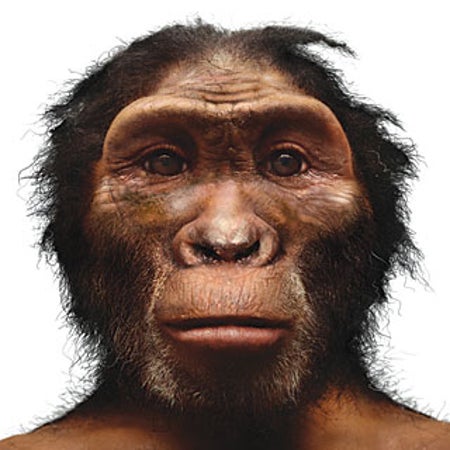
The Human Pedigree: A Timeline of Hominid Evolution
Some 180 years after unearthing the first human fossil, paleontologists have amassed a formidable record of our forebears
Decoding the Mammoth
Scientists sequence half the woolly mammoth's genome
Updates: Whatever Happened to Natural Blood-Vessel Dilators?
Also: updates on cloning mice and extinction by disease
Updates: Whatever Happened to Midsize Black Holes?
Also: updates on HIV's origins, Neandertal fishing and transgenic guidelines