
EnvironmentApril 1, 2013
Map Shows Vast Regions of Ocean Are Warmer
Many parts of the Atlantic and Pacific are up by 1 degree Celsius or more
Mark Fischetti was a senior editor at Scientific American for nearly 20 years and covered sustainability issues, including climate, environment, energy, and more. He assigned and edited feature articles and news by journalists and scientists and also wrote in those formats. He was founding managing editor of two spin-off magazines: Scientific American Mind and Scientific American Earth 3.0. His 2001 article “Drowning New Orleans” predicted the widespread disaster that a storm like Hurricane Katrina would impose on the city. Fischetti has written as a freelancer for the New York Times, Sports Illustrated, Smithsonian and many other outlets. He co-authored the book Weaving the Web with Tim Berners-Lee, inventor of the World Wide Web, which tells the real story of how the Web was created. He also co-authored The New Killer Diseases with microbiologist Elinor Levy. Fischetti has a physics degree and has twice served as Attaway Fellow in Civic Culture at Centenary College of Louisiana, which awarded him an honorary doctorate. In 2021 he received the American Geophysical Union’s Robert C. Cowen Award for Sustained Achievement in Science Journalism. He has appeared on NBC’s Meet the Press, CNN, the History Channel, NPR News and many radio stations.
Map Shows Vast Regions of Ocean Are Warmer
Many parts of the Atlantic and Pacific are up by 1 degree Celsius or more
Root Fungus Stores a Surprising Amount of the Carbon Sequestered in Soil
Falling leaves and branches are important, but roots and their fungi win out
New Observatories May Help Predict Flooding From Pacific Storms
New observatories may help predict flooding from Pacific storms
Young Scientists Encourage the Public to Demand Peer Review
Lead Exposure on the Rise Despite Decline in Poisoning Cases
Leaded gasoline and lead paint are gone, but other sources are keeping the danger high
U.S. Geologist’s “Spy” Cameras Confiscated in Nepal
Ulyana Horodyskyj says her video cameras were recording a surprising rate of glacial melting in the Himalayas
ARGO Network Senses Ocean Changes
More than 3,600 robots probe the seas down to 2,000 meters
What Is Consciousness? Go to the Video!
How Would Obama Address Climate Change?
Exclusive reply to Scientific American points to reduced oil dependence and clean-energy investments
More Than 3,500 U.S. Weather Records Smashed in 2012
Interactive map shows extreme temperatures, rainfall, snowfall, floods, wildfires and droughts
Matt Damon s Fracking Movie Depicts Gas Companies as Liars
How Likely Are You to Die…Today? [Video]
Riding a bike is more dangerous than driving a car; hang gliding is riskier than scuba diving
How to Survive the Next Big Storm
The scientist who predicted the damage from Hurricane Sandy explains how to protect coastal cities
How to Gain or Lose 30 Minutes of Life Every Day
Consequences of good and bad health habits are boiled down to 30-minute slices of your life
Where in the World Are Josh Simpson's Planets? [Slide Show]
Volunteers have hidden 1,700 of his glass globes worldwide
New U.S. Commission Would Try to Improve Weather Forecasting
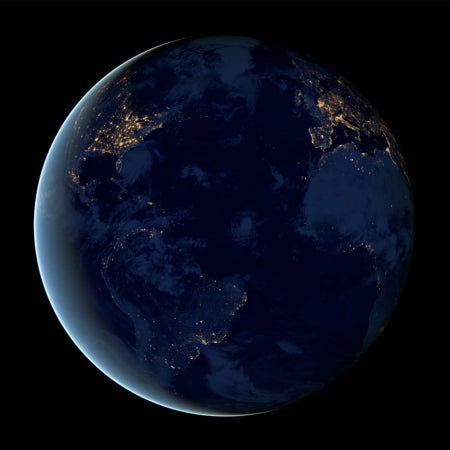
NASA Releases Stunning Animation of Earth at Night
SAN FRANCISCO—This incredibly detailed 360-degree view of Earth at night was unveiled during a December 5 presentation at the American Geophysical Union conference.
New Observatories Will Warn Public about "Atmospheric River" Floods
An $11-million weather sensor network being installed in California will give officials more time to prepare for onslaughts of Pacific storms
Arctic Sea Ice Hits Record Low
Greater ice loss could cause harsh winters in the U.S. Northeast and Europe
Mysterious Atmospheric River Soaks California, Where Megaflood May Be Overdue
Artist Josh Simpson Makes Giant, Fiery Glass Planets, Coronas and Meteorites [Slide Show]
Science and a furnace turn glass and metallic oxides into fantastic worlds
Come Hang Out with Some World Changing Ideas
How to Survive the Next Big Storm: Q&A with Klaus Jacob
The scientist who predicted Hurricane Sandy's extensive damage explains how to protect coastal cities against storm surges and rising seas
Earth May Be Warming Even Faster Than Expected [Slide Show]
Three feedback loops are amplifying how rapidly the planet is heating up